
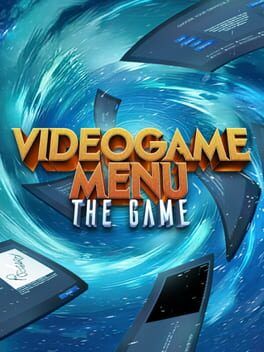

Video Game Menu: The Game turns graphics sliders, fake settings, and hostile buttons into the whole joke. Here is how the odd indie works and what to expect.
Image: IGDB
Store links: Video Game Menu: The Game on Steam
A game that starts where most games hide the work
Video Game Menu: The Game is available on Steam following its listed September 21, 2026 release, according to Foro3D and daily.dev, and its central hook is unusually literal: the settings menu is the game. Argentine indie developer Sebastián Gioseffi’s experimental release runs about 20 to 30 minutes, supports English and Spanish, and builds its short playtime around more than 70 options, daily.dev reports.
That is the concrete news, but the tension is in the design dare. Most games treat menus as scaffolding: useful, forgettable, ideally invisible once the player is actually moving, fighting, building, racing, or solving. Video Game Menu: The Game drags that scaffolding onto center stage and asks players to do the thing many of us already do before touching the first level: open every submenu, nudge the brightness, change the frame cap, toggle V-sync, wonder whether motion blur is a crime, and press the strange button purely because it exists.
Rock Paper Shotgun describes the result as “a video game about video game menus,” with the Steam blurb pitching it in knowingly absurd terms. As quoted by RPS, the store page asks whether players are tired of games bothering them with “challenges, levels or gameplay,” then promises that in Video Game Menu: The Game, those distractions will not get in the way. The joke lands because it is aimed at a real habit. PC players especially have been trained to treat the options screen as a ritual space, part performance check, part comfort setup, part curiosity cabinet.
This is where the Video Game Menu game pitch becomes sharper than a throwaway gag. It takes the quiet, repetitive work of configuring a game and converts it into a comedy system. If the reveal has caught attention among fans of weird indie games 2026, it is because the premise recognizes something familiar and then keeps escalating until the familiar turns hostile, silly, and oddly playable.
How a menu becomes the main mechanic
The basic interaction, as RPS reports, is simple: players move through menu screens and press buttons to see what changes. That structure matters. Video Game Menu: The Game does not appear to hide its premise behind a second genre for long stretches. The act of changing options is the loop, and the immediate question becomes whether the interface will behave like a useful tool, a prank, or a trap.
Some settings begin in recognizable territory. RPS lists graphics quality, V-sync, FPS targets, and brightness among the ordinary options players can expect to encounter. These are the safe nouns of PC settings culture. They tell your brain, briefly, that you know this place. Then the game slides into stranger switches, including screen rotation, a setting for how bloated the game is, and a “take off glasses” option that RPS assumes blurs the display.
The stronger comedy comes when the interface stops being passive. RPS describes a “cursorphobic buttons” option that makes other buttons run away from the cursor, which changes the menu from a flat list into a tiny dexterity problem. Another option causes text and buttons to shrink as the cursor approaches. Airplane mode, according to RPS, overlays a cockpit PNG across the entire screen. These are jokes, but they are also interaction rules. The menu is no longer a neutral container for choices. It becomes the playable space.
Foro3D frames the design as an experiment in UI and UX, noting that each option, slider, and submenu functions as an interactive piece with consequences inside the experience. That reading is useful because it explains the craft hiding under the absurdity. A menu-first game lives or dies on feedback. Every click needs to tell the player something changed, even if that change is useless, inconvenient, or deliberately ridiculous. The pleasure is discovery, but the design challenge is legibility: players must understand enough of the prank to want to trigger the next one.
The reveal works because settings already feel like play
The odd resonance around Video Game Menu: The Game is easier to understand if you stop treating menus as dead time. For a certain kind of player, indie game menus and PC options screens already invite experimentation. We toggle subtitles before hearing dialogue. We check key bindings before learning the verbs. We set a frame-rate cap, reopen the display tab, and then return again after five minutes because the fans sound angry. This is behavior that looks adjacent to play, and Gioseffi’s game appears to make that adjacency explicit.
RPS leans into that shared joke by calling menu tinkering “everyone’s favourite gaming pastime,” a deliberately exaggerated claim that points at a real ritual. The comedy is not only that the game has fake settings. It is that fake settings can feel surprisingly close to real ones, especially in an era where players routinely encounter dense options pages, accessibility menus, display toggles, graphics presets, HDR calibration, controller remapping, and platform-specific quirks before the opening cutscene.
The supporting source material around menu development makes the joke feel even more pointed. A Unity asset listing for “Settings Game Options - Unified Menu Generator” advertises a template with support for URP, HDRP, Built-in render pipelines, old and new input systems, input binding, localization, prefab UI, autosave, PlayerPrefs saving, controller support, touch support, scripting APIs, and more. That listing is not evidence about Video Game Menu: The Game’s tools, and should not be read that way. It does, however, show how much real production work can live inside something players often call “the options menu.”
A GitHub issue for the Yakumo project makes the technical side even plainer. The issue proposes an in-game overlay for settings such as window size, fullscreen, render scale, V-sync, texture filtering, volume, and controller options, noting that changing render scale at runtime means recreating render targets and waiting for the GPU to release the old ones. Again, this is context rather than a direct connection to Gioseffi’s game. It helps explain the premise’s bite: menus are mundane until they break, and invisible until a game turns them into the whole performance.
Comedy with a short runway and a specific audience
Players should not go into Video Game Menu: The Game expecting a sprawling systems game. The reported duration is 20 to 30 minutes, according to Foro3D and daily.dev, and RPS cautions that it may not be something that keeps players going for hours. That is not a knock on the concept. It is a useful expectation check. This sounds like a compact experimental comedy, built to be poked, laughed at, and completed before the central trick wears thin.
The tone described across sources is surreal rather than dry. Daily.dev mentions more than 70 fake settings, absurd difficulty options, and odd humor including a decapitated alpaca. RPS points to menu options that interfere with basic navigation, distort the screen, or layer a cockpit over the view. The reveal suggests a game whose best moments will come from escalation: the player asks what a toggle could possibly do, presses it, and then has to live with the interface becoming worse in a new way.
That makes it a clean fit for players who enjoy short-form experimental indies, interface jokes, game-design curios, and comedy games that treat frustration as slapstick. It may be a harder sell for players who want mechanical depth measured in hours, or for anyone who dislikes games that intentionally make interaction clumsy. A button running away from the cursor is funny because it violates a basic expectation. It is also, by design, annoying. The balance between those two feelings will decide how warmly different players receive it.
The reveal also hints at minigames inside the menu simulator. RPS says some “actual video games” appear to be lurking within the experience, presumably as testing grounds for the strange combinations of options players apply. That detail is worth watching because it gives the premise a practical release valve. Menus can be funny on their own, but seeing absurd settings spill into tiny playable spaces could make the joke feel earned rather than static.
What is confirmed, and what remains unclear
The confirmed picture from the supplied sources is fairly tight. Video Game Menu: The Game is an experimental indie game by Argentine developer Sebastián Gioseffi. Foro3D and daily.dev both report a Steam release date of September 21, 2026, with a 20 to 30 minute runtime. Daily.dev reports English and Spanish language support. RPS links to the Steam page and says the game can be picked up there, which lines up with those release-date reports given the current calendar.
The provided sources do not establish a console release, a price, Steam Deck verification status, controller support, accessibility details, system requirements, or post-launch update plans. Those may exist on the live Steam listing, but they are not included in the supplied material, so readers should check the storefront directly before buying if any of those details affect the purchase.
There is also a small naming wrinkle in the coverage. The game is consistently discussed as Video Game Menu: The Game or Video Game Menu The Game, while the RPS source text ends by saying “Video Game: The Menu” in its Steam link sentence. Given the assignment topic, the quoted Steam URL, and the rest of the source text, the article’s subject is clearly Video Game Menu: The Game. The stray wording is best treated as a source-text inconsistency rather than evidence of a separate title.
For anyone searching for RPS Video Game Menu coverage, the important takeaway is that the reveal is not selling a parody skin over a conventional genre. The reported design centers the interface itself. That distinction affects whether you should jump in. If you want a traditional challenge structure, wait for impressions or watch the trailer. If a half-hour of buttons misbehaving sounds like your idea of a palate cleanser, the premise is already telling you exactly what kind of joke you are buying.
A tiny game with a sharp read on a familiar ritual
The smartest thing about Video Game Menu: The Game, at least from the reveal and reporting available so far, is that it does not need to invent a new language. Everyone who has opened an options screen understands the verbs. Click, drag, toggle, back out, apply, undo, panic, reset to default. Gioseffi’s premise bends those verbs until they become the game.
That is why the project stands out in the current field of oddball indies. It has the clean silhouette of a joke game, but the joke is rooted in a real design space. Menus are where developers expose assumptions about players: what they may want to change, what the game can safely alter in real time, what needs a restart, what belongs under graphics versus display, what gets saved, what remains hidden. Foro3D’s UI and UX reading gets at that side of it. Video Game Menu: The Game appears to turn those assumptions into toys.
The best version of this concept will be one where every setting has a punchline, every punchline teaches the player a little more about the interface, and the final stretch feels like a comic pileup of choices the player knowingly made. The risk is repetition. A short runtime helps, but a menu game has to keep finding new ways to surprise the hand on the mouse.
Based on the sources, players should expect a brief, surreal, settings-obsessed indie comedy rather than a hidden epic. That is a narrow lane, but it is also a memorable one. Video Game Menu: The Game seems built for the part of the brain that cannot resist one more toggle, even when the last toggle made the buttons run away.