
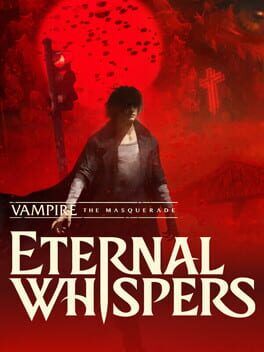

How Flyos’ combat-free CRPG uses Disco Elysium-style systems to tell a very Vampire story in Montreal, and where it sits in the wider World of Darkness lineup.
Vampire: The Masquerade has always been about the conversation before the fight. Eternal Whispers finally builds a whole CRPG around that idea, trading Bloodlines’ scrappy action RPG roots for something closer to Disco Elysium’s dense inner monologue and messy investigations.
Set in Montreal 20 years after the Montreal by Night storyline from Flyos’ own tabletop game, Eternal Whispers is a narrative-first, combat-free CRPG where you role-play through dialogue, deductions, and social maneuvering instead of ability rotations and DPS checks. It is also a big swing for the World of Darkness video game lineup, which has struggled to capture the tabletop’s mix of politics, tragedy, and street-level horror.
A Disco Elysium-style CRPG, but written in Vitae
The Disco Elysium comparison is not just marketing. Eternal Whispers lifts some of the key structural ideas from ZA/UM’s cult classic and runs them through Vampire’s personal horror filter.
You play as Gabe, a customizable fledgling Kindred who wakes from a long torpor with no memory of their sire. Montreal has moved on, the city’s undead politics have curdled in your absence, and your only real ally is Sam, a Thin-blood caught at the margins of Kindred society. Together, you move through a top-down city, poking at crime scenes, interrogating suspects, and trying to rebuild a sense of identity in a world that has no place for you.
Where Disco Elysium externalized your psyche into a chorus of skills that talk back, Eternal Whispers instead leans on the Vampire fantasy of masks within masks. Every conversation is a performance. You are always balancing what your character wants, what the sects demand, and how much truth you dare show to the people who could end you with a word. The result is less about arguing with your own brain and more about constantly rewriting the persona you present to the city.
Crucially, there is no traditional combat system. Conflicts are resolved through dialogue trees, skill checks, and clever item use. This instantly pushes the game away from the Bloodlines formula and into a purer role-playing space, closer to what a pen-and-paper Vampire chronicle looks like at the table. It also aligns Eternal Whispers with Disco Elysium’s belief that conversations and consequences are the real boss fights.
Dice, skills, and fail-forward design
Eternal Whispers builds its character system as a bridge between tabletop Vampire and modern narrative RPGs. Gabe is defined by 15 upgradeable skills, split across social, mental, and physical disciplines. These stats gate options in dialogue and investigation scenes, but they also tie into a dice-based resolution system that makes each choice feel tangible.
Every important action pulls a roll in the background. You might lean on Presence to dominate a conversation, Wits to spot a hidden clue, or raw physicality to kick in a locked door. Consumables and items in your inventory can tweak these odds, echoing the way a clever player at the table might stack situational bonuses before they take a risk.
The key part is what happens when you fail. Eternal Whispers is built around “fail forward” design, where a bad roll does not brick your progress. Instead, it twists the story. Maybe you miss a vital clue and are forced to rely on a more dangerous informant. Maybe a botched lie cements a rival’s hatred in a way that will echo two missions later. Failure defines your version of Gabe as clearly as success, which is exactly what a Vampire story needs.
That also matters for replayability. Since there is no single golden path through a case, investing heavily in different skills is not just a flavor choice. A smooth-talking social predator will see entirely different branches than a paranoid investigator or a blunt, physically imposing bruiser. In theory, Eternal Whispers should feel less like you are chasing the best outcome, and more like you are improvising your way through a messy chronicle that cannot go perfectly.
Mission-based investigations instead of an open district
One of the biggest structural differences from Disco Elysium is pacing. Where Martinaise was a contiguous, slowly unlocking neighborhood, Eternal Whispers is built as a sequence of investigations. Each major case runs roughly 90 minutes to two hours, with its own locations, suspects, and political complications.
Between missions you return to a safe-house hub, a quiet pocket of undead routine that grounds the campaign. This is where you talk to recurring NPCs, debrief from the last disaster, and prepare for the next. It also houses one of the game’s more intriguing systems: a library that you, as Gabe, are responsible for maintaining.
Vampire has always been obsessed with memory, lost history, and the fragile paper trail of the undead. Turning that into a concrete activity fits the license smartly. Filling the shelves with recovered tomes, reports, and personal accounts is worldbuilding, but it is also a mechanical reflection of how much truth you have actually uncovered. The safe-house is where your chronicle takes shape as more than just a series of scenes.
Structurally, this mission-based approach should also make Eternal Whispers approachable. Instead of wandering lost in a dense urban sprawl, you enter focused stories with clear stakes, then step back to breathe and re-spec your strategy. It is closer to a TV season of linked episodes than a freeform novel, which might be exactly what the often lore-heavy World of Darkness needs to welcome new players.
Role-playing as a Kindred, not a combat class
Most Vampire video games have translated clans into combat archetypes: the sneaky Nosferatu rogue, the Tremere battle mage, the Brujah brawler. Eternal Whispers goes in a different direction by trimming out real-time fighting and sharpening what it means to role-play as a creature of the Masquerade.
Gabe’s build is less about how you win fights and more about how you survive social and investigative pressure. Do you specialize in reading people and steering conversations, effectively playing Vampire as a social sim? Do you invest in perceptive and analytical skills to treat Montreal like a sprawling crime scene? Or do you lean into physicality not for brawling, but for intimidating presence and the occasional desperate act of brute force?
Without a combat loop to fall back on, every point you spend in your character sheet is a statement about how you intend to solve problems. That lines up with the tabletop’s core fantasy, where coteries talk through plans, pull on connections, and only draw claws when everything else has failed. Eternal Whispers, at least in its pitch, looks determined to capture that tone.
There is also potential here for stronger alignment with the World of Darkness themes of personal horror. Without the dopamine loop of loot drops and crit numbers, failures and compromises hit harder. When you burn a relationship to protect the Masquerade, you are not doing it because it unlocks the next dungeon, you are doing it because the fiction leaves you no clean option.
Montreal as a character and a continuity
Eternal Whispers is not set in some generic gothic metropolis. Flyos is returning to Montreal, the city it already fleshed out in Vampire: The Masquerade – Chapters and the Montreal by Night expansion. This matters because World of Darkness games live or die on their sense of place.
Two decades have passed since the events of Chapters. Familiar factions have shifted, elders have disappeared, and power has consolidated in new, potentially rotten ways. For returning fans, that promises a continuation of an existing chronicle, with old decisions reinterpreted and background lore paying off in new forms. For newcomers, Montreal offers a dense but curated slice of Vampire society, with its own history, scars, and regional flavor separate from the more familiar Los Angeles and Seattle settings seen in other games.
By tying Eternal Whispers so tightly to a specific city and timeline, Flyos is positioning the CRPG as a kind of narrative hub for its corner of the license. It is an opportunity to shore up the continuity that stretches from tabletop modules to board game hybrids and now into digital RPGs, something the World of Darkness brand has often fumbled in the past.
Where Eternal Whispers sits in the World of Darkness lineup
The World of Darkness video game catalog is a strange, scattered thing. You have the cult legend of Bloodlines, the long troubled development of Bloodlines 2, smaller experimentations like Swansong, and a surprising number of spin-offs that yank Vampire into everything from battle royales to story-driven adventure games.
Eternal Whispers looks like a statement of intent. By going hard on narrative, ditching combat, and embracing a CRPG framework that foregrounds dialogue and consequence, it speaks directly to what makes Vampire unique. Where Bloodlines channeled early-2000s immersive sim energy and Swansong took a more cinematic, vignette-driven approach, Eternal Whispers wants to be the adaptation that feels closest to running a tabletop chronicle with a dedicated storyteller.
In the broader CRPG scene, that also makes it interesting. While Baldur’s Gate 3 and similar titles have proven there is an appetite for lavish, combat-heavy campaigns, there is still a gap for games in the Disco Elysium mold that devote all their energy to writing, role-play, and systems of interpretation rather than initiative orders. Eternal Whispers is stepping directly into that space with a license that, thematically, fits it.
If it works, it could become the template for future World of Darkness games: smaller in scope than a blockbuster action RPG, but denser, stranger, and more reactive to player choice. If it stumbles, it will at least stand as a bold attempt to treat Vampire: The Masquerade as a story engine first and a combat engine distant second.
What to watch as Eternal Whispers develops
Eternal Whispers is still early. Development kicked off in 2023, and there is no release date on the calendar yet. That leaves plenty of open questions that will decide whether it can stand next to Disco Elysium instead of just living in its shadow.
The first is how far the fail-forward design really goes. Do failed checks consistently open new routes and character beats, or do they mostly nudge you back toward the same outcomes? The second is how reactive Montreal feels across the full campaign. A mission-based structure lives or dies on how much what you did in episode three changes what happens in episode eight.
Finally, there is the sheer writing burden. Disco Elysium worked because it paired bold systems with some of the sharpest prose in modern games. World of Darkness fans will expect the same level of bite from Eternal Whispers, including a willingness to get weird, political, and bleak inside the supernatural horror.
For now, though, the pitch is strong. A combat-free Vampire CRPG about memory, masks, and messy investigations is exactly the kind of experiment the license has needed. Eternal Whispers might not look like Bloodlines 2, but if Flyos sticks the landing, it could become something just as important for a new generation of Kindred.