
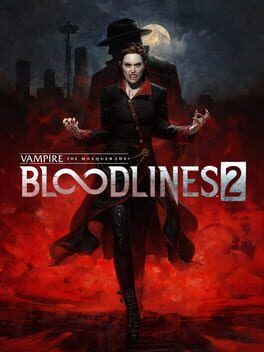

Bloodlines 2’s first DLC, Loose Cannon, hands the reins to Seattle’s sheriff and finally lets you lean on guns. We break down what the expansion adds, how it might change combat, and whether it hints at a smarter long‑term plan from Paradox.
Vampire: The Masquerade – Bloodlines 2 has been quietly rebuilding itself since launch, trading on patches and small quality‑of‑life fixes rather than big, flashy expansions. Loose Cannon is the first step toward changing that, a character‑focused DLC that pulls the camera away from Phyre and onto Benny Muldoon, Seattle’s gun‑happy former sheriff. It is also the first time Bloodlines 2 properly leans into firearms as a core part of the fantasy instead of a situational afterthought.
The obvious question is whether this is actually substantial enough to help the game’s post‑launch recovery, or if it is just an atmospheric side story with a cool coat of paint.
A Sheriff With Something To Prove
Loose Cannon drops you into Benny’s shoes in four new questlines set between his first encounter with Phyre and the later story mission where you confront him in the main campaign. That framing lets Paradox and The Chinese Room fill in some of Seattle’s missing connective tissue, digging into the sheriff’s history, his relationship with the Camarilla, and how the city looked before Phyre started rearranging the food chain.
Reports from the initial reveal paint Benny as exactly the kind of vampire Bloodlines 2 needed more of. He is brash, violent, foul‑mouthed and constantly on edge, the sort of sheriff who solves problems with a drawn gun and a snarl. Where Phyre is an Elder pulled between factions and cursed with a sense of responsibility, Benny is a working enforcer who understands the city block by block. That contrast alone gives Loose Cannon a different narrative flavor, closer to a street‑level crime story than the base game’s more rarefied political intrigue.
The DLC also returns to locations that felt underused in the base game, especially Lou’s underground pleasure palace. Giving Benny more time in these spaces should help Seattle feel a little less like a series of briefly visited sets and more like a city with overlapping histories.
Trading Elder Powers For A Sidearm
The biggest practical shift in Loose Cannon is that Benny is not an Elder. He does not have access to Phyre’s Telekinesis, Glide, or Heightened Senses. Instead, his entire combat rhythm pivots around his automatic 9mm, backed up by melee weapons, Brujah‑flavored discipline powers, and brutal finishers.
On paper this is a clever way to solve two of Bloodlines 2’s ongoing problems. First, giving players a fresh kit sidesteps fatigue with Phyre’s build and adds a new layer of replay value. Second, it gives Paradox room to recontextualize ranged combat without rewriting the main campaign from scratch.
Benny’s pistol is positioned as an extension of his personality rather than an optional tool. Previews describe him using it aggressively in close quarters, pairing quick shots with lunging melee strings and discipline powers like Soaring Leap and Split Second. Where Phyre’s combat can feel floaty and dominated by glide‑based repositioning, Benny’s toolkit is all about forward momentum, closing gaps, and ending fights fast.
If Paradox executes cleanly, this could finally nudge Bloodlines 2 away from its slightly awkward middle ground between immersive sim and character action game. A sheriff who is comfortable emptying a magazine into a kine problem, then finishing survivors with bare hands, fits the tone of modern World of Darkness stories and helps sell the idea that firearms have real teeth in this setting.
How Loose Cannon Might Change Combat Feel
The base game’s combat was reactive and occasionally stylish but rarely confident. Guns existed, yet they never fully integrated into how most players approached encounters. Loose Cannon is the first expansion that feels designed to answer that criticism by building an entire character around a signature firearm and the disciplines that make it work.
Stripping out Glide and Telekinesis does more than just justify a different button layout. It pushes players to think about line of sight, cover, and distance in ways that Phyre’s power set often let them ignore. Soaring Leap turns verticality into an offensive tool rather than an escape option, while Split Second’s Brujah emphasis can tie enemy control directly into your shooting rhythm.
There is also the simple psychological weight of being told that you are playing the sheriff. In theory, Benny should feel like an apex predator even without Elder status, a vampire who knows how to enforce the Masquerade through intimidation and targeted violence. That can only work if the gunplay has enough punch, feedback, and tactical nuance to support it. If Loose Cannon can make firefights feel dangerous and satisfying, that learning will be invaluable for the broader ranged‑combat overhaul Paradox has already pegged for later updates.
Firearms Today, Ranged Overhaul Tomorrow
Loose Cannon is not a full redesign of Bloodlines 2’s combat systems, but it clearly functions as a test bed for Paradox’s longer‑term plans. The studio has already flagged that a future DLC, The Flower and the Flame, will be accompanied by larger ranged combat improvements along with new modes like photo and noir filters.
Seen through that lens, Benny’s pistol is more than a cool toy. It is a way to collect data on how players actually engage with guns when the narrative and mechanics finally push them to use one. How often do players rely on the firearm versus their disciplines? Do they treat it as primary damage, an opener, or a finisher? Which enemy types and encounter layouts make shooting feel good rather than clumsy? Those are the kinds of questions Paradox can quietly answer while still marketing Loose Cannon as a character expansion.
If the DLC lands, it sets a clearer direction for future support. Instead of scattering small balance tweaks across the entire game, Paradox can anchor big mechanical experiments in focused side stories, then roll the most successful changes back into the main campaign. That is a smart way to stretch a post‑launch budget while still moving toward a more cohesive combat experience.
Is Loose Cannon Substantial Enough To Matter?
Measured purely in raw content, Loose Cannon is modest. Four questlines and a new playable perspective are not going to rewrite Bloodlines 2’s reputation overnight. Players looking for a sweeping campaign expansion or entirely new districts of Seattle will not find that here.
Where it might punch above its weight is in how it uses its scope. A tighter, sheriff‑centric story can give Seattle’s politics more texture without demanding dozens of new characters. Revisiting existing locations lets the art and level design teams deepen the world at a fraction of the cost of building everything from scratch. Most importantly, Benny’s different power set makes the same streets and alleys feel more dangerous and volatile, which is exactly what a vampire RPG should aim for.
The inclusion of a Benny‑inspired outfit for Phyre is small, but it nudges the DLC into the broader fantasy of Bloodlines 2 players building their own version of Seattle’s nightlife legend. Cosmetic tie‑ins like this help link side stories back to the main save file, which in turn keeps the DLC from feeling like a quarantined vignette.
What It Signals About Paradox’s Long‑Tail Strategy
Bloodlines 2’s road to release was messy, and the launch left it with a reputation to repair. Loose Cannon suggests Paradox is settling on a more focused long‑tail strategy built around three pillars. The first is character‑driven DLC that deepens key figures and fleshes out underused spaces. The second is targeted mechanical experiments, like Benny’s firearm‑heavy kit, that test improvements in a controlled environment. The third is a slower, steadier cadence of content, with The Flower and the Flame already penciled in for summer alongside broader features such as photo mode and noir mode.
That approach will not convert skeptics overnight, but it is the kind of incremental, disciplined support that can turn a troubled launch into a cult favorite over time. Bloodlines 2 does not need flashy live‑service events or massive annual expansions. It needs sharper systems, more confident combat, and a stronger sense that Seattle is worth haunting. Loose Cannon looks like an early, cautious step in that direction.
Whether it ends up being remembered as the moment Bloodlines 2 began its real recovery will depend on execution. If Benny’s campaign delivers punchy missions, distinctive encounters, and a pistol that finally feels worthy of the World of Darkness, it could mark the point where Paradox’s post‑launch plan starts to make sense. If it does not, Bloodlines 2 risks adding another missed opportunity to a history already crowded with them.
For now, Loose Cannon at least shows that Paradox understands what has been missing and is willing to build new content around fixing it. That alone gives Seattle’s nights a little more life than they had at launch.