
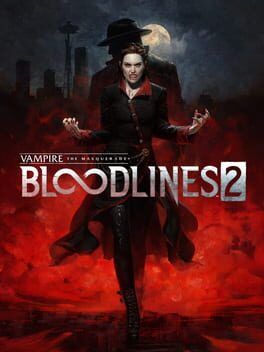
Leaked gameplay, cut quests, and modder archives are finally revealing what Hardsuit Labs’ version of Bloodlines 2 was aiming for, how it differs from The Chinese Room’s reboot, and why fans are racing to preserve this lost Seattle.
Vampire: The Masquerade – Bloodlines 2 was never supposed to have two completely different identities. Yet in 2024, that is exactly what fans are picking apart: the released game from The Chinese Room, and the broken skeleton of an earlier build from the original developer Hardsuit Labs, now surfacing through leaks, datamining, and the efforts of one of the community’s most important archivists.
Thanks to newly surfaced footage and cut content breakdowns, we finally have a clearer sense of what Hardsuit Labs’ Bloodlines 2 was actually trying to be. It looks rough, obviously unfinished, but also strangely cohesive, with a tone and structure that often feels closer to Troika’s 2004 cult classic than the game that ultimately shipped.
This is a look back at that canceled version: what the new gameplay reveals, how it contrasts with The Chinese Room’s direction, and why modders are already treating it like a lost chapter in World of Darkness history.
A fragmented vision, finally visible
For years, Hardsuit Labs’ take on Bloodlines 2 existed mostly as rumor and concept art. When Paradox removed the studio from the project in 2021 and handed development to The Chinese Room, there were vague statements about quality and vision, but no public yardstick to measure what had been lost.
That changed when legendary Bloodlines modder Werner “Wesp5” Spahl began digging into Bloodlines 2’s files and surfacing long-buried material from the Hardsuit era. On his YouTube channel, he has showcased character models, maps, and, crucially, two largely playable levels: an industrial warehouse mission and a horror-heavy hospital excursion. They are unpolished and incomplete, but they are also unmistakably Bloodlines in feel.
The warehouse sequence plays like a grimy nocturnal heist that gradually spirals into a supernatural breakdown. Players sneak and scrap through loading bays and office spaces, juggling feeding opportunities with low-ammo combat. Visual distortions warp the environment as the protagonist’s perception frays, echoing the original game’s knack for using level design to externalize mental strain. An awkward office party scenario acts as a strange little social vignette, mixing mundane corporate discomfort with vampiric hunger.
The hospital mission leans far harder into horror. It drips with atmosphere: flickering lights, echoing corridors, abrupt jumpscares. Time-shift style sequences pull the player into the building’s pre-war past, showing the same locations in different eras as the story layers on tragedy and decay. Despite being unfinished, the level already includes implemented voice acting and some surprisingly elaborate scripting. It feels like the kind of self-contained haunted-house episode Troika excelled at with the Ocean House Hotel.
Pieced together, these slices sketch out a Bloodlines 2 that wanted to be a string of dense, authored scenarios threaded through an open Seattle rather than a pure systemic sandbox or a corridor-driven action RPG. It is rough, but it has texture.
Tone: closer to Troika’s haunted urban tragedy
The most striking thing about Hardsuit’s build is tone. The leaked material wears its lineage openly. It is moody, grubby, and interested in how monstrous violence rubs up against dark humor and painfully ordinary human spaces.
Both the warehouse and hospital show an obsession with place. Environments are not just combat arenas, they are stories told through clutter, lighting, and small interactions. A bland office party full of oblivious mortals becomes an anxiety machine for a hungry vampire. A hospital that has seen a century of suffering becomes a layered ghost story accessed through temporal slipstreams.
This carries over into how the protagonist is framed. The distorted visual effects during moments of strain suggest that Hardsuit wanted to embed psychological instability into the basic language of the UI and camera work. Reality bending around the player feels like an attempt to recapture Bloodlines’ tradition of clans like Malkavians, whose worldview warped the entire presentation.
Compared to the cleaner and more straightforward tone of The Chinese Room’s release, Hardsuit’s version is messier and more abrasive. Dialogue snippets and quest setups that have surfaced hint at a darker, sardonic edge, less concerned with accessibility and more with leaning into the uncomfortable, tragic absurdity that defined the original.
Systems and structure: immersive sim DNA in a modern shell
Even in its incomplete form, the Hardsuit build shows a systemic ambition that edges toward immersive sim territory. The warehouse mission in particular suggests multi-path infiltration options, with routes that cater to stealth, direct aggression, or manipulation of human NPC behavior. Lighting, verticality, and line of sight appear to matter, and the presence of feeding opportunities mid-mission implies a design where resource management and predation are baked into encounter design, not just bolted on as a side mechanic.
Combat, as seen in the footage, looks weighty and slightly scrappy, with close-quarters brutality that clearly had not gone through final tuning. Yet you can see the contours of a system built around managing distance, crowd control, and discipline cooldowns, rather than pure button-mashing spectacle.
The horror-heavy hospital level shows off a different facet, centered more on scripted scares, environmental storytelling, and puzzle-like traversal during time-shift segments. Taken together, they hint at a campaign structured like a sequence of strongly themed episodes, each pushing different aspects of vampiric power and masquerade pressure.
Crucially, the leaked content suggests a game trying to balance authored narrative beats with player expression within levels, in a way that feels more directly comparable to Dishonored or Deus Ex than to a narrative adventure.
The Chinese Room’s Bloodlines 2: a cleaner, narrower reimagining
In contrast, the Bloodlines 2 that The Chinese Room rebuilt and eventually shipped is more focused, streamlined, and accessible, but also narrower in some key ways.
The new version leans heavily into a narrative-driven, quest-hub structure. It favors clearly signposted objectives, heavier reliance on cutscenes, and a more tightly curated emotional arc for its protagonist. Where Hardsuit’s levels seem built around letting you poke at systems and re-route missions through different skills or playstyles, The Chinese Room’s take is more about delivering a consistent atmosphere and story, punctuated by combat encounters that feel more authored and less emergent.
Visually and tonally, The Chinese Room’s Seattle is cleaner and more stylized. It is still dark and rain-slicked, but it is framed more like a prestige TV drama than a grimy PC RPG from the mid 2000s. Dialogue leans into emotional clarity and character-driven drama, with less of the wild tonal whiplash that Troika and, it appears, Hardsuit were more comfortable with.
This is not inherently a bad direction. Many players appreciate the tighter production values and more guided experience. But side by side with the Hardsuit footage, you can feel the shift. Where Hardsuit seemed to be chasing a modernized immersive-RPG, The Chinese Room delivered a narrative action RPG that sits closer to contemporary genre expectations.
Two Seattles, two design philosophies
Looking at both incarnations, you can see two competing visions for what a modern Bloodlines should be.
Hardsuit’s Seattle, as implied by the surviving material, is a patchwork of haunted micro-stories, each level a little stage for systems-driven mischief and horror. Here, the city is less a backdrop and more a network of pressure cookers. The emphasis is on exploration within spaces, on testing the limits of stealth, combat, and social manipulation, and on letting the weirdness of World of Darkness seep into environmental design.
The Chinese Room’s Seattle, by comparison, is a more cohesive narrative tapestry. Neighborhoods are story hubs, characters are center stage, and missions push you along a more clearly defined emotional journey. The systemic flexibility that Hardsuit was gesturing toward gives way to crafted beats and a more uniform tone.
Both approaches have merit, but they speak to very different fantasies. One is about being a predator improvising in the shadows of a living city. The other is about inhabiting a curated vampire drama with strong authorial control.
Modders as archivists: Wesp5 and the rescue of a lost build
For many fans, the most encouraging part of this whole saga is not the leaks themselves, but who is handling them. Werner “Wesp5” Spahl is not just another YouTuber chasing clicks. He is the reason the original Bloodlines is still playable and evolving in 2024, thanks to his long-running unofficial patch that has fixed countless bugs, restored cut content, and even integrated entirely new questlines built from Troika’s discarded assets.
His involvement with Hardsuit’s Bloodlines 2 material immediately reframes it from simple leak fodder into a kind of community-led archival project. By cataloging maps, characters, and levels, and by clearly labeling the footage as unfinished work in progress rather than some secret “better” version, he is preserving a snapshot of an important, turbulent moment in RPG history.
The parallels to his work on Bloodlines 1 are hard to ignore. Back then, Troika’s slashed content and rough edges became raw material for a two-decade-long restoration effort. Now, Wesp5 is again sifting through discarded pieces of a vampire RPG, asking what can be saved, what should remain a curiosity, and how to honor the original creators without misrepresenting their intentions.
Can the Hardsuit build be restored or modded in?
The natural fantasy for many fans is obvious: if Wesp5 could restore so much cut content in Bloodlines 1, could he and other modders eventually resurrect parts of Hardsuit’s Bloodlines 2 inside the released game?
Technically, this is far more complicated than importing a few unused maps. The Chinese Room’s Bloodlines 2 is not just a reskin of Hardsuit’s work, it is a heavily reworked project with different level design assumptions, narrative structures, and likely substantial engine-level divergences. Porting over entire missions or systems would mean wrestling not just with assets, but with scripting frameworks, AI behavior, UI, and progression logic that may no longer align.
Early commentary from Wesp5 and coverage by outlets like Rock Paper Shotgun, PC Gamer, and PCGamesN suggest that while there is a slim possibility of some form of integration, fans should temper expectations. At best, we might see standalone modded experiences that use salvaged Hardsuit assets to build tribute levels or non-canonical side stories, rather than a full reconstruction of the canceled campaign.
Yet even that limited outcome would matter. It would turn these scraps from curiosities into playable artifacts that future players can visit, like wandering through a museum of paths not taken.
Preserving the World of Darkness’ missing chapter
The saga of Bloodlines 2 now spans studio upheaval, creative overhauls, and two starkly different games sharing one title. Hardsuit Labs’ build, finally visible in flickering, janky form, is no longer just a cautionary tale about troubled development. It is a concrete, playable reminder that there was once another vision for what a modern World of Darkness RPG could be.
Modders and archivists are making sure that vision does not simply vanish into corporate archives. Through patient documentation, cautious sharing, and a deep respect for both Troika’s legacy and Hardsuit’s doomed effort, they are turning a canceled build into an object of study and, eventually, perhaps even a platform for new community-made stories.
The Chinese Room’s Bloodlines 2 is the version that will live on store shelves and review aggregators, debated and patched and modded for years to come. But somewhere inside its files, and on hard drives maintained by people like Wesp5, the ghost of Hardsuit’s Seattle lingers. It is incomplete, contradictory, and often barely functional. It is also a rare and precious thing: a lost sequel that, thanks to the community, refuses to fade into myth.