
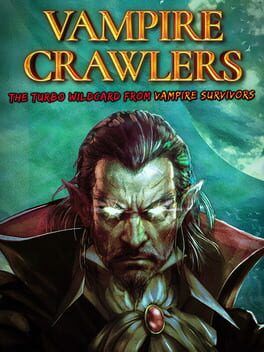

Poncle’s surprise spin-off ditches bullet heaven for a first-person, card-driven dungeon crawler that keeps the same busted power fantasy. Here is what the new release date trailer tells us about combat flow, progression, and how it could grow the Vampire Survivors brand.
On paper, Vampire Crawlers: The Turbo Wildcard from Vampire Survivors sounds like a hard left turn. Poncle is taking one of the defining auto-shooting “bullet heaven” hits of the last few years and rebuilding it as a first-person, turn-based deckbuilder. The new release date trailer makes it clear this is not a reskin or a quick cash-in, but a deliberate attempt to bottle the same runaway escalation of Vampire Survivors inside a very different structure.
Release date, price, and platform rollout
The trailer confirms Vampire Crawlers: The Turbo Wildcard launches on April 21, 2026. Poncle is sticking to the same “cheap but irresistible” pricing that helped the original blow up. Crawlers is set at $9.99 / £9.99 / €9.99, with a ¥1,200 tag in Japan. For a full-fat spin-off with new systems and a new perspective, it sits in that sweet spot where impulse buys and curiosity add up fast.
This time poncle is not waiting years to escape PC. Crawlers lands on PlayStation 5, Xbox Series consoles, Nintendo Switch, and PC via Steam and the Microsoft Store on day one, with mobile versions for iOS and Android arriving later. It will also be part of Xbox Game Pass at launch, which quietly matters a lot for a strategy-heavy spin-off. Players who bounced off Vampire Survivors’ frantic pace or never tried it now have a frictionless way to sample the brand in a more thoughtful format.
From bullet heaven to deckbuilding dungeon crawler
Where Vampire Survivors is about steering a tiny sprite through oceans of enemies while your build plays itself, Vampire Crawlers zooms the camera into the dungeons those hordes spilled out of. It plays as a first-person, blobber-style dungeon crawler that advances in discrete steps. Every movement, turn, and attack feeds into a “Turboturn” loop governed entirely by cards in your deck.
This genre pivot matters for poncle in two big ways. First, it proves that the studio sees “Vampire Survivors” less as a specific auto-shooter and more as a wider design ethos built on ridiculous escalation, tight runs, and low-friction replayability. Second, it plugs the brand into the booming deckbuilder and turn-based tactics space without abandoning what made it distinctive. Instead of trying to turn Survivors into yet another run-based action roguelite, poncle is planting its flag in a niche that still has room for a breakout hit.
What the trailer shows about combat flow
The release date trailer is the clearest look yet at how Crawlers actually plays, and it leans hard on the slogan of “deal world-ending combos and blitz through infested dungeons.” In the footage, the player advances tile by tile through cramped, grid-based corridors in a pixelated Italian countryside gone wrong. Encounters lock you into a first-person battle view, where enemies line up and your entire toolset is expressed through cards drawn into your hand.
Each Turboturn appears to be a compact decision space. You line up a small sequence of cards, then cash them out in one explosive resolution. The key twist is that cards stack and amplify one another. Playing certain cards in succession supercharges the next effect, turning what looks like a modest attack into a chain reaction of status effects, splash damage, and oversize crits. It is the same design instinct that let a half-baked Garlic run in Vampire Survivors suddenly snowball into screen-melting nonsense, but here it is articulated through card text and synergies instead of passive weapon evolutions.
The trailer repeatedly shows enemies disintegrating in a single overbuilt combo. It lingers on oversized damage numbers and cascading animations that resolve almost faster than you can parse them. That pacing is crucial. Many deckbuilders lean methodical and slow. Crawlers wants you to make quick, greedy choices, then watch the Turboturn detonate in a blur. It is still turn-based, but it looks tuned to be played at a snappy tempo closer to Survivors’ 20-minute sprints than a one-hour tactical crawl.
Combat also seems built for flexible difficulty in how you approach a run moment to moment. The trailer footage and store descriptions emphasize that you can be either deliberate and tactical, carefully constructing a combo line, or you can slam cards rapidly to keep the dungeon’s rhythm fast and loose. That duality should broaden the appeal: systems-minded deckbuilding fans can min-max the exact order of operations, while existing Vampire Survivors players can chase the same “numbers go up” spectacle without feeling like they signed up for a heavy tabletop sim.
Progression: translating the snowball into cards
If Vampire Survivors is built around passive experience orbs and evolving weapons, Vampire Crawlers shifts that snowball into deck construction and dungeon routing. The latest trailer, backed up by its store page and press writeups, shows the same fundamental arc. You enter dungeons weak, pick up card rewards and upgrades as you level, and steadily assemble a build that stops being fair.
Leveling in Crawlers appears to feed into a choice-driven upgrade system where you regularly pick between new cards, enhancements to existing ones, and possibly relic-style passives that warp your whole deck. The combo stacking at the heart of Turboturns means that every decision has multiplicative potential. A card that seems minor in isolation might become the keystone of a devastating chain if you already lean into its associated element or archetype. That captures the spirit of Vampire Survivors’ last five minutes, where a build that felt barely viable suddenly erases bosses before their sprites fully appear.
The Italian countryside dungeon framing also looks like more than window dressing. Environments shown in the trailer echo familiar Vampire Survivors maps, but seen from eye level, they become twisting mazes with side paths and rooms. That structure gives poncle a way to add light exploration and treasure-hunting to the progression loop. Dead ends in Survivors often held chests or special pickups. In Crawlers, those detours can house elite battles, stronger rewards, or events that mutate your deck.
Runs are still clearly designed to be repeatable. The roguelite label suggests some form of persistent progression, whether it is meta-upgrades, new card pools, or starting bonuses for specific characters. That longer-term drip is what kept Survivors on people’s hard drives for hundreds of hours. If Crawlers finds the right balance between short-term busted decks and steady account-level unlocks, it can replay as compulsively as its predecessor even while operating in a slower, more considered genre.
Returning faces, new roles
Crawlers does not leave its cast behind. The trailer highlights that you begin by picking from familiar Vampire Survivors characters, and that choice directly shapes your starting deck and early-game curve. Survivors’ heroes were essentially bundles of a starting weapon and passive traits. Here, they can be more sharply defined archetypes. A projectile-heavy character might start with multi-hit attacks and cheap chain starters, while a tankier pick could lean on block, sustain, or taunts that stall enemies while you assemble a combo.
Those starting biases are important in a card game. They give each run an identity from turn one and help replicate the pick-a-weapon vibe of the original. They also give poncle easy vectors for DLC or free updates. Adding a single new character in Crawlers means a new base deck and new interactions with the existing card pool, which in turn gives the whole community fresh build puzzles to solve. Given how much Vampire Survivors grew with updates and expansions, Crawlers’ character system looks tailor-made for live support.
Why this spin-off could grow the Vampire Survivors brand
The big play with Vampire Crawlers is not just “try a new genre.” It is to prove that Vampire Survivors can support multiple subseries built on its core pleasures. Bullet heaven was the hook. The real secret was lean, readable systems that escalate into excess inside short runs. Crawlers takes that skeleton and swaps muscles, asking what happens if you replace pure dodging with hand management and route planning.
From a brand perspective, the move makes sense. Poncle gets to chase a deckbuilder audience that might not have touched the original, while giving existing fans a new context for their favorite cast and item tropes. At the same time, the price point stays low enough to keep expectations in check and foster experimentation. If Crawlers works, “from Vampire Survivors” becomes a reliable label for tightly scoped, replayable experiments across adjacent genres, not just a reminder of one breakout hit.
The trailer itself signals confidence. There is no overexplaining or defensive justification for the shift. Instead, it puts stylish first-person dungeon shots next to absurd damage sequences and a neat gag about the identical prices in different currencies. That levity is part of why Vampire Survivors resonated. Crawlers looks ready to keep that identity intact even as it trades twin-stick jukes for Turboturn math.
With the April 21 launch lining up on every major console and PC, and with Game Pass support lowering the barrier further, Vampire Crawlers: The Turbo Wildcard is positioned to be more than a curiosity. If poncle sticks the landing on its combat flow and progression pacing, this could be the moment Vampire Survivors stops being a one-genre wonder and starts looking like a small but durable ecosystem of “turbo” roguelites.