
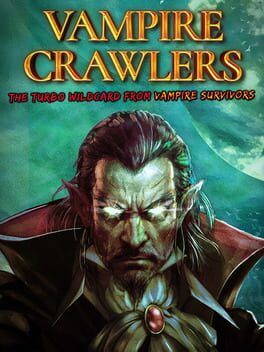

Ahead of the free February PC demo, we dig into how Vampire Crawlers translates Vampire Survivors’ screen-filling carnage into a first-person, turn-based deckbuilder, and what fans should pay attention to in its party tools, positioning and progression systems.
Vampire Survivors is all about moving as little as possible while the screen melts around you. Vampire Crawlers takes that same power fantasy and asks a different question: what if you had to plan every ridiculous combo before it goes off?
Poncle’s first spin off, co-developed with Nosebleed Interactive, reimagines Survivors’ chaos as a first-person, turn-based dungeon crawler. It keeps the familiar faces, relics and tone, but swaps stick-flicking for hand management, party positioning and a new Turboturn system that tries to make a card game feel as explosive as a bullet heaven.
With a free PC demo dropping in February as part of Steam Next Fest and a simultaneous Xbox trial, this is the first proper chance to see if the experiment works. Here is how Crawlers is remixing the formula and what to look for when you jump into the demo.
From idle juking to deliberate dungeon crawling
Vampire Crawlers shifts the camera into first person and drops you into tile based dungeons that feel closer to a 90s JRPG than an idle roguelite. Instead of kiting rings of bats in an open arena, you are pushing through corridors and rooms, choosing doors, hunting treasure and triggering encounters.
Exploration is manual rather than menu driven. You move a step at a time, scanning for loot and enemies, and each move is a small risk because you are never sure which tile will kick off the next fight. The Mad Forest and other familiar locations return as full dungeons rather than flat stages, so even before combat starts there is more structure than in a standard Survivors run.
The tempo is different too. Survivors is about staying alive for 30 minutes while the density ramps up; Crawlers is built around runs that are broken into discrete battles and rest points, which is where the deckbuilding and party choices really matter.
Turboturn is Poncle’s answer to missing bullet hell
The obvious problem with converting Vampire Survivors into a turn-based game is that the original’s spectacle comes from dozens of effects firing at once. Crawlers’ solution is Turboturn.
At a basic level, fights play out like a traditional card battler. Enemies line up in front of you. You draw a hand of cards tied to your party and equipment. You play attacks, blocks, buffs and movement in sequence, then the enemy responds.
Turboturn lets you override the usual card-by-card rhythm. You queue up multiple actions, then unleash them in a single explosive volley. Animations compress, attack cards stack their effects and the screen floods with numbers and particles in a way that is instantly familiar to Survivors fans.
The key design trick is that Turboturn is not just a visual shortcut. Timing when to cash in a full hand versus playing more cautiously is a core strategic decision. In the demo, expect to experiment with:
Reading turn order and enemy telegraphs before you commit to a big Turboturn.
Using setup cards that amplify damage or apply status effects, then ending the chain with hard-hitting finishers.
Saving a defensive Turboturn to dump blocks, heals and crowd control when the enemy’s own big attacks are lined up.
When it clicks, a well built deck plus a well timed Turboturn starts to resemble Survivors’ late-game screens, just chopped into crunchy, readable turns.
Party composition: Survivors favourites become a proper team
Where Vampire Survivors focused on a single overpowered build, Crawlers pushes you to think in terms of a party. You still recruit the cast of oddballs you know from Survivors, but they now slot into clearer combat roles with their own card pools.
Each character contributes cards to your overall deck and brings passive perks that lean you toward certain strategies. In broad terms, you can expect:
Front liners who excel at soaking hits, taunting and manipulating enemy targeting.
Glass cannon casters and ranged attackers who pile on damage but need protection.
Support characters who specialise in healing, buffs, debuffs or resource generation.
The trick in the demo will be to build a line up where everyone’s cards actually talk to each other. A tank whose cards apply vulnerable or elemental tags pairs well with a damage dealer whose kit scales off those statuses. A support who feeds extra draws into the Turboturn system can turn a modest combo into a mini Survivors-style screen wipe.
Because this is a roguelite, you will likely cycle through different team members across runs. The early hours will be about learning what each character’s card archetype is actually good at and which pairings feel natural.
Why positioning suddenly matters in a Survivors game
Crawlers takes place in narrow dungeon lanes, and the turn-based battles lean into that by making position a central mechanic. Characters occupy distinct slots in the party line, and enemies frequently come in ranks of their own.
Being in the front row affects who gets hit first, which cards are even playable and how certain abilities resolve. Some attacks only strike the closest target. Others cleave through a line. A few ignore the frontline entirely and snipe the back.
The positioning game plays out on multiple layers:
Where you place each party member before combat, which defines their basic job and risk level.
How you shuffle them mid fight with movement or swap cards to dodge incoming hits or expose enemy weaknesses.
Which enemies you focus first based on their own location, since support casters and summoners often hide in the back.
Fans who are used to just circling the mob in Survivors should pay attention to how often Crawlers asks you to move bodies around, not just aim damage. Many of the nastier enemy patterns will be built around forcing bad trades if you neglect those movement tools.
Deckbuilding, Gems and Fusions: Survivors evolutions reborn as card tech
Crawlers’ progression hooks are built on a flexible card system that feels like a direct extension of Vampire Survivors’ weapon evolutions.
Every run you pick up new cards that represent attacks, skills, movement tricks and defensive options. Between fights and at specific upgrade points you slot Gems into those cards to tweak their behaviour. A Gem might add damage, change an element, increase card draw, boost armor or add on-hit effects.
Stacking the right Gems unlocks Fusions. These are upgraded or combined versions of existing cards that act like Survivors’ evolved weapons: fewer in number but much more spectacular when the Turboturn fires. In practice you are looking for:
Core cards that define your party’s gameplan, such as a multi-hit spell or a tanking stance.
Supporting Gems that push those cards over key thresholds, from just-okay damage into room-clearing numbers.
Fusion opportunities that turn a familiar effect into something that warps how you approach fights.
Even in a short demo, there should be enough drop variance to get a taste of that transformation, especially if you commit to a few focused builds across runs instead of sampling everything at once.
Meta progression and run structure
Outside of individual battles, Crawlers builds its roguelite spine out of two main layers: dungeon progression and long-term unlocks.
Within a run you are choosing routes through each dungeon, deciding when to take harder encounters for better rewards and when to detour into safer rooms with healing or shops. That adds an extra dimension to the classic Survivors question of greed versus survival.
Across runs you unlock new characters, cards and permanent upgrades. Poncle has said Crawlers is a full game with a beginning and an end rather than an endlessly escalating survival mode, so expect a structure closer to a traditional campaign stitched together from semi-randomised dungeons, with meta progression smoothing the difficulty curve.
For the demo, focus on how generous early unlocks feel. If you are seeing new tools and party options every few runs, that is a good sign that the full game will keep fresh builds coming.
What to watch for in the February PC demo
With the Steam Next Fest demo acting as Crawlers’ debut, there are a few specific things Survivors fans should pay attention to.
First is whether Turboturn really sells the fantasy. When you empty your hand, does it feel like popping off in late-game Survivors, or more like a slightly faster Slay the Spire turn? Pay attention to how readable the chaos is and whether you feel encouraged to experiment, or to hoard cards for fear of misplaying.
Second is how satisfying party tools and positioning are. The best dungeon crawlers make decisions about who stands where feel as important as what spell you cast next. If you find yourself regularly swapping characters, protecting squishy allies and exploiting enemy formations, that is Crawlers’ tactics layer doing its job.
Third is the pace of progression. A good demo run should be long enough for a couple of meaningful upgrades and at least one Fusion moment where your deck suddenly spikes in power. If you are resetting runs without ever seeing that kind of payoff, the full game may need tuning.
Finally, keep an eye on how approachable it all feels. Poncle is openly targeting players who normally bounce off card games. Tooltips, UI telegraphs and generous early builds will be critical, and the demo is our first look at whether Crawlers can bridge that gap.
Vampire Survivors turned a tiny early access experiment into a phenomenon by understanding exactly what felt good about mowing down waves of monsters. Vampire Crawlers is a far bolder pitch, but if the February demo can sell its vision of turn-based carnage, Poncle might have found a new way to make time disappear.