
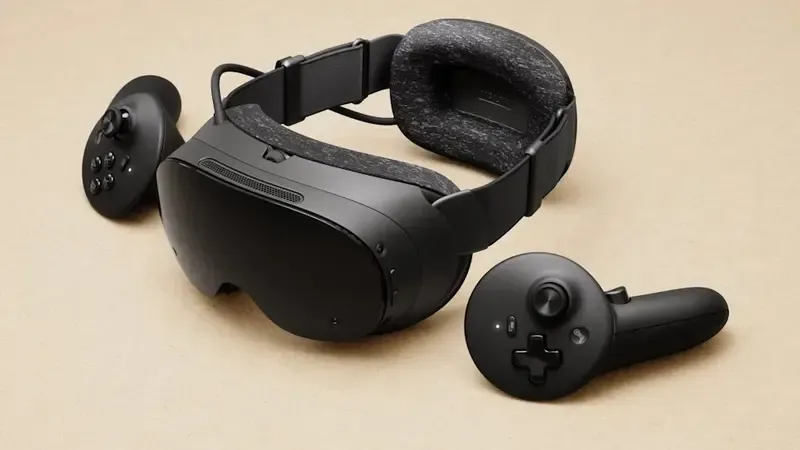

Qualcomm's reported double-digit Snapdragon price increase adds a new cost problem for Valve's still unreleased Steam Frame VR headset, while buyers still wait for official specs, pricing, and timing.
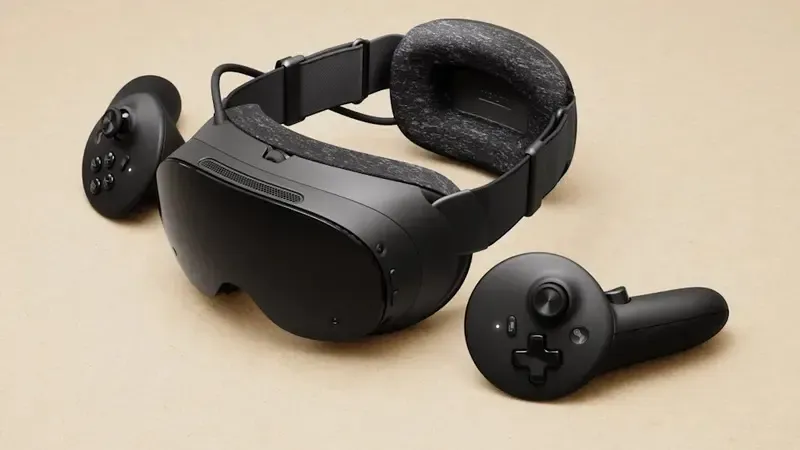
Image: dlcompare.com
A new component squeeze hits before Valve has named the price
Qualcomm has reportedly told customers that prices on its products are going up by a double-digit percentage for chips shipped after September 1, 2026, creating a fresh cost problem for Valve’s still unreleased Steam Frame VR headset. GamingOnLinux, VideoCardz, Notebookcheck, DLCompare, and PC Gamer all tie the report back to Bloomberg, which said Qualcomm sent customers a letter explaining that it could no longer absorb higher supplier costs.
That is the strongest concrete development here: the reported price increase is not a Valve announcement, and it does not confirm a Steam Frame price hike. It does, however, land directly on one of the headset’s most important reported parts. GamingOnLinux says Valve’s upcoming VR set will use a “Qualcomm 4 nm Snapdragon 8 Gen 3,” while VideoCardz and Notebookcheck also identify the Steam Frame’s processor as Snapdragon 8 Gen 3. If Valve is buying that silicon after Qualcomm’s new pricing takes effect, the headset’s bill of materials becomes harder to keep in check.
There is a small but useful source wrinkle. GamingOnLinux cites Bloomberg’s report as coming from July 24, Notebookcheck refers to June 24, and DLCompare says June 26. Those outlets are not aligned on the date they repeat, but they are aligned on the substance: Qualcomm reportedly warned customers of a double-digit increase taking effect September 1, 2026. For readers tracking Valve VR hardware, the date that affects hardware planning is the effective date, not the article-date confusion around the Bloomberg report.
The Steam Frame’s reported parts list is already expensive
The Qualcomm chip price rise would be easier to shrug off if the Steam Frame VR headset looked like a low-cost accessory built from flexible parts. The reporting points in the other direction. GamingOnLinux says the headset is expected to pair the Snapdragon 8 Gen 3 with 16GB of unified LPDDR5X RAM. VideoCardz and Notebookcheck add that the device includes either 256GB or 1TB of UFS storage, depending on configuration.
That combination matters because the processor is only one pressure point. Notebookcheck reports that storage and memory shortages had already affected Valve’s Steam Machine and Steam Frame release plans, with AI data centers competing heavily for components. DLCompare similarly points to rising memory and flash storage costs during the AI-driven component shortage. VideoCardz says all three categories, Snapdragon processor, LPDDR5X memory, and UFS storage, have faced tighter supply or rising costs.
For a standalone headset, those parts are not decorative. The system-on-chip is the engine that determines how much local processing the device can do without a PC. Unified memory affects how comfortably the software stack and games can run. Storage decides how many VR titles, updates, and apps fit before users start managing space like it is a tiny launch-window handheld. Until Valve confirms final specs, performance claims are premature, but the reported component stack shows why price pressure could become visible to buyers rather than remaining a quiet supplier problem.
September 1 creates a first-batch question Valve has not answered
The date attached to Qualcomm’s reported increase is important because it separates inventory that may already be in Valve’s pipeline from future production. VideoCardz is careful on this point: Qualcomm’s reported increase does not prove Valve will change Steam Frame pricing, because Valve may have secured some chip supply under earlier contracts. Units built with processors shipped after September 1, however, could carry a higher bill of materials.
That is where the situation becomes awkward for anyone waiting on the Steam Frame. If Valve already has enough earlier-priced components for an initial run, it could launch at one price and face pressure later when that stock is exhausted. GamingOnLinux raises a similar possibility, suggesting Valve may have to raise pricing after initial inventory sells through, or delay while it settles on a new price. Those are interpretations based on the reported supply change, not announced Valve plans.
Notebookcheck has also reported signals that anticipation is building, including suspected Steam Frame shipments, a Steam backend “Welcome Tour,” a “Great on Steam Frame” Steam Store category, and Steam Frame Verified games. Those are launch-adjacent signals as described by Notebookcheck, but they are not a confirmed release date, price, or retail configuration. For buyers, that distinction is the whole story: activity around the device can make launch feel close, while the hardest purchasing questions remain unanswered.
Unofficial price expectations are drifting upward
Valve has not announced a final Steam Frame price in the supplied reporting. That leaves a vacuum, and hardware cost inflation is filling it quickly. Notebookcheck says buyers are still waiting for a confirmed price and release date, while also reporting that earlier optimistic projections placed the base model around $800. The same outlet now describes pricing above $1,000 as realistic, while noting that a modest Snapdragon increase alone would not necessarily add hundreds of dollars.
DLCompare goes further into market speculation, saying there is growing speculation the headset could launch above $1,000, €860, or £740 once Qualcomm’s reported increase is combined with memory, storage, manufacturing, and logistics costs. That should be treated as speculation, not a leak and not guidance from Valve. It is also consistent with the broader direction described across the sources: the headset’s expected parts have become harder to price cleanly.
The comparison point hovering over this is Valve’s earlier VR hardware. Notebookcheck refers to the Steam Frame as a successor to the Index and says Valve had aimed for a lower cost than the $999 Index predecessor. If that target was real, the current component market makes it harder to hold. Valve can choose to absorb margin, reduce hardware ambition, raise MSRP, stage configurations carefully, or delay until costs settle. None of those choices has been confirmed.
VR buyers should budget for uncertainty, not rumors
If you are waiting on Valve Steam Frame details before buying a headset, the practical answer is patience with a sharper checklist. The reported Qualcomm chip price rise is a credible cost-pressure signal, but it is not the same thing as an official Steam Frame price increase. Do not treat $800, $1,000, or any regional figure as a preorder number until Valve publishes it.
The better question is how much risk you are willing to carry before the final spec sheet arrives. A standalone VR headset lives or dies by display quality, tracking, comfort, battery behavior, thermals, software compatibility, and controller design as much as its chip name. The supplied sources focus on the Snapdragon 8 Gen 3, LPDDR5X memory, and UFS storage, but they do not confirm the full consumer package. That means buyers still cannot judge whether a possible premium price would be justified by the parts that shape everyday play.
There is also a timing issue. If Qualcomm’s higher pricing applies to products shipped after September 1, a late-2026 release window, as DLCompare describes in expectation terms, would put Valve close to the new component-cost environment. If launch comes earlier or initial inventory was secured before the increase, the first wave may be insulated. If production extends deep into the higher-cost period, later availability could be tighter or more expensive. That is the scenario to watch.
Valve’s unanswered questions are now harder to dodge
The Steam Frame is carrying several unresolved questions at once: final price, launch date, confirmed retail specs, configuration split, regional availability, and how Valve positions it against existing VR ecosystems. Qualcomm’s reported Snapdragon price increase does not answer any of those questions, but it makes the pricing one more urgent.
For players who discover VR through compact, clever games rather than showcase spectacles, affordability matters as much as raw silicon. A headset that prices out curious buyers narrows the audience for experimental VR design, rhythm games, tactile puzzle spaces, and the small studios that benefit when hardware becomes easier to recommend. That is the human side of this supply-chain story: component inflation can quietly decide which devices feel approachable.
The clean read is this. Bloomberg’s reported Qualcomm letter, as cited across the hardware press, is a real warning sign for Valve’s cost structure. The Steam Frame’s reported Snapdragon 8 Gen 3, 16GB LPDDR5X memory, and UFS storage make it exposed to the same component market that has already complicated other Valve hardware planning, according to Notebookcheck, VideoCardz, GamingOnLinux, and DLCompare. But no source in the provided material confirms a Valve price, a Valve delay, or a Valve price increase. Until Valve speaks, the smartest move is to treat every number as provisional and every launch signal as incomplete.