
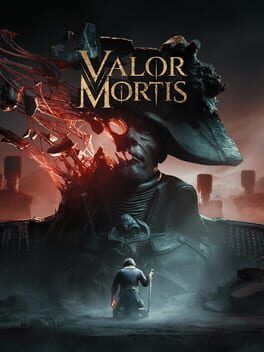

The new Valor Mortis gameplay overview trailer details transmutations, catalysts, and Ambers, positioning build crafting as the key hook before its October 13 Game Pass debut.
Image: IGDB
Store links: Valor Mortis on Steam
Valor Mortis is selling its Soulslike pitch through builds
Lyrical Games’ new Valor Mortis gameplay overview is doing the important pre-launch work that a first-person Soulslike needs to do before players commit: it is explaining how progression, survivability, and playstyle choice fit together. According to reports from GamingBolt, MonsterVine, Noisy Pixel, Console Creatures, and GamingTrend, the trailer breaks down William Dowsett’s weapons, Valor Mortis transmutations, Catalysts, Ambers, and death loop ahead of the game’s October 13, 2026 launch.
The timing matters because Valor Mortis is arriving day one on Xbox Game Pass, according to MonsterVine, Noisy Pixel, Console Creatures, and GamingTrend, while also launching on PlayStation 5, Xbox Series X|S, and PC via Steam. Those same reports list the standard price at $39.99, with a $59.99 Deluxe Edition that includes a major story DLC planned for 2027, several cosmetic packs, and post-launch support through free updates whose contents have not yet been detailed.
The immediate tension is clear. Game Pass lowers the cost of curiosity for Xbox and PC players in that ecosystem, but Valor Mortis still has to prove that its first-person melee combat can support the long-term character planning that Soulslike players tend to scrutinize. The new trailer’s answer is build crafting. Rather than leaning only on atmosphere or the novelty of Napoleonic horror, the overview presents William as a character shaped by weapons, supernatural abilities, upgrade currency, and build-altering modifiers.
Transmutations give William a second layer of combat identity
The most distinct system in the trailer appears to be Transmutations, supernatural abilities William channels through his left hand. Console Creatures describes the overview as the first substantial look at the casting system, while Noisy Pixel and MonsterVine identify three examples shown in the footage: Fire, Shield, and Grapple.
Fire can set enemies burning, according to those reports, giving William an offensive option that sits apart from blades and firearms. Shield absorbs incoming damage before releasing a shockwave, which frames defense as an active choice rather than a simple emergency button. Grapple lets William move using designated grapple points, giving the system a traversal role in addition to its combat implications.
That spread is important because it suggests Valor Mortis transmutations are not being presented as isolated spells on a cooldown bar. In the trailer’s structure, they are one side of a triangle that also includes physical weapons and character upgrades. GamingBolt reports that William can use blades, flintlock pistols, and rifles while dodging and parrying, but also notes that Transmutations range from a palm-mounted flamethrower to a traversal grapple. The hook is the combination: a Claymore build that wants controlled openings may value Shield differently from a ranged or mobility-minded setup that relies on Grapple to reposition.
The sources do not provide cooldowns, resource costs, scaling rules, or how many Transmutations are in the final game. That leaves an important launch question unanswered. If Transmutations compete for scarce upgrade investment, they could become build-defining. If they are broadly available tools with limited specialization, they may function more like a universal kit. The trailer, as reported, points toward the former without confirming the full progression math.
Catalysts turn death into a build economy
Valor Mortis catalysts are the game’s clearest Soulslike inheritance. Noisy Pixel reports that Catalysts serve as upgrade currency and can be spent at Lanterns to improve stats such as health, stamina, and parry. MonsterVine reports the same, adding that the currency drops where William falls when he dies. Console Creatures similarly describes Catalysts as currency earned by defeating enemies and spent at Lanterns for upgrades.
That creates a familiar pressure pattern: every push into a hostile area is also a question of how much unspent progression the player is willing to risk. In a first-person action RPG, that risk has a slightly different flavor than in a third-person Soulslike. Reads are closer, attacks can feel more immediate, and spatial awareness depends heavily on animation clarity, sound cues, and level geometry. The overview reportedly emphasizes stamina management, light and heavy attacks, parries, and counterattacks, so losing Catalysts is likely meant to reinforce discipline rather than pure caution.
The choice of upgrade examples also gives a useful read on the game’s intended playstyles. Health is the broad safety investment. Stamina affects both aggression and survival if attacks, dodges, and defensive actions draw from the same combat rhythm. Parry investment, if it meaningfully improves the player’s defensive payoff, could support a higher-risk build that stays in close range and converts enemy pressure into damage windows.
What remains unconfirmed is the exact penalty structure. The sources say unused Catalysts are dropped at the death location, but they do not specify whether a second death before retrieval destroys them, whether bosses create special retrieval conditions, or whether Lanterns also reset enemy placement. For players planning to try Valor Mortis through Game Pass, those details will shape how forgiving the progression loop feels in practice.
Ambers are the trailer’s real build-crafting tell
If Catalysts explain how William grows, Ambers explain how Valor Mortis wants players to specialize. GamingBolt describes Ambers as “build-altering” and notes that they often carry trade-offs. One example cited by the outlet is an Amber that lets melee strikes recover more health while removing the ability to heal on demand. MonsterVine and Noisy Pixel report that Ambers are found throughout the game, equipped at Lanterns as William levels up, and used to tailor builds around different combat approaches.
That distinction matters. Stat upgrades can make a character stronger, but modifiers with trade-offs can change decision-making. The health-on-hit example pushes toward sustained melee pressure, but the loss of on-demand healing would punish poor target selection, weak stamina discipline, and failed parries. In other words, the Amber does not simply reward aggression. It asks whether the player can maintain enough control of the fight to make that aggression sustainable.
For RPG players, Valor Mortis Ambers may be the system to watch most closely at launch. Their strength will depend on whether they create meaningful forks rather than obvious best-in-slot answers. A strong Amber system would let a player build William as a parry specialist, a range-conscious musket user, a Transmutation-heavy controller, or a melee sustain fighter, with each route accepting a visible weakness. A weaker version would reduce Ambers to passive boosts that players swap only when numbers go up.
The trailer appears to be positioning Ambers as the differentiator between a competent first-person Soulslike and one with genuine build identity. That is an expectation based on the reported examples, not a confirmed verdict. The final test will be how many Ambers exist, how restrictive equip slots are, and whether late-game enemies require flexible builds or simply higher stats.
Weapons and stamina keep the RPG systems grounded in execution
The build systems would matter less if combat did not ask for commitment. According to MonsterVine and Noisy Pixel, the gameplay overview highlights stamina management, light and heavy attacks, parries, and counterattacks. Weapon choice is also presented as situational. The Claymore is described as a slow, hard-hitting two-handed blade, while the Musket is a two-handed firearm with greater range and power than William’s pistol.
That weapon spread places Valor Mortis in a delicate position. First-person melee games need readable enemy tells and consistent hit feedback, especially when parries and counterattacks are central. One More Level’s previous recognition as the developer of Ghostrunner is relevant here because multiple outlets identify the studio that way, but the trailer’s reported systems suggest a different cadence from Ghostrunner’s speed-focused swordplay. Valor Mortis appears to be asking for measured stamina expenditure, weapon matching, and build planning rather than pure momentum.
Firearms also complicate the fantasy in a useful way. Wikipedia’s sourced overview describes William as using a flintlock pistol to target weak points and stagger enemies, while noting that ammunition is scarce. The new trailer coverage expands the arsenal with the Musket, which MonsterVine and Noisy Pixel report as a more powerful ranged option than the pistol. If scarcity remains central, guns become part of the build puzzle rather than a way to bypass melee fundamentals.
The practical takeaway is that players should not read “first-person Soulslike” as shorthand for a shooter with dodges. Based on the gameplay overview coverage, Valor Mortis is being pitched as a close-range action RPG where ranged weapons, Transmutations, and Ambers feed into the same stamina-aware combat loop.
The lore hook supports the systems without answering every question
Valor Mortis is set in an alternate-history Europe devastated by war and the Crimson Plague, according to GamingBolt, with William rising from the dead to answer the call of the Emperor, implied there to be Napoleon. MonsterVine provides additional reported context from the trailer: William Dowsett is an English volunteer who joined Napoleon’s army after becoming disillusioned with the monarchy, awakens on a ruined battlefield with little memory, and hears the Emperor through a mysterious connection. The same report identifies Vincent Cassel as Emperor Napoleon Bonaparte, James Alexander as William Dowsett, and Jennifer English as The Shrike.
The Shrike appears to be a counterweight to Napoleon’s voice. GamingBolt describes her as leading a rebellion against the Emperor, while MonsterVine describes her as a rebel fighting against imperial occupation who has her own plans for William. That conflict gives the progression systems a narrative frame: William is not simply collecting power in a ruined world, he is being pulled between surviving, remembering, and deciding whom to trust.
GamingBolt also points to a nightmarish inner world that William can enter, raising questions about whether it represents his mind and why it is filling with giant versions of slain bosses. Those questions remain unanswered in the provided reporting, so they should be treated as trailer implications rather than confirmed story explanations.
For a systems-minded RPG audience, the promising part is that the lore and build structure seem to share the same theme of transformation. William is resurrected, altered, and equipped with powers that are themselves called Transmutations. Ambers then alter the rules of how he survives. The overview’s best move is connecting those ideas without spelling out the whole mystery before launch.
Release details, editions, and the sensible way to approach launch
The confirmed launch date reported across the supplied coverage is October 13, 2026. Valor Mortis is planned for PlayStation 5, Xbox Series X|S, and PC via Steam. MonsterVine, Noisy Pixel, Console Creatures, and GamingTrend report day-one Xbox Game Pass availability, while GamingBolt lists the platforms and $40 price without mentioning Game Pass in the provided text. The fuller set of reports supports Game Pass as part of the launch plan, but the difference is worth noting because not every article foregrounds the subscription angle.
Pricing is straightforward in the reports that include it. The standard edition is $39.99. The Deluxe Edition is $59.99 and includes a major story DLC planned for 2027 plus cosmetic packs scheduled between launch and that expansion, according to MonsterVine, Noisy Pixel, Console Creatures, and GamingTrend. Multiple free updates are also planned after release, but the specific additions have not been detailed in the provided source material.
For players with Xbox Game Pass, the low-risk move is obvious: try the opening hours and pay attention to how the systems interlock. The questions to answer early are whether parries feel reliable in first person, whether stamina limits create interesting decisions, whether Transmutations feel essential without flattening encounter design, and whether Ambers offer meaningful trade-offs rather than easy optimizations.
For players buying on PlayStation 5 or Steam, the trailer gives enough information to identify the appeal, but not enough to settle performance, encounter variety, or long-term build balance. The strongest confirmed reason to watch Valor Mortis is its attempt to make build crafting the center of a first-person Soulslike: Catalysts set the foundation, Transmutations define tactical options, and Ambers appear designed to change the rules of a run. On October 13, that promise gets tested outside the overview trailer.