
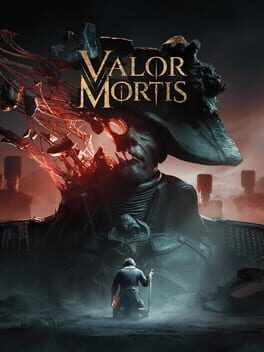

Valor Mortis brings Soulslike stamina, parries, corpse-run progression, scarce firearms, magic, and parkour into first person. Here is what sets One More Level’s upcoming action RPG apart.
Image: IGDB
Store links: Valor Mortis on Steam
Valor Mortis has a release date, a price, and a difficult pitch
Valor Mortis is scheduled to launch on October 13, 2026, for PlayStation 5, Xbox Series X/S, and PC via Steam, according to Noisy Pixel’s report on the latest gameplay overview trailer and the public Valor Mortis listing summarized by Wikipedia. Noisy Pixel also reports a $39.99 standard price, a $59.99 Deluxe Edition that includes a major story DLC planned for 2027, and day-one availability through Xbox Game Pass. Those commercial details matter because Valor Mortis is entering a crowded field of upcoming soulslike games with a pitch that can either sharpen its identity or split its focus: a first-person soulslike set in an alternate, plague-ravaged version of Napoleonic Europe.
The first-person view is the gamble at the center of the game
The defining hook is simple to describe and harder to execute: Valor Mortis takes the Soulslike rhythm of stamina pressure, precise defense, dropped upgrade currency, and dangerous checkpoints, then puts it directly behind William’s eyes. Wikipedia describes the game as a first-person action RPG and Soulslike, while GamingBolt’s overview stresses that the perspective is part of what separates it from the genre’s usual third-person silhouette reading. That shift creates the central design tension. In a third-person Soulslike, players read danger through whole-body animation, distance, and peripheral movement. In first person, every lunge, parry window, firearm shot, and dodge has to be readable through hands, weapon motion, enemy tells, sound, and camera space. The sources do not include hands-on impressions, so it would be premature to say Valor Mortis has solved that problem. What is confirmed is that One More Level is building around systems that demand clarity: perfect parries, dodges for unblockable attacks, stamina management, posture-breaking defense, and executions. If those cues land cleanly, the camera could make each duel feel close and violent rather than cramped. If they do not, the same perspective could make difficulty feel muddy. That is the main question genre fans should track before launch.
Combat is built around steel first, with guns as pressure tools
Despite the pistol, musket, and flintlock imagery, Valor Mortis is not being positioned as a first-person shooter. Wikipedia says the developers did not intend the game to be played that way, and GamingBolt reports that melee is the main focus even though firearms are part of William’s kit. The confirmed combat loop leans on light and heavy attacks, stamina costs, parries, dodges, and counterattacks. Noisy Pixel’s trailer report says different weapons are suited to different situations, naming the Claymore as a slow two-handed blade with high impact and the Musket as a two-handed firearm with more range and power than William’s pistol. The interesting part is the role ammunition appears to play. GamingBolt and Wikipedia both note scarcity, which pushes guns into a tactical lane rather than a primary damage routine. Wikipedia says the flintlock pistol can target weak points and stagger enemies. In practical terms, that suggests firearms may function as interrupts, openers, or punish tools within a melee tempo. That is a better fit for a Valor Mortis soulslike than a simple genre mashup, because Soulslike combat is usually about commitment. A shot that staggers at the right moment can support that rhythm. A gun that deletes risk would flatten it.
The most promising readability tool may be aggression itself
One of the sharper confirmed ideas in Valor Mortis gameplay is the health-restoring counterattack. GamingBolt reports that immediate counterattacks can replenish spent health, encouraging players to press forward after taking damage instead of automatically retreating. That is a familiar action-game pressure valve, but in first person it has extra importance. A system that rewards quick answers can teach timing through motion: block, absorb the hit, return the blow, regain footing. It gives the player a reason to stay locked into the enemy’s animation rather than circling away to reset every exchange. Defense still appears central. Wikipedia says William can block incoming attacks at the cost of a small amount of health, dodge unblockable attacks, and parry with the right timing for major damage. GamingBolt adds that perfect parries can break posture and create openings for violent executions. Read together, the confirmed design points toward a combat language of recognition and response. The player watches for what can be blocked, what must be dodged, what can be parried, and when a counterattack can turn damage into momentum. That structure is exactly where a first-person soulslike either earns trust or loses it. The spectacle of a close camera is secondary to whether the player understands why they lived or died.
Progression uses familiar Soulslike stakes, then adds build modifiers
Valor Mortis is using a recognizable risk-reward economy. Noisy Pixel reports that Catalysts are the upgrade currency and can be spent at Lanterns to improve stats such as health, stamina, and parry. Wikipedia similarly says Catalysts upgrade William’s stats, stamina, and health, and that unused Catalysts are dropped at the death location when William is defeated. GamingBolt describes Lanterns as bonfire-style checkpoints where resting replenishes healing vials while enemies respawn, and says players get one chance to retrieve dropped resources after death. The additional build hook is Ambers. According to Noisy Pixel, Ambers are found throughout the game and equipped at Lanterns as William levels up, acting as modifiers that let players shape a build around different combat approaches. That is the progression detail worth watching, because first-person melee games often live or die on how much expression they allow without breaking encounter readability. Stats such as health and stamina are legible. Parry investment could directly support high-risk defense. Ambers, depending on their range and restrictions, could be the layer that lets one player lean into firearms, another into Transmutations, and another into close-range blade timing. The sources do not provide a full Amber list, so the depth of that system remains unconfirmed.
Transmutations and traversal give Valor Mortis its set-piece identity
Valor Mortis also has a supernatural toolset called Transmutations. Wikipedia says William gains magical abilities as he progresses, including bursts of flame. Noisy Pixel’s trailer report gives more detail: William uses Transmutations through his left hand to attack, defend, or move through the environment. Fire can burn enemies, Shield absorbs incoming damage before releasing a shockwave, and Grapple lets William move between designated grapple points during exploration and combat encounters. GamingBolt also points to parkour traversal as part of the game’s identity. That combination is where One More Level’s background becomes relevant. Wikipedia notes that the Poland-based studio is applying experience from first-person games to the Soulslike genre, though the scraped source text omits the titles named in parentheses. Even without leaning on missing title names, the design logic is clear from the reported systems: Valor Mortis wants encounters to be about space as much as stamina. A grapple point in combat changes target priority. A shield that stores pressure before a shockwave changes how long the player can hold ground. Fire gives the left hand an offensive beat between blade swings and scarce shots. The setting supports that escalation. The game follows William, described by Wikipedia as a British soldier in Napoleon’s Grande Armée who is resurrected by Napoleon, through an alternate 19th-century Eastern Europe consumed by supernatural plague. GamingBolt describes cursed battlefields and Napoleon’s voice in William’s skull. Those are strong ingredients for oppressive routes, sudden arenas, and boss spaces built around war imagery twisted into horror.
Who should keep Valor Mortis on the radar, and who should wait
For Soulslike regulars, Valor Mortis is worth tracking because its confirmed systems are not cosmetic swaps. First-person melee, scarce firearms, posture pressure, counterattack healing, Lantern checkpoints, dropped Catalysts, Ambers, Transmutations, and grapple traversal all touch the way players will read fights and build momentum. For action fans less attached to Soulslike punishment, the $39.99 price reported by Noisy Pixel and the day-one Xbox Game Pass release lower the barrier, but the sources still describe familiar genre friction: enemy respawns, lost currency on death, stamina management, and precise defensive timing. The sensible caution is performance and feel. None of the provided sources include final review code, platform performance targets, PC requirements, or hands-on verdicts. The Steam store page exists for Valor Mortis, but the captured source text is largely an age-check and navigation shell rather than detailed specifications. If combat readability is your dealbreaker, wait for final previews or reviews that specifically discuss enemy tells, camera behavior, parry timing, and how the game handles multiple attackers in first person. If the idea of a Napoleonic plague nightmare built around close-quarters steel, limited shots, and magic sounds like the kind of genre experiment you want to support, Valor Mortis has enough confirmed design intent to belong on a 2026 watchlist.