
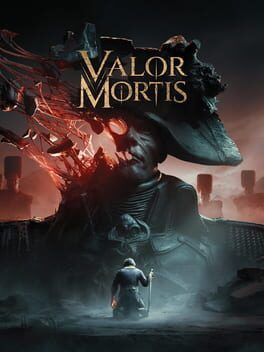

Valor Mortis has slipped from September to October 2026 to escape an absurdly crowded launch window. We break down why the delay makes sense, what the new demo reveals about its brutal first‑person combat and Ghostrunner‑style mobility, and how One More Level is carving out space in a stacked soulslike scene.
October 13 2026 has become the new rallying date for Valor Mortis, the Napoleonic first person soulslike from Ghostrunner studio One More Level. Originally pencilled in for September 24, the game was one of many that tried to jump out of Grand Theft Auto 6’s gravity well only to discover that everyone else had the same idea. September 2026 quickly turned into a traffic jam of prestige releases, and Valor Mortis quietly became one of the first to blink.
According to One More Level’s public statements and coverage from outlets like IGN, Game Informer and Eurogamer, the decision was not about production woes. The build is content complete enough to support an expanded Steam demo and hands on sessions. The problem was visibility. Late September is currently loaded with titles such as Control Resonant, Silent Hill: Townfall, Onimusha: Way of the Sword and several others that shifted away from October and November to avoid clashing with Rockstar’s juggernaut.
For a new IP that has to sell players on a left field pitch, “first person Napoleonic horror soulslike,” releasing on the same week as multiple big budget sequels would be asking to be ignored. Moving to mid October gives Valor Mortis a little more breathing room and turns a short delay into a marketing decision rather than a red flag.
The studio has tried to balance that disappointment with something tangible. Alongside the delay, One More Level pushed out an upgraded demo on Steam and at events, expanding what Rock Paper Shotgun previously described as a tense proof of concept into something closer to a vertical slice. The build trades the controlled corridors of that first show floor demo for broader arenas, more side routes and a better look at the game’s movement toolkit.
Valor Mortis is still built on a punishing foundation of first person swordplay. You play a resurrected soldier in a twisted, plague choked vision of the Napoleonic wars, facing both human foes and warped monstrosities. Encounters revolve around tight parries, deliberate swings and read based defense rather than combo memorisation. In the RPS preview, James Archer notes that simply occupying a first person view makes standard soulslike tricks feel more intimidating than they do in third person. Enemies take up more screen space, their attack tells are harder to read at a glance, and cramped interiors feel hostile before combat even starts.
That perspective does a lot of heavy lifting for the mood. In third person soulslikes, you often have generous battlefield awareness. Here, sightlines are narrow and every misstep pushes that rusted bayonet or serrated sabre directly into your face. The Napoleonic setting amplifies the brutality. Muskets roar behind you, cannonades light up the sky, and uniforms that should be ceremonial are shredded and blood soaked. It feels closer to walking through a Goya painting than yet another gothic castle.
The new demo is also where One More Level’s Ghostrunner DNA really shows. Earlier showings sold Valor Mortis as a grounded, weighty melee experience. This build layers in a surprisingly acrobatic movement system: a grappling hook that latches onto broken church rafters and hanging gallows, swinging points that let you arc over patrols, and limited wall running that calls back to the studio’s cyberpunk parkour.
RPS likens it to a soulslike prequel to Ghostrunner, and that is not far off in motion. You might start an encounter edging forward with shield raised, trading parries with a hulking grenadier, then suddenly fire a grapple mid roll to pull yourself onto a balcony, sprint along collapsing masonry, and drop down behind an arquebus line for a quick execution. It is not as speedrun centric as Ghostrunner, but the controls have the same snap. Jumps fire as soon as you tap, slides carry real momentum, and recovery from a missed swing rarely feels sluggish.
Right now, most of that freerunning is used for traversal and positioning rather than as a direct combat verb. Critics note that grapples and wall runs help you reach shortcuts, flanking lanes and hidden loot more than they enable flashy midair finishers or instant-kill drop attacks. That could change in the final game, but even in the current state, the added mobility subtly changes the pacing of exploration. Rather than trudging from bonfire to bonfire, you are weaving through layered routes that sometimes feel closer to a compact immersive sim level than a linear souls corridor.
One More Level’s challenge is to make that mobility feel essential rather than ornamental. If the most efficient way to play is still to hug the ground with shield raised, the parkour risks becoming a sideshow. But if enemies, hazard layouts and boss arenas properly exploit verticality, Valor Mortis could land somewhere interesting between classic souls tension and Ghostrunner’s flow state.
That blend might be the key to differentiation in 2026’s soulslike crowd. The year is already stacking up with heavy hitters, including more conventional third person entries and a few other first person action RPGs. Valor Mortis carves out space in three main ways. First is the Napoleonic aesthetic, which is shockingly underused compared to medieval fantasy or Victorian gothic. Square marching formations, shako helmets and black powder muskets make for a very different silhouette than the usual cloaked knight. The game leans into that with uniforms turned into ritual garb, blood red standards wrapped in occult symbols and liminal battlefields scattered with burning artillery.
Second is its camera choice. First person melee is notoriously hard to get right due to animation readability and hit feedback, but when it works it can feel far more intimate and frightening than a distant lock on roll. Early impressions from press and players suggest that Valor Mortis finds a promising middle ground. Parry timings are strict, yet the window is readable, and enemy animations exaggerate just enough without drifting into cartoon.
Third is the fusion of Ghostrunner movement sensibilities with soulslike structure. Instead of simply itemising that pedigree on a press release, the demo actually feels influenced by the studio’s previous work. Chaining grapples and slides to break enemy lines or recover from a bad engagement feels natural if you have ever played Ghostrunner. For players used to slower soulslikes, it gives them more tools to reset a fight without always retreating to the nearest checkpoint.
The expanded demo does not prove that everything is locked in. Some previews question whether the tonal clash between filthy Napoleonic horror and almost superheroic agility will fully gel. There are also open questions about progression and build diversity, areas where many soulslikes live or die. Right now the focus is almost entirely on a sabre centric moveset and a handful of supernatural abilities, and it is hard to gauge how flexible that will feel over a 20 plus hour campaign.
Still, the overall sentiment from outlets like Rock Paper Shotgun and IGN is cautiously enthusiastic. The core combat loop is satisfying, the art direction is distinct, and the movement has a fluidity that most first person melee games never reach. Against the backdrop of a chaotic 2026 schedule, that is a strong starting position.
If nothing else, the delay out of September shows that One More Level understands its uphill battle. Valor Mortis does not have the brand power of a FromSoftware release or the marketing machine of a major publisher. What it does have is a clearly defined hook and a studio with a proven track record for tight, kinetic first person action. With a bit more room to breathe in October and an open demo winning over early adopters, the Napoleonic soulslike might yet avoid becoming cannon fodder in 2026’s release wars and instead march onto the field as one of the year’s standout curiosities.