
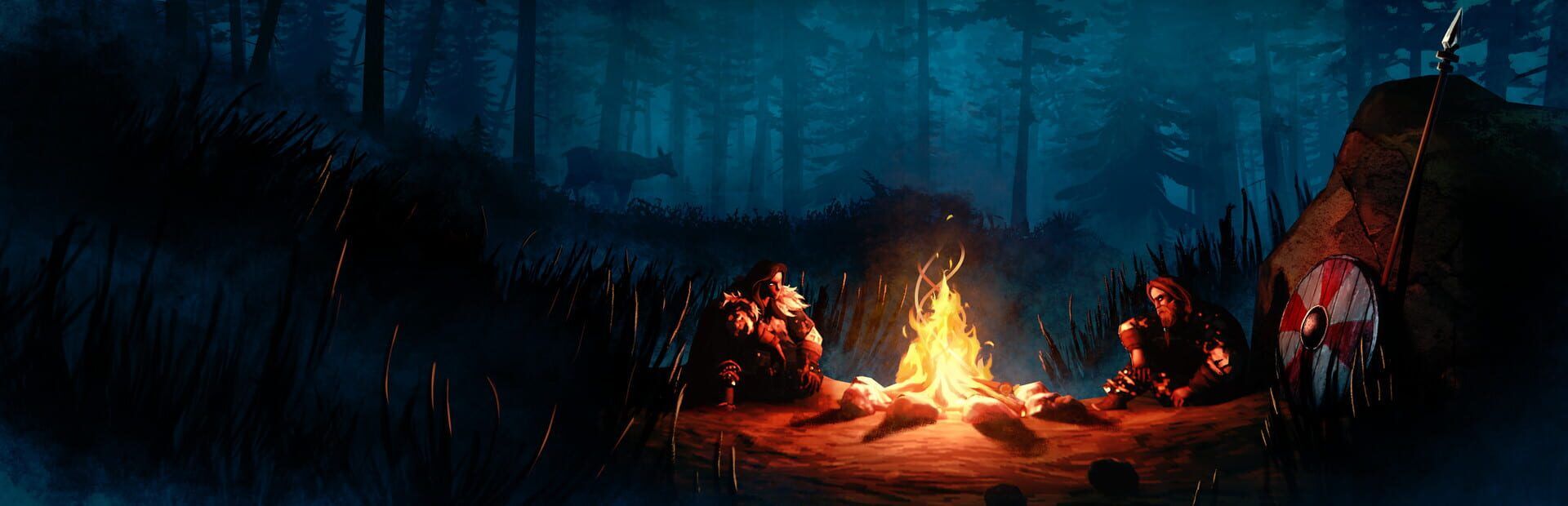
How Valheim grew from a breakout Early Access hit into a fully fledged survival classic, why the Deep North biome is the perfect finale, and what long-term support means for one of the decade’s defining survival games.
Valheim’s rise from quiet Early Access launch in 2021 to one of the biggest survival success stories of the decade has never really been about spectacle. It has been about patience, coherence and a studio that refused to rush a game that millions already loved. With Version 1.0 finally landing on September 9, 2026, Iron Gate is closing the book on Early Access but not on Valheim itself.
The road to this full launch is written into the world’s biomes. Each major update expanded the Viking afterlife outward, from the humble Meadows where players first punched trees to the spectral mists of the Mistlands. Version 1.0 adds the final piece of that circle with the Deep North, a frozen capstone that doubles as a statement of intent about how Valheim will live on after launch.
From breakout hit to slow, deliberate evolution
When Valheim first hit Early Access, it became an overnight phenomenon. Word of mouth and meme-ready moments of troll attacks and sinking longships carried it to millions of players. Many studios in that position might have pivoted into aggressive content cadence and live service trappings. Iron Gate instead opted for a slower, more deliberate pace.
Major biome updates arrived one at a time. The Hearth and Home update deepened core survival systems. Mistlands redefined the mid to late game with its dense vertical terrain and new enemy factions. Each patch felt like a crafted expansion of an overarching Norse tapestry instead of a disconnected content drop. The years between 2021 and 2026 were marked by steady iteration rather than sweeping reinvention, and that restraint is a big part of why Valheim’s community stuck around.
That approach also meant that 1.0 always had to be more than just another update. It needed to feel like the world was finally complete, that the lines drawn on the map from south to north, from Meadows to the edge of the world, now formed a whole.
Deep North as the final frontier
The Deep North fills the last blank on Valheim’s world map, a frozen crown at the top of the Viking afterlife. Players have sailed past its placeholder ice caps for years, speculating about what kind of horror and treasure would eventually lurk there. With 1.0, that question is finally answered.
At a glance, the Deep North looks almost peaceful. Snow-thick forests and frozen plains stretch across the horizon, the light of the low sun bouncing off sheets of ice and lakes that look solid enough to hold a fortress. Iron Gate leans into that deceptive calm. This is meant to be one of the deadliest regions in Valheim, one where the environment and its inhabitants have a shared history of rejecting human settlement.
Abandoned Viking camps dot the landscape, each a breadcrumb of failure. These are not just set dressing; they imply centuries of doomed expeditions, of warriors tougher and better equipped than most players who still could not tame the cold. In a game that has always used ruins and stone circles as fragments of worldbuilding, the Deep North’s settlements quietly tell a story of hubris and defeat without a single line of dialogue.
Gammeltrolls, Elakingar and the escalation of threat
The Deep North’s bestiary underlines its role as an endgame biome. Gammeltrolls are the headliners, ancient trolls that wandered north long ago and evolved into towering primordial giants. Players who once feared the blue trolls of the Black Forest will recognize the silhouette but not the scale. Gammeltrolls are positioned as living monuments, guardians that embody the land’s age and hostility rather than simple roaming nuisances.
Below the snow, new dungeon spaces introduce Elakingar, underground predators tied to the fate of those failed Viking settlers. Where past dungeons in Valheim felt like self-contained challenges, Deep North’s caverns are designed to connect more explicitly to the region’s implied history. The presence of an enemy faction that has already defeated Vikings creates a sense that players are walking into a fight that has been lost many times before.
By escalating both environmental and enemy threat while tying them directly into the theme of a land that refuses conquest, Iron Gate makes the Deep North feel like a culmination rather than just another frozen zone.
Traversal, ice and the joy of movement
Survival games often treat late-game travel as a solved problem. Once players unlock certain mounts, portals or vehicles, movement becomes trivial. Valheim’s Deep North pushes against this by reshaping how players think about terrain itself.
Frozen lakes and ice sheets are not simply obstacles. They are foundations. Players can build directly on the ice, turning fragile surfaces into anchor points for new kinds of bases and outposts. That design choice invites experimentation with risk, since frozen water can also become a liability if conditions change or enemies turn fortifications against their builders.
The introduction of ice-skating and the Grappling Hook adds a new physicality to exploration. Ice-skating builds on Valheim’s existing physics, rewarding players who read slopes and surfaces to maintain momentum. The Grappling Hook, meanwhile, opens up more aggressive approaches to cliffs, ravines and even Gammeltroll encounters. It is a practical tool for navigating the Deep North’s layered terrain, but it is also a late-game toy that refreshes the simple act of moving through the world.
In combination, these systems keep travel interesting at a point in the game where other survival titles have often become purely about resource throughput.
Reworking the early journey for a complete saga
A full launch is not just about adding the last biome. It is also about making sure the path to get there feels cohesive. Iron Gate is using Version 1.0 to revisit early-game biome progression and narrative framing across the entire experience.
Early regions like the Meadows and Black Forest are being tuned so that their pacing and difficulty curve better foreshadow the escalating threats of later areas such as the Mistlands and Deep North. This involves more than numeric tweaks. Boss encounters now reward players with story cinematics that contextualize their victories and losses. These sequences are not long cut-scenes so much as short mythic punctuations, underscoring that every boss slain is another step in a larger saga.
Valheim’s story has always been present in subtle ways, from rune stones to environmental storytelling. With 1.0, those threads are pulled tighter. The developers are layering new narrative elements that tie together years of updates into a single throughline, so that a new player starting in 2026 experiences Valheim as a complete, intentional journey rather than a chain of disconnected content patches.
Community, co-op and a platform for the future
Valheim’s community is a significant reason it was able to spend five years in Early Access without losing cultural relevance. Co-op servers, modded worlds, detailed build showcases and hardcore challenge runs kept the game in conversation even when official updates were sparse.
It helped that Valheim’s design has always been friendly to long-term communal play. Building systems that are deep but readable, combat that favors positioning and timing over twitch reflexes, and a progression curve that feels more like a shared expedition than a gear treadmill all made it a natural hub for groups of friends. The game’s open-ended sandbox side, with sprawling Viking longhouses and megaprojects on mountain ridges, became as important as its boss progression.
Version 1.0 strengthens that foundation with full cross-platform support across PC, consoles and handhelds. Valheim’s afterlife is no longer gated by platform choice, which removes one of the biggest friction points for social groups and community servers. For a game built around shared sagas, that matters more than any single new item or enemy.
Crucially, Iron Gate has framed 1.0 not as the end of the road but as a milestone. The complete biome map provides closure, yet the underlying systems, mod potential and crossplay infrastructure position Valheim as a long-term platform. This mirrors how other enduring survival games treat their 1.0 launch as a foundation for years of expansions instead of a final curtain.
What 1.0 means for survival gaming
Valheim’s transition from Early Access curiosity to full release says a lot about how survival games can mature. It shows that you can release slowly, resist the pressure to go full live service and still hold an audience if the core loop is strong and each update feels meaningful.
By saving the Deep North for 1.0 and making it thematically and mechanically resonate with everything that came before, Iron Gate turns full release into an event rather than a mere version number. The completed world map, the refined early progression, the new traversal tools and the unified narrative framing all work together to make Valheim feel like a finished saga.
At the same time, the door is wide open for the game’s post-launch life. Community servers and modders now have a complete canvas to paint on, without the uncertainty of entire regions being reworked or replaced. For a decade that has seen countless survival games appear, spike in popularity and then vanish, Valheim’s measured road to 1.0 stands out as a case study in how to build something that lasts.
The Deep North is frozen by design, but its arrival marks a future for Valheim that is anything but static.