
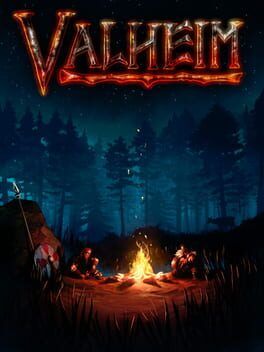

Valheim leaves early access on September 9 with Deep North, new narrative touches, PS5 and Switch 2 launches, and a higher price for new buyers.
Image: IGDB
Store links: Valheim on Steam
Valheim finally reaches 1.0, and the old campfire has new shadows
Valheim is scheduled to leave early access on September 9, 2026, ending a five-year run that began on Steam Early Access in 2021 and turning one of survival gaming’s biggest slow burns into a full 1.0 release. GamingBolt reports that the launch also brings Valheim to PS5 and Nintendo Switch 2, while TechTimes reports that the 1.0 update will be free for existing owners and will include the Deep North, the game’s final biome.
That is the concrete headline. The tension around it is equally practical: returning players get the update without another purchase, but new buyers are facing a higher price. TechTimes reports that Valheim will rise to $29.99 at launch, while GameDaily and MSN note that Valheim had been priced at $19.99 and that Iron Gate says the increase reflects the game’s move from early access to a full, complete release rather than the value of any single new content drop.
For a Valheim survival game built around cold nights, thin food bars, creaking timber, and the awful sound of something moving beyond torchlight, 1.0 is less a clean reset than a reckoning. It asks whether the world that swallowed millions of Vikings in 2021 can still feel dangerous, strange, and worth rebuilding after years of updates, pauses, biome launches, and player-made sagas.
Iron Gate is treating 1.0 as a milestone, not a finish line
The clearest signal from Iron Gate’s recent creator comments is that 1.0 does not appear to be framed internally as the studio’s final thought on Valheim. In a PCGamesN interview at Gamescom, Art Director and Creative Lead Robin “Grimmcore” Eyre was asked whether what was shown represented the team’s final vision for the game. “Not at all,” Eyre replied, according to PCGamesN. He added, “We had visions, but we never thought it would turn into this.”
Producer Andreas “Lumaaah” Tomasson was also part of that PCGamesN interview, which places the moment in the context of a small studio that took its time. PCGamesN reports that Iron Gate has remained a team of nine people and had no real intention to grow beyond that number. That matters when judging the long Valheim early access run. The slow cadence has often been part of the conversation around the game, but the source material frames it as a consequence of scale and intent rather than a live-service treadmill.
Eyre called the moment “bittersweet” in the PCGamesN interview, describing it as “the end of an era, but a start of a new age.” That quote is doing a lot of work. It confirms the emotional weight of 1.0 for the developers, but it also leaves space for the unknown. The sources provided confirm the 1.0 launch, the final biome, new narrative presentation, console debuts on PS5 and Switch 2, and a price change for new buyers. They do not confirm a complete post-1.0 roadmap, nor do they answer every lingering question about how Iron Gate will support the game after this milestone.
The Deep North sounds like a different kind of endgame pressure
The major playable draw for returning players is the Deep North. TechTimes reports that Iron Gate’s retrospective video closes with fresh footage of the biome, and PCGamesN describes it as Valheim’s final zone. According to PCGamesN’s Gamescom coverage, Eyre described the Deep North as a silent, frozen tundra where Vikings “go to die.”
That phrasing fits Valheim’s best survival instincts. The game has always been strongest when the environment feels like an enemy before any creature arrives: wet debuffs after a bad landing, a black forest at dusk, the first time swamp poison turns confidence into panic. PCGamesN reports that the Deep North has a slower tempo than the more combat-heavy Ashlands and Mistlands, while still including combat threats. The zone is home to a colossal Gammeltroll, which PCGamesN says Iron Gate described as the biggest enemy it has produced.
PCGamesN also reports that the Deep North includes two dungeons: The Winding Tunnels and a large castle-style structure. The same report notes that crafting and building opportunities remain part of the biome. That combination suggests the 1.0 endgame is not being positioned as a pure boss corridor. Based on the reported details, returning players should expect the familiar Valheim cycle of preparation, travel, resource pressure, and base planning to continue, even as the biome’s mood shifts toward closure.
There is also a design contrast here. Ashlands and Mistlands are described in PCGamesN’s report as more combat-heavy reference points, while Deep North is framed as quieter and more reflective. That does not guarantee an easier zone, and none of the provided sources make difficulty claims beyond the presence of combat, dungeons, and the Gammeltroll. But it does indicate a different survival texture: less relentless heat and fog, more cold silence and finality.
Cutscenes and an ending change the shape of a return trip
Valheim’s early access identity has long leaned on player-made stories: the doomed boat trip, the corpse run, the accidental troll demolition, the proud hall that looked safe until the raid horns started. For 1.0, Iron Gate appears to be adding more authored structure around that sandbox. PCGamesN reports that the 1.0 build shown at Gamescom includes animated cutscenes designed to add story and narrative depth, as well as an ending sequence.
That last point is the quiet thunderclap. PCGamesN states plainly that Valheim does have an end, although the outlet’s reporter had not seen the ending at the time of the interview. Eyre’s reaction to discussing it, according to PCGamesN, was physical enough to raise goosebumps. That is a developer’s emotional cue, not a spoiler, and it should be treated as such. The confirmed fact is that an ending sequence exists in the 1.0 presentation described by PCGamesN. The quality, length, and player requirements for reaching it are not detailed in the provided sources.
For returning players, this changes the old question of whether to start over. The source material does not confirm save compatibility, world migration requirements, or whether older worlds will surface every 1.0 feature cleanly. Without that information, the safest practical guidance is to wait for Iron Gate’s launch notes before committing a long-running server to the update. What can be said now is that 1.0 gives lapsed players a clearer reason to re-enter than a single biome checklist: the reported cutscenes and ending imply a stronger journey from first campfire to final frontier.
The retrospective video frames Valheim as a shared survival record
In the days before launch, Iron Gate released a behind-the-scenes retrospective titled “(Y)our Journey,” according to GamingBolt and TechTimes. Sandboxer also lists a September 8 post titled “Valheim: (Y)OUR JOURNEY.” GamingBolt describes the video as nostalgic and grateful, with accounts of the game helping players through difficult moments in their personal lives. TechTimes reports that the video intercuts Iron Gate team members discussing the game’s early access years with community members describing what Valheim has meant to them.
That framing suits the strange intimacy of co-op survival. Valheim’s systems make players remember logistics as emotion: who forgot the portal materials, who sailed through fog, who heard the deathsquito first, who built the hall everyone still talks about. GamingBolt compares the video’s highs and lows to Valheim’s co-op loop, where epic wins and absurd failures sit close together.
TechTimes reports that Iron Gate’s official description thanks players for embarking on a magical journey “with us,” calling it a journey that is “yours, as much as ours.” That is a marketing line, but it is also a fair description of how early access survival games age when they work. The world changes under the player, and the player changes how the world is remembered. In Valheim’s case, the provided sources place that relationship at the center of the 1.0 moment rather than treating the launch as a simple version number.
The price change is the clearest buyer decision
For current owners, the purchasing question appears straightforward. TechTimes reports that the Valheim 1.0 update is free for every existing owner, citing Iron Gate’s official 1.0 FAQ. That means players who already bought into Valheim early access are not being asked to pay again for Deep North or the full release update, according to the provided reporting.
For new players, the timing matters. TechTimes reports that Valheim’s price rises to $29.99 at launch. GameDaily and MSN report that the game had been priced at $19.99 and that Iron Gate says the increase reflects the transition from early access to full release, not any single piece of new content. That distinction is important because it separates the business decision from a narrow “is Deep North worth ten dollars” calculation. Iron Gate is presenting the higher price as the price of the complete product.
The platform picture also broadens at 1.0. GamingBolt reports that Valheim makes its debut on PS5 and Nintendo Switch 2 alongside the early access exit. The provided sources do not include performance targets, resolution details, crossplay confirmation, save transfer information, or console pricing beyond the reported launch price context. Players choosing between PC and the new console versions should wait for platform-specific details if performance, mods, or server continuity are the deciding factors.
How far Valheim has come, and what remains unanswered
TechTimes reports that Valheim entered Steam Early Access on February 2, 2021, and says the game has sold 17 million copies worldwide. It also describes Iron Gate’s early structure as a small Swedish studio, with co-founders Richard Svensson and Henrik Törnqvist having worked together at Pieces Interactive before Svensson developed the game as a solo side project, citing Iron Gate’s site for that background. PCGamesN’s interview adds the current contrast: a nine-person team carrying one of the genre’s defining survival games to 1.0.
That scale is part of the story. Valheim did not arrive with the machinery of a giant service game, and the sources specifically frame its early access years around biome updates, community memory, and a studio that resisted large expansion. TechTimes also notes the absence of a battle pass or cosmetic storefront during that run. Those facts do not erase player frustration over waiting, but they do clarify the kind of project Valheim has been: a survival sandbox built in long weather patterns rather than seasonal churn.
There are still gaps. The provided sources do not confirm the future of every biome idea, and GamingBolt’s related coverage is described as leaving the fate of the Ocean biome unknown. The sources also do not confirm post-launch update cadence, technical performance, save behavior, or how console versions will compare in the wild. Those are launch-week questions, and survival players know better than to enter a new biome without checking the sky.
What is confirmed is substantial enough for a return: Valheim 1.0 release on September 9, a free update for existing owners, Deep North as the final biome, new narrative cutscenes and an ending as reported by PCGamesN, PS5 and Nintendo Switch 2 debuts as reported by GamingBolt, and a higher $29.99 price for new buyers as reported by TechTimes. After five years of smoke, frost, raids, and half-lit coastlines, Iron Gate is finally putting a 1.0 marker on the map. Whether that feels like arrival or another shoreline depends on what players bring back through the portal.