
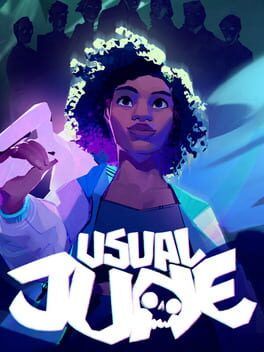

Finji has dated Usual June for October 28, 2026, pairing Hades-like action movement, ghosts, crystal crabs, and a new Steam demo for a timely Halloween indie launch.
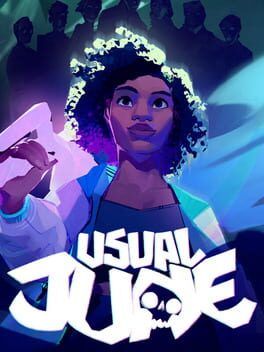
Image: IGDB
Store links: Usual June on Steam
Usual June gets an October 28 date, right on Halloween’s doorstep
Finji has confirmed that Usual June will launch on October 28, 2026, putting its supernatural third-person action-adventure just days before Halloween. The date was announced in a Games Press release from Finji, alongside a new trailer shown during the Awesome Indies Showcase powered by IGN at Gamescom and a new demo that is live now on Steam.
That timing is the clearest hook here. Usual June is a game about a college student, a citywide mystery, monsters, ghosts, and a threat hanging over Fen Harbor. Rock Paper Shotgun’s demo coverage also points to stranger local flavor, including crystalline crabs attacking a cemetery and ghosts appearing as June’s summer break goes sideways. In a late-October release window crowded with horror replays, seasonal events, and darker indies, Usual June is trying to land as a spooky action game with warmth in its corners rather than a straight scare machine.
The confirmed Usual June release date also gives players something practical to work with: there is a Steam demo available now, wishlisting is open, and the game is close enough that the demo should be a useful read on its rhythm rather than a distant proof of concept. Finji has not provided a price in the supplied announcement material, so anyone planning an October indie budget still has that question unanswered.
The combat pitch is action-adventure first, with Hades-like movement energy
Finji describes Usual June as a third-person action-adventure built around fast, fluid combat arenas. According to the publisher’s Games Press release, June can dash, use super moves, dodge, parry, adapt to enemy behavior, and change her fighting style through equipped items and loadout customization. The same release says players gain XP, level up, and unlock new powers, though Finji adds that those powers come with a cost players will discover themselves.
That setup is where the Hades comparison enters, but it needs a careful frame. Finji is not selling Usual June as a roguelike in the provided materials. Rock Paper Shotgun, after playing the demo, describes the movement as having “Hades-esque” qualities, while also comparing the combat’s snap and crunch to action games like Kingdom Hearts. Based on that demo impression, the Hades-like action game angle seems to sit in the feel of movement, spacing, dodging, and chaining offense rather than in run-based structure.
That distinction matters for expectations. Players looking for a repeatable roguelike loop should not assume one from the sources available. The publisher’s language and Rock Paper Shotgun’s impressions both point toward a more classic action-adventure shape: explore locations, fight set encounters, talk to characters, improve June’s tools, and push deeper into the mystery. For an indie audience tired of every stylish action pitch turning into another endless build machine, that could be part of the appeal.
Ghosts, crystal crabs, and Fen Harbor’s odd little apocalypse
The story follows June, a college student who does not know what to do with her life, according to Rock Paper Shotgun’s summary of the setup. Her quiet summer break is interrupted by strange crystalline crabs attacking the local cemetery and by ghosts becoming part of the problem and the solution. Finji’s own description broadens that into a mystery threatening to obliterate an entire city.
The city is Fen Harbor, and the publisher says players will explore secret labs, buried tunnels, haunted observatories, abandoned train stations, and a mysterious other world. Those locations suggest a compact mystery box structure rather than a single haunted house or pure monster hunt. The fun, at least on paper, is in the collision: everyday young-adult uncertainty, civic secrets, ghosts with useful memories, and creatures that sound like they crawled out of a mineral collection with claws.
Finji also says neither the living nor the dead can save the city alone. The game features a cast of 25 characters, and players will use the photographic memories of the dead and the living characters’ ability to touch physical objects to investigate what is happening before the ghosts disappear and time runs out. That is a sharp adventure-game premise tucked inside an action shell. If the final game makes those character abilities feel meaningful during exploration, Usual June could stand apart from indies that treat ghosts mainly as atmosphere.
A Halloween indie pick because it sounds eerie, not punishingly grim
Rock Paper Shotgun’s preview makes the seasonal case plainly: Usual June is positioned well for Halloween, with a cozy autumnal quality and an undercurrent of something stranger going on. That is an important tonal lane. The source material does not describe a gore-forward horror game, a survival horror resource gauntlet, or a jump-scare showcase. It describes a supernatural action mystery where June fights monsters, talks to ghosts, and tries to understand a threat before time runs out.
That balance could make it a strong Halloween indie game for players who want seasonal flavor without committing to pure horror. Crystal crabs in a cemetery, haunted observatories, disappearing ghosts, and a strange dimension are plenty spooky. The college-break framing and ensemble cast give it a softer social texture. In indie terms, that combination can be powerful: a game that fits the Halloween rotation because it carries the season’s mood, while still playing like an approachable action-adventure.
The craft question is whether Usual June can make those ingredients cohere. A lot rests on encounter pacing, enemy clarity, and whether its mystery keeps pulling players through new spaces. Rock Paper Shotgun’s demo writeup is positive on the combat’s immediate feel, calling it “quite nifty,” but also notes that the game is not finished. For now, the safest read is anticipation rather than verdict: the pieces are unusually specific, and the launch date gives those pieces excellent seasonal timing.
The demo points to speed, parries, and one possible friction point
Rock Paper Shotgun’s hands-on account says the demo does not appear to include blocking, instead emphasizing awareness, dodging, parrying at the right time, and stringing together combos with June’s morphable wrench. That weapon detail is small but promising. A morphable wrench sounds like the kind of tool that can sell character through animation, giving combat a scrappy, improvised identity instead of default sword swings or magic bolts.
The same preview flags a possible friction point: no platforming and, more specifically, no jumping. Rock Paper Shotgun says the environments are not designed around platforming, but still found the inability to jump uncomfortable at times and felt it could interrupt flow. That is not a dealbreaker in an action-adventure, especially one focused on arenas and conversation, but it is exactly the kind of tactile issue that can shape how a game feels over hours.
For players curious about the Usual June indie game pitch, the demo is the obvious test. If the dodge-parry-combo loop feels crisp and the absence of jumping fades into the background, the October release could be an easy wishlist. If movement freedom is your first demand in a third-person game, the demo should tell you whether Finji’s arena design and encounter timing compensate.
Platforms are mostly clear, but Mac wording deserves a check
The broad availability picture is Steam. Finji’s Games Press release links the Steam page, says the demo is playable there, and says players can wishlist Usual June now. MonsterVine reports that Usual June will launch on PC and Mac via Steam. The Games Press release itself contains both a PC-only line near the top and a PC-and-Mac line later in the text. Gematsu’s report lists PC via Steam.
That creates a small but real platform wording wrinkle. PC on Steam is consistently supported across the provided sources. Mac appears in Finji’s longer release text and MonsterVine’s coverage, but not in every summary. If you plan to play on Windows, the available reporting is straightforward. If Mac support is essential, check the Steam listing before launch or before making plans around day-one access.
No console versions are confirmed in the supplied source material. No price, Steam Deck verification, system requirements, or performance targets are included either. For a fast action game where dodge timing and parry responsiveness matter, those technical details will be worth watching closer to release.
Finji’s team gives the project a strong indie pedigree, but the unanswered questions remain useful
Usual June is being developed by Finji’s internal team. In its announcement, Finji identifies Adam Saltsman, known for Overland and Canabalt, as creative director. The project is also produced in collaboration with writer David Pinckney, BAFTA-winning writer Cara Ellison, and BAFTA-winning audio director Adam Hay, whose credits listed by Finji include Dreams and Everybody’s Gone to the Rapture. Finji’s announcement also reminds readers of the studio’s broader history, including Overland and Canabalt, and its publishing work on TUNIC and Night in the Woods.
That pedigree helps explain why Usual June is worth tracking beyond its Halloween date. The game is aiming at a tricky intersection: expressive action, character-led mystery, supernatural comedy or melancholy, and adventure-game investigation logic. Any one of those can pull focus from the others. A strong version of Usual June would make combat feel immediate while letting ghosts, friends, and Fen Harbor’s locations carry the emotional weight.
For now, the practical guidance is simple. If the phrase “Hades-like action game” makes you interested, treat that as a movement and combat-feel comparison, then play the demo to see whether the structure matches your taste. If you want a Halloween indie pick with ghosts, crystal crabs, haunted spaces, and a warmer mystery tone, October 28 is the date to circle. Just keep an eye on the Steam page for price, final platform details, and any late technical notes before launch.