

The Daily Lowball and other browser car games are turning real-world vehicle prices into shareable daily puzzles for players who like being confidently wrong.
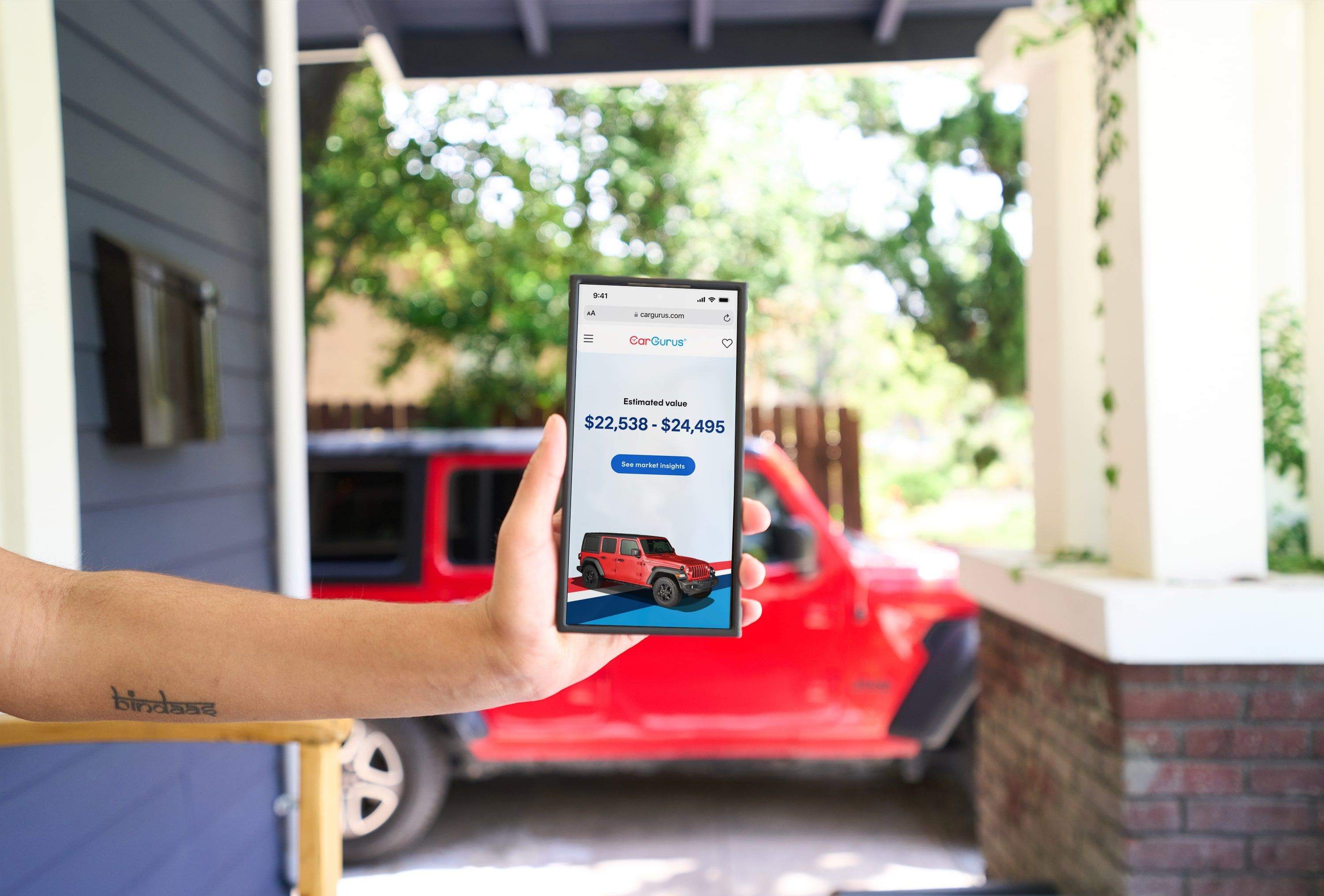
Image: cargurus.com
The newest daily puzzle obsession asks a brutal question: what did that car sell for?
The Daily Lowball’s homepage now describes itself plainly as “a daily used car price guessing game,” and that blunt pitch is exactly the hook: look at a used car, study the clues, then guess the price somebody actually paid. On the site’s October 24, 2026 listing, its main mode is labeled “Guess the Price #30,” with the tease, “Somebody actually paid that. Can you guess how much?”
That is the concrete development behind the current mini-trend. A browser puzzle game has taken the Wordle-era daily ritual and swapped letters for depreciation, mileage anxiety, collector-car weirdness, and the uneasy feeling that you know less about used cars than you thought. PC Gamer recently called The Daily Lowball its “new daily game fixation” in a piece reposted through a 7MMO forum thread, and the interesting part is how little setup the game needs. Everyone understands the prompt. Almost nobody seems safe from getting it wrong.
The tension is right there in the format. A spelling puzzle tests vocabulary. A geography puzzle tests map sense. A used car price guessing game tests a messy, real-world instinct that most people only use when buying, selling, browsing classifieds, or arguing with a relative who swears a 20-year-old coupe is “basically an investment.” That makes The Daily Lowball feel less like trivia and more like a tiny market simulator with a punchline.
The Daily Lowball turns market confusion into a clean daily loop
According to the PC Gamer article text reposted on 7MMO, The Daily Lowball serves up five real cars each day, with photos and stats such as make, model, year, mileage, and the car’s original new price. Players then enter what they think each vehicle sold for on the date shown. The game grades the results from A to F through a virtual boss, and the PC Gamer account says your daily streak can be broken if you perform badly enough or string together poor days.
That framing gives the game a surprisingly sharp structure. The puzzle is not simply “name a number.” It asks players to read a car the way a buyer might: age, mileage, badge, condition implied by photos, nostalgia tax, performance reputation, and how far the market has drifted from the original sticker. The Daily Lowball homepage reinforces the job-like gag with an “Employee of the Week” leaderboard, including visible dealer rating scores for top users on October 24.
The clever design choice is that the answer is tied to what “somebody actually paid,” as The Daily Lowball puts it, rather than an abstract book value. That distinction matters. A price guide can feel authoritative. A real sale can feel irrational, personal, or regional. The resulting reveal has the same sting as a good daily puzzle solution: obvious in retrospect on some days, baffling on others, and perfect for comparing scores.
The difficulty comes from cars behaving like culture, not math
PC Gamer’s account of playing The Daily Lowball is useful because it captures the game’s best joke: even people who think they have a sense for cars can miss wildly. The writer describes misjudging a 2014 Audi Allroad Quattro and a 2005 Dodge Neon SRT-4, doing better on a 2008 Mercury Grand Marquis and a 2001 Porsche Boxster, and nailing a 2001 GMC Yukon, ending with a C average for the day. The same write-up says other PC Gamer staffers landed at two Ds and one F.
Those examples show why a used car price guessing game works as a daily puzzle game. The variables are legible, but never fully obedient. A practical old SUV might carry demand because of durability or utility. A performance trim with a cult following can pull a number that looks silly if you only think in model year. A low-mileage older car creates a different question: is it a preserved gem, an overvalued oddity, or a maintenance time capsule waiting to punish its owner?
That uncertainty is the craft. The Daily Lowball gives players enough information to form a theory, then lets the real sale price puncture it. Unlike a puzzle with a fixed dictionary, the used car market keeps smuggling in taste, nostalgia, scarcity, reputation, and buyer emotion. The result is a browser puzzle game where being wrong is often the fun part, because every miss teaches you which assumptions failed.
It is part of a wider car-guessing puzzle lane
The Daily Lowball is the most direct match for players who want to guess used car prices based on actual sale outcomes, but it sits alongside a growing cluster of lightweight car games built for browsers and daily play. CarGuessr, for example, describes itself as “the car price guessing game” and says it uses real used-car listings, hiding the asking price while showing up to eight original photos, make, model, trim, year, mileage, fuel, gearbox, power, equipment, and the seller’s own description.
CarGuessr’s own site lists three modes: Classic, with 656 everyday used cars and a median price of €13,800; Prestige, with 609 supercars, hypercars, and collector cars ranging from €100,000 to €5 million; and Versus, which lets players challenge a friend online in real time through an invite link. Its FAQ says the game is free, requires no account, has no download or ads wall, and runs in a browser on desktop and mobile. It also says there is a daily challenge every day at midnight Paris time, with the same car for everyone, a single guess, and daily and weekly leaderboards handled by the server.
CarSpotr shows the adjacent appeal from another angle. Its homepage calls it “the daily guess-the-car puzzle,” says players identify the make, model, and year from a zoomed-in photo, and gives five tries with the image revealing more after each wrong guess. The page also claims more than 34,800 cars guessed and says a new mystery car arrives daily at midnight Pacific Time. CarSpotr is not a price game, but it confirms the audience appetite: cars make excellent daily puzzle material because they are visual, specific, and full of half-remembered expertise.
The key split: sold price, asking price, or identity
For players searching “guess used car prices,” the important difference is what each game is asking you to estimate. The Daily Lowball’s stated hook is what somebody actually paid, and PC Gamer’s description says players guess how much each used car was sold for on the date shown. That puts the game closer to an auction-result puzzle or sales-comp detective game. The satisfaction comes from discovering the final transaction, even if that transaction looks absurd.
CarGuessr is different by its own description. It asks players to guess the asking price of real used-car listings from sources named in its FAQ as Leboncoin and AutoScout24. That makes it closer to browsing classifieds with the price hidden. The seller’s ask may or may not reflect the final amount a buyer would pay, but it gives the game a broader listing-reading feel: you inspect equipment, trim, mileage, and description as if you were evaluating a live marketplace post.
CarSpotr strips out price entirely and focuses on identification. Its puzzle is about visual recognition, narrowing from a cropped photo toward make, model, and year with color-coded hints. For daily puzzle fans, that split is useful. Pick The Daily Lowball if you want real-world sale-price chaos. Pick CarGuessr if you want a free browser game about reading listings and price positioning. Pick CarSpotr if you want the car equivalent of a silhouette puzzle.
Practical guide for today’s players
The Daily Lowball is playable through dailylowball.com, where the homepage currently links to “Guess the Price,” “Steal or Bad Deal,” “Higher or Lower,” and “Lucky License Plate.” On October 24, the site lists “new cars today” for Guess the Price, “five new deals today” for Steal or Bad Deal, and “no daily limit” for Higher or Lower. The site also links to a Discord, Instagram, feedback page, FAQ, privacy page, terms page, and a full leaderboard.
The cleanest starting point is Guess the Price, because it expresses the whole trend in one loop: inspect five cars, make five price calls, receive judgment. Steal or Bad Deal appears to shift the question from exact pricing to whether a buyer got a good or poor deal. Higher or Lower reduces the read to a head-to-head comparison of which car sold for more, with The Daily Lowball’s homepage saying three misses end the run. Lucky License Plate is a side curiosity rather than part of the price-guessing core, with one random plate per day.
If you are coming from Wordle-style rituals, the appeal is the same compact promise: one sitting, one set of results, and a streak to protect. The twist is that this new daily game uses a skill many people assume they have until the reveal arrives. That is why real-world pricing guesses are catching on with puzzle fans. They turn ordinary browsing instincts into a score, and they make every wrong answer feel like a story about the market, the car, and the person who paid the number you failed to see coming.