
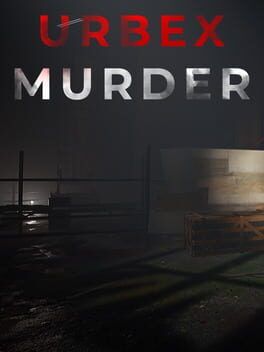

Urbex Murder leaves Early Access with a full 1.0 launch centered on Murder Mode, flashbangs, two maps, 2 to 4 player lobbies, and a $3.99 Windows listing on Steam.
Image: IGDB
Store links: Urbex Murder on Steam
Urbex Murder leaves Early Access with the mode its title promised
Urbex Murder has reached its full 1.0 release, and the headline feature is direct: Murder Mode is now live for everyone who owns the game. According to HappyGamer, the indie horror game left Early Access on Saturday, October 24, exactly one year after its initial launch, with Steam listing the Windows version at $3.99 at the time of that report.
That timing gives the update a sharper edge than a routine content patch. Urbex Murder leaves Early Access by shifting its center of gravity toward a social survival setup where one player becomes the threat and everyone else is trying to work under pressure. The full release also adds a flashbang, two maps built around Murder Mode, continued access to Urbex Mode for players who prefer exploration without a killer in the group, and support for 12 languages, according to the same report.
The immediate tension is whether Urbex Murder 1.0 now has a clear enough identity to compete on Steam’s crowded horror shelf. Its strongest pitch is compact and readable: 2 to 4 players, one hidden pressure point, generators to repair, an escape door to open, and a human-controlled murderer listening while survivors try to organize. Its biggest unanswered question is also visible from those same details: after Early Access, is that lean structure a confident horror design or a content-light proposition that depends heavily on having the right friends?
Murder Mode turns exploration into a social survival test
The new Murder Mode changes the game’s loop by making the threat human, immediate, and unpredictable. HappyGamer reports that each match randomly chooses one player as the Murderer, while the rest become survivors. Survivors must repair generators placed around the map and open the escape door before the timer expires. The Murderer wins by stopping them before they complete those objectives.
The developer’s Steam announcement, as quoted by HappyGamer, describes the setup plainly: “Each match picks one player at random to be the Murderer. Everyone else is a survivor.” That simple role split is doing most of the work. Urbex horror usually leans on the dread of entering places people abandoned for a reason. Murder Mode adds a social knife twist: the danger is no longer only in the architecture, the dark hallway, or the locked door. It is in the lobby.
Voice chat staying active for the entire match is an important confirmed detail because it gives the mode its pressure system. Survivors need to coordinate generator routes, share discoveries, and warn each other when something moves in the wrong room. At the same time, the Murderer may be hearing every callout. That makes communication useful but unsafe, which is exactly the kind of resource tension small-session horror needs. Speaking can save time, but it can also give away a location.
HappyGamer also notes that dead players can spectate the rest of the match. That matters for a 2 to 4 player game because an early death could otherwise turn a short horror round into dead air. Spectating does not erase the frustration of being caught first, but it keeps eliminated players connected to the story of the round instead of pushing them back to a menu.
The two 1.0 maps are built around splitting up and regretting it
Murder Mode launches with two maps, Haunted Mansion and Abandoned Factory, and the reported objective placement gives both a similar survival dilemma: stay together and move slowly, or split up and create lonely targets.
In Haunted Mansion, HappyGamer reports that generators appear in the garden gazebo, the main hall, and the balcony, with the final generator locked behind a keypad door. Someone has to find the code first. That detail is small on paper but meaningful in play structure, because it creates a secondary search objective while the main repair clock is still running. A group that travels together is safer but inefficient. A lone code hunter is faster but exposed.
Abandoned Factory spreads generators across the brick building, loading bay, warehouse, and yard, according to the same report. That layout sounds less like a puzzle box and more like a space-control problem. Wide objective distribution gives survivors a reason to divide the workload, but it also gives the Murderer clean opportunities to isolate players away from voice support and visual contact.
This is where Urbex Murder’s post-Early Access identity is clearest. The maps are not described as large-scale sandboxes or elaborate campaign spaces. They are arenas of uncertainty, built around the horror of deciding who walks alone. In a four-player lobby, that can be enough to make every route choice feel consequential. In a two-player lobby, the same structure could become much harsher, because there is less room for misdirection and recovery. The provided sources confirm the 2 to 4 player lobby range, but they do not provide balance details for different player counts.
Flashbangs add a resource decision instead of a guaranteed escape
The Urbex Murder flashbang is the other major 1.0 tool, and its cooldown is the key design detail. HappyGamer reports that the throwable blinds anyone caught in its flash, then goes on cooldown after use. The developer’s wording, as cited in the report, tells players to “pick your moment.”
That cooldown is what keeps the item from flattening the chase. In a horror game built on pursuit and separation, a reusable blind could easily become a panic button if players can throw it without consequence. A cooldown makes the flashbang closer to a limited window than a permanent safety net. Throw it too early and the Murderer can wait it out. Throw it too late and the survivor may already be cornered. Throw it poorly and the player has given up their best interruption tool until it recharges.
The source material does not state whether the flashbang affects teammates, how long the blind lasts, whether the Murderer has counterplay beyond avoiding the blast, or whether map lighting changes its usefulness. Those are the practical details that will decide whether the item becomes a tense survival resource or a routine escape habit. What is confirmed is enough to show the intent: Murder Mode is not only about running from a killer. It is about timing, spacing, and using a tool when the hallway has already turned bad.
For horror players, that distinction matters. A chase tool that demands commitment can make an encounter louder and scarier because it delays the consequence instead of deleting it. If the flashbang fails, the survivor has announced panic and lost tempo. If it lands, the team may buy the seconds needed to finish a generator or break line of sight.
A small lobby and a low Steam price sharpen the pitch
According to HappyGamer, players enter Murder Mode by selecting Play Murder from the main menu, hosting a 2 to 4 player lobby, choosing a map, and bringing friends in. Steam was listing Urbex Murder at $3.99 for Windows at the time of the report. No console or non-Windows release information is included in the provided source material.
That makes the practical buying case fairly specific. Urbex Murder 1.0 appears aimed at players who want a cheap, small-group horror night rather than a large live-service commitment. A 2 to 4 player cap can help preserve silence, isolation, and suspicion. It also means the game’s value depends heavily on whether a buyer has a small group willing to rotate through the same setup. The sources do not confirm matchmaking quality, player population, performance, or long-term update plans, so anyone buying for public lobbies rather than friends should be cautious and check the current Steam page before jumping in.
Urbex Mode remaining available is also important. HappyGamer describes it as the option for players who would rather explore without a killer in the group. That gives the full release a quieter side, but the 1.0 story is clearly being carried by Murder Mode. The title now matches the main attraction more directly, and the game’s Steam identity becomes easier to understand at a glance: urban exploration horror with a player-controlled murderer layered over objective repair and escape.
Enough identity to stand out, but the unanswered questions are content and staying power
On confirmed details alone, Urbex Murder has a stronger post-Early Access identity than many small Steam horror releases because it can explain itself quickly. One player hunts. Survivors repair generators. Voice chat is always on. Flashbangs create clutch interruption moments. Two maps force decisions about separation. The price is low, the lobby size is intimate, and the Windows listing keeps the platform message simple.
The risk is that clarity and depth are different things. The provided source material confirms two Murder Mode maps, a flashbang, 12 language support, 2 to 4 player lobbies, and continued access to Urbex Mode. It does not confirm additional monsters, progression systems, cosmetics, custom rules, matchmaking features, roadmap plans, anti-griefing tools, or how the game handles repeated play after the first few sessions. Those absences do not mean the features are missing, but they are not established by the sources provided.
For players searching for Urbex Murder Murder Mode specifically, the 1.0 launch looks like the moment the game’s intended hook arrives. For players browsing Steam for an indie horror game with a distinct voice, the better question is whether a compact social horror loop at $3.99 is enough for their group. If you have two or three friends who enjoy tense callouts, bad information, and sudden betrayal pressure, Urbex Murder 1.0 now has a clean reason to be on your radar. If you need a broad content suite or a confirmed long-term roadmap before buying, the current reporting leaves those questions open.