
How the new Brother’s Wedding Story DLC turns Urban Jungle’s plant‑care chill into a tender, queer relationship story, and why narrative vignettes like this could be the key to keeping cozy sim communities engaged between big updates.
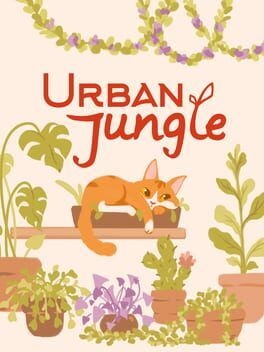
Urban Jungle has always been about the quiet drama of tiny spaces: watering plants, fussing over light levels, shifting a monstera two inches to the left until the room finally feels right. Brother’s Wedding Story, the new DLC on Steam, takes that same careful attention and applies it to something more emotionally charged: a queer proposal night in a Bangkok apartment.
Instead of expanding the game with more pots, soil types, or meters to watch, this chapter leans into story. It is a short, focused slice of life that tries to answer a bigger question bubbling up across the cozy sim genre: can these peaceful, mechanical sandboxes also be homes for more complex, adult relationships without losing their comfort?
A Proposal Night Framed As A Cozy Build
Brother’s Wedding Story shifts the spotlight to Nurgun, who is getting ready to propose to his boyfriend Rachata, the brother of Pharita from the base game. The premise is as simple as it is effective. You are not planning a festival or designing a sprawling farm. You are tuning a single evening inside a lived‑in Thai home so that one question lands just right.
Mechanically, the DLC plays like an intimate remix of Urban Jungle’s core loop. You are still arranging objects, but now the stakes are emotional rather than purely aesthetic or financial. Plants, candles, records and groceries all become storytelling tools. Instead of asking “does this look good,” the game pushes you to think “what does this say about who these people are and what they’ve shared together?”
The new multi‑floor Bangkok home is central to this. Sunlit rooms, balconies and tight hallways feel like they belong to real people, not just a neutral showroom. As you dig into the layout and dress each space, you are quietly assembling environmental context about Nurgun and Rachata’s life together. A plant near a window might recall an earlier date. A particular record on the turntable can signal history, nostalgia or nerves. Urban Jungle has always been about reading a room, but here you are learning to read a relationship.
The DLC threads in small interactive beats so the experience does not topple into visual novel territory. You are still dragging and placing items, experimenting with arrangements, and listening to soft, romantic tracks that gently nudge you toward a calm flow state. The core feeling of “zoning out with plants” is intact; it is simply anchored to a singular narrative goal rather than indefinite optimization.
LGBTQ+ Representation As Everyday Domesticity
Where Brother’s Wedding Story is most interesting is in how it handles LGBTQ+ representation. Nurgun and Rachata’s relationship is not treated as a twist or a dramatic conflict. There is no loud exposition about prejudice or identity. Instead, the DLC frames their romance as something already lived in and accepted. You arrive in the middle of their story, not at its inciting incident.
That choice matters. Cozy sims thrive on reliability and warmth, and queer characters are often introduced as either background flavor or as the subjects of heavy thematic arcs. Here, the representation is integrated into the very structure of play. You are not told that this is a loving couple; you take part in the slow preparation of their space in a way that normalizes them as a couple like any other.
The Thai setting amplifies that normalcy rather than exoticizing it. The apartment is distinctly local in its details, from the architecture to the sense of heat and color implied by the decor, but the emotional beats are universal. Cleaning the home, arranging flowers, picking the right music and hiding the ring in just the right spot are rituals many players can map onto their own lives or aspirations. That mixture of specific cultural context and quietly universal romance helps the DLC stand out among cozier games that lean on generic fantasy villages or ambiguous cities.
Importantly, the DLC chooses joy over trauma. In a genre that often avoids explicit adult themes altogether, it is notable to see a queer love story centered on commitment and future‑building. The chapter does not need to lecture players about inclusion; it simply invites them to act out a queer domestic fantasy through the same thoughtful, tactile play that made Urban Jungle appealing in the first place.
How The New Mechanics Grow The Original Game
Despite its story focus, Brother’s Wedding Story is not a detached side story. It recontextualizes familiar systems and quietly nudges Urban Jungle’s design closer to narrative territory that has historically belonged to life sims and dating games.
The act of placing plants has always doubled as environmental storytelling in Urban Jungle. A climbing vine on a bookshelf hints at a studious resident, while succulents in the kitchen suggest someone with a busy schedule. The DLC sharpens that storytelling function. Items you choose are now charged with specific meanings tied to Nurgun and Rachata’s shared history, which encourages more intentional decorating.
Because the scope is narrow, the emotional pacing can be tighter. There is an arc to this room prep, from rough tidying to deliberate staging to the final reveal. The soft soundtrack underlines that trajectory, shifting from casual background to something more overtly romantic as the evening takes shape. That sense of progression is a small but important step for a game that typically relies on the slow drip of completion percentages and collection goals.
The DLC also highlights how limited mechanical changes can go a long way if the theme is strong. There is no radical overhaul of watering, light management, or plant health. Instead, it is the framing that changes. The same actions now carry narrative weight, which subtly teaches players that Urban Jungle can be a flexible stage for more types of stories without fragmenting its identity as a chill plant sim.
Keeping A Niche Cozy Community Engaged
For a niche sim like Urban Jungle, large feature updates will always take time. Brother’s Wedding Story suggests a path for filling those gaps with smaller, narrative vignettes that are inexpensive for players and targeted in scope. At a low price point with a launch discount, the DLC is positioned less like an expansion pack and more like a short story collection for a favorite world.
That structure has a few community advantages. It gives existing players a concrete reason to reinstall or check in, especially if they care about the characters and setting. It offers streamers and cozy‑focused creators a neat, self‑contained experience to showcase in a single session. It also lets the developers test new tones and themes without committing to a full sequel or a disruptive rework of core mechanics.
The focus on LGBTQ+ domestic romance in particular can deepen a niche, but loyal audience. Cozy sim communities often rally around games that feel emotionally safe and authentically inclusive. A chapter like Brother’s Wedding Story sends a clear signal about who Urban Jungle is for, and that clarity can be more valuable than chasing a broader audience with generic content drops. When players see themselves, their relationships, or their cultural details in a game’s small stories, they are more likely to stick around between big patches.
There are risks. Narrative DLC that is too short or too linear can leave some players feeling like they paid for what could have been a free update. Others might prefer systemic depth or new mechanics over another intimate vignette. The key test for Urban Jungle will be whether future chapters build on this template in surprising ways or simply repeat it.
Still, Brother’s Wedding Story feels like a promising statement of intent. It shows that a cozy plant sim can stretch into adult queer romance without sacrificing its calming core, and it hints at a future where niche sims stay alive not just through feature lists, but through small, heartfelt stories that grow between the leaves.