
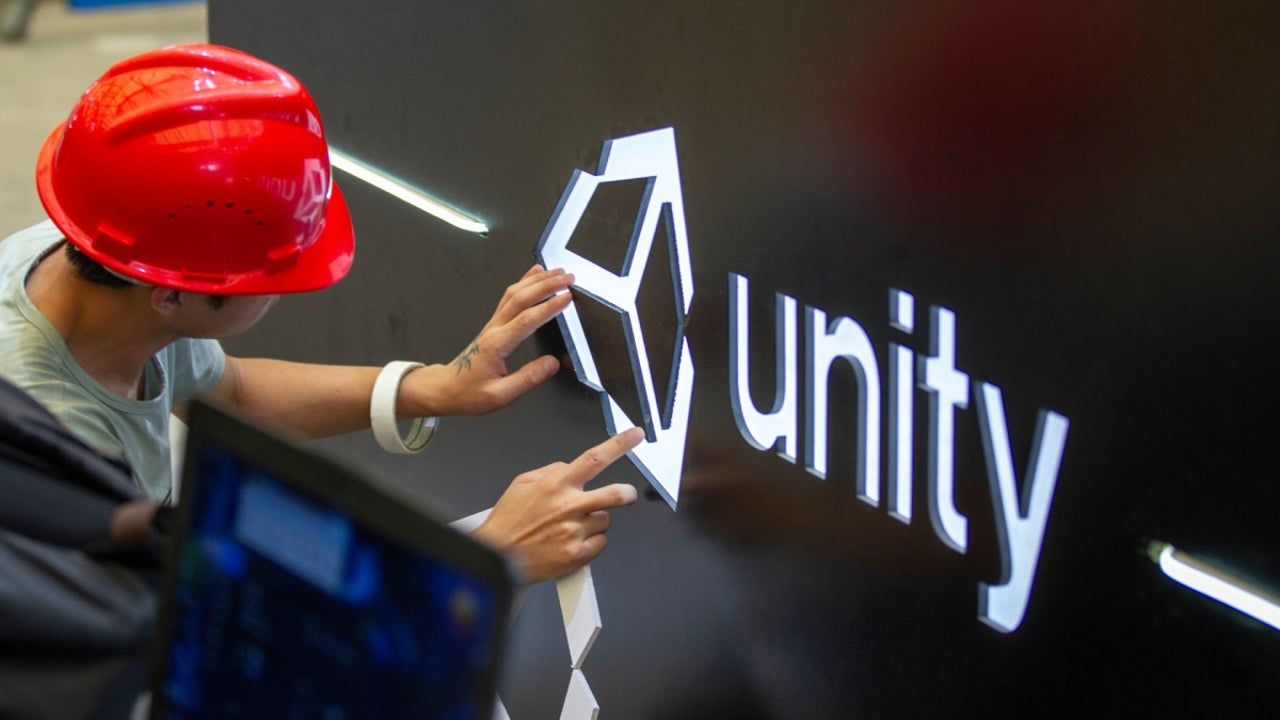

Reported $25 billion Unity acquisition talks involving Saudi Arabia’s PIF and Silver Lake raise a different kind of gaming industry risk: engine dependence, pricing trust, and infrastructure control.
Image: en.softonic.com
Unity buyout talks are reportedly real, but a deal is not
Saudi Arabia’s Public Investment Fund and private equity firm Silver Lake have reportedly approached Unity Software about a possible acquisition, with Reuters cited by multiple outlets as saying the discussions involved a valuation of about $25 billion. That is the hard center of the story: the company behind one of gaming’s most widely used engines has held early buyout talks with investors that only recently helped take Electronic Arts private.
The situation remains unannounced by the companies involved. VGC, IGN, Inven Global, Rock Paper Shotgun, Eurogamer, GamingBolt and others all point back to Reuters reporting based on unnamed sources familiar with the matter. Those sources reportedly said Unity is working with an investment bank to evaluate its options, terms could change, and no transaction is assured. Inven Global reported that Unity declined to comment, while Silver Lake and PIF did not immediately respond.
That distinction matters because a Unity acquisition is still a reported possibility, not a completed deal. There is no announced offer document, no shareholder vote, no confirmed financing structure, no published plan for Unity’s engine licensing, and no public statement from Unity leadership explaining what would happen to developers if ownership changed. What exists, according to Reuters as cited across the reports, is a recent approach by a consortium including PIF and Silver Lake, discussion of a roughly $25 billion valuation, and Unity’s evaluation of its options.
The EA connection changes the temperature of the story
The reported Unity talks landed differently because of who is said to be involved. Silver Lake and Saudi Arabia’s PIF were part of the investor group that acquired Electronic Arts in a deal valued at about $55 billion, according to VGC, IGN, Eurogamer, Rock Paper Shotgun and Inven Global. VGC reported that the EA buyout, completed in August, left PIF owning 93.4% of EA, Silver Lake owning 5.5%, and Affinity Partners owning 1.1%. Reuters’ Unity report, as summarized by VGC, did not mention Affinity Partners as being involved in the Unity discussions.
Silver Lake also has a direct Unity history. VGC, IGN, Eurogamer and Inven Global report that Silver Lake already owns around 8% of Unity after investing up to $400 million in the company in 2017. They also note that Silver Lake CEO Egon Durban sits on Unity’s board, with Reuters saying he would typically recuse himself from sale discussions because of that position.
For developers, the EA comparison is not useful because Unity and EA do the same thing. They do not. EA is a publisher and studio operator. Unity is a toolchain, runtime, services platform, ad-tech business and real-time 3D software provider. The comparison matters because the same capital stack that backed a major publisher buyout is now reportedly looking at infrastructure used by thousands of teams that do not work for Unity. If EA was a content and catalog acquisition, a Unity engine buyout would sit closer to the production layer of the industry.
Engine dependence is the real strategic risk
Unity’s value is tied to how deeply it is embedded in development pipelines. IGN notes that Unity’s engine and tools have been used for mobile, console and PC games including Genshin Impact, Hollow Knight, Among Us, Subnautica and Beat Saber. GamingBolt describes Unity as one of the two major game engine creators alongside Epic Games’ Unreal Engine, with particular reach among indie and mobile developers thanks to C#, ease of use and its asset marketplace.
WolfsGamingBlog, citing GameDiscoverCo analysis, reported that almost half of the Steam games released in 2025 that the analysis examined were made with Unity, compared with around a fifth using Unreal Engine. That figure is an analysis sample rather than an official Unity market share number, but it illustrates the practical concern: many studios have years of code, tooling, plug-ins, art pipelines, platform compliance work and staff expertise built around Unity.
Engine switching is not a clean menu choice for most teams. A studio can evaluate Godot, Unreal or custom technology, but moving a live game or mid-production project away from Unity means rebuilding workflows, retraining staff, replacing packages, retesting platform behavior and accepting schedule risk. That is why ownership and pricing trust hit differently for an engine than they do for a single publisher. A publisher can cancel a game. An engine owner can alter the economic assumptions under which thousands of other games were planned, although no such post-buyout change has been announced in this case.
Unity’s Runtime Fee history makes developers sensitive to control changes
The reported Saudi PIF Unity and Silver Lake Unity talks arrive after Unity already spent years trying to repair developer trust. VGC reports that Unity announced controversial install-based monetization plans in 2023, prompting backlash from developers, then partially walked them back before scrapping the Runtime Fee altogether in September 2024. GamingBolt quotes Unity engine and editor lead Marc Whitten’s apology at the time: “I am sorry,” followed by an admission that Unity should have spoken with more developers and incorporated more feedback before announcing the policy.
That history is central to the current anxiety. The Runtime Fee episode showed that developers were not only reacting to a price increase. They were reacting to uncertainty over whether a platform provider could change the rules after projects had already committed to its technology. In strategy terms, that was a trust shock to the engine meta: teams began reassessing the long-term cost of dependency, even if they did not immediately migrate.
There is no source in the current reporting saying PIF or Silver Lake plans to revive the Runtime Fee, change Unity Personal, raise royalties, alter asset-store terms, or restrict access to the engine. The developer risk is therefore prospective rather than confirmed. The concern is that a leveraged or private-equity-backed structure could prioritize cash generation, cost cuts or pricing changes at a company whose customers need stable terms over multi-year production cycles.
Unity is stronger financially than its reputation might suggest
A simple distress-sale reading does not fit the reported numbers. Inven Global reported that Unity beat market expectations in its November 5 Q3 results, with revenue of $622.1 million, up 32% year over year. Inven also reported that Unity posted its first quarterly GAAP profit since its September 2020 IPO, helped by growth in its AI-driven advertising platform Vector. Rock Paper Shotgun similarly points to Unity’s recent financial results as strong, supported by year-over-year growth in Vector.
Eurogamer adds another angle from Unity’s latest report, citing a 59% year-over-year increase in strategic revenue and net income of $122 million. The $25 billion figure was reportedly discussed before those results, while IGN says the earnings lifted Unity’s market capitalization to roughly $21.5 billion. Inven reported Unity’s stock rose about 4% in extended trading immediately after the Reuters report, while IGN later reported shares rose nearly 15% in regular trading and were at $48.80 at the time of its writing. Those different figures appear to reflect different trading windows rather than a fundamental contradiction.
The financial picture cuts both ways. Strong results can raise Unity’s negotiating leverage and make the $25 billion valuation a moving target. They also make Unity more attractive to financial buyers because the business is no longer defined only by engine subscriptions and developer tools. Advertising, AI-powered ad optimization and real-time 3D software outside games create multiple levers for growth, margin expansion and restructuring.
A private Unity would matter beyond another big gaming industry acquisition
If the Unity acquisition happened, it would sit inside a broader consolidation pattern but with a sharper infrastructure edge. VGC, IGN, Eurogamer and Inven connect the reported Unity talks to the same investors’ EA deal. Kotaku also notes PIF’s broader gaming exposure, including EA, Scopely and stakes in companies such as Nintendo, Capcom and Take-Two. WolfsGamingBlog highlights the mobile link: Savvy, owned by PIF, bought Scopely for $4.9 billion in 2023, and Scopely’s Monopoly Go!, Stumble Guys and Star Trek: Fleet Command run on Unity.
That creates a layered map of influence. On one layer are game makers and publishers. On another are the tools and services those makers rely on. Unity sits across engine technology, monetization, analytics, ads and real-time 3D workflows. A Unity engine buyout would therefore raise questions that are broader than who owns the next EA Sports game or Mass Effect project. It would raise questions about neutrality, developer terms, data access, ad-tech incentives and whether infrastructure companies should be evaluated differently from content companies when consolidation accelerates.
The EA aftermath is part of the fear but should be handled carefully. IGN reported that EA initiated major restructurings and studio closures after the buyout, including shutting BioWare and cancelling the next Mass Effect game. Rock Paper Shotgun reported layoffs of around 400 people, BioWare’s closure and the cancellation of a Sims-related project codenamed Project Lotus. Those reports do not prove the same would happen at Unity. They do show why developers and workers will watch financing structure, debt load and cost-cutting plans closely if the Unity talks move from approach to agreement.
For developers, the rational move is vigilance rather than panic
There is no announced Unity acquisition, no confirmed price change, and no published migration requirement for teams using the engine. Developers shipping on Unity today should not treat the reported talks as a reason to abandon production plans overnight. The switching cost may be higher than the ownership risk, especially for games near launch or live-service projects with established pipelines.
The practical response is to reduce strategic blind spots. Teams should review how much of their project depends on Unity-specific services, packages, ad products, analytics, asset-store tools and platform integrations. They should track whether any eventual buyer confirms the deal structure, whether debt is loaded onto Unity, whether engine pricing or Unity Personal thresholds change, and whether leadership commits publicly to stable developer terms. Studios starting new projects have a stronger reason to compare Unity, Unreal, Godot and custom options through a five-year cost and portability lens rather than a launch-window feature checklist.
For now, the confirmed state of play is narrow: Reuters, as cited by multiple outlets, says PIF and Silver Lake held recent talks with Unity about a possible acquisition at roughly a $25 billion valuation, Unity is evaluating options, and no deal is guaranteed. The strategic story is wider: after EA, the next possible private equity backed gaming deal may not be about owning another publisher. It may be about who controls the engine layer that many other developers cannot easily leave.