
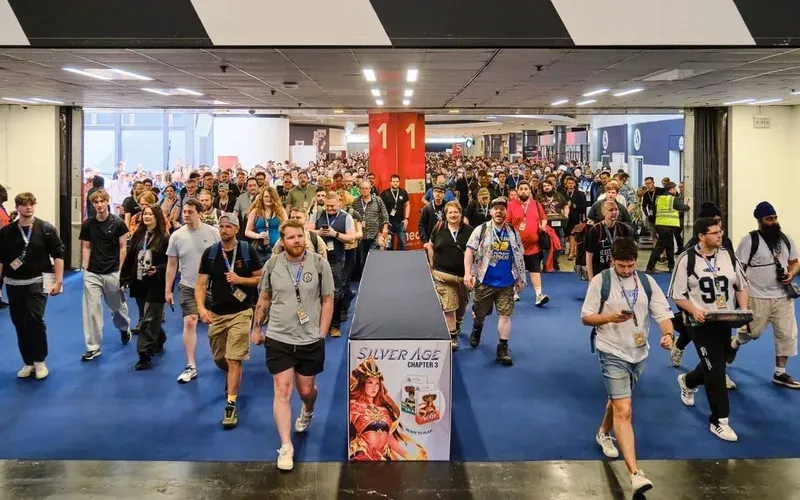

UK Games Expo has barred exhibitors from selling or displaying tabletop products made completely or significantly with AI, with limited exceptions for editing, production, and accessibility tools.
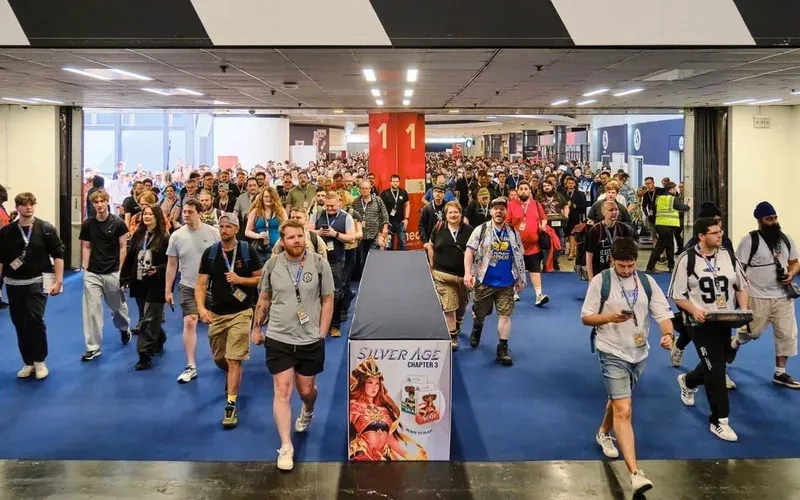
Image: northeasttimes.com
UK Games Expo draws a hard boundary around AI-made products
UK Games Expo has published a new AI policy that prohibits exhibitors from selling or displaying products created “completely or in significant part” with AI tools, according to Rascal’s report on the policy published September 24. The rule covers tabletop games, books, and merchandise, including images and written text, and it gives organizers power to remove offending material from the show floor.
The immediate tension is enforcement. The policy, as quoted by Rascal and Kotaku, says organizers may require exhibitors who display or sell prohibited items to remove them. If an exhibitor refuses, UK Games Expo may close the exhibitor’s stand and ban them from future participation. That is a serious penalty structure for a trade floor where small publishers, artists, writers, and accessory makers often treat a convention weekend as a major sales window.
UK Games Expo is not a fringe event testing a symbolic rule. Kotaku describes it as the largest tabletop convention in the United Kingdom, founded in 2007 and hosted in Birmingham each summer. GeekNative says the updated rules apply to exhibitors, studios, and traders operating at the National Exhibition Centre in Birmingham. For tabletop creators watching gaming convention AI rules develop in real time, UKGE’s policy is one of the clearest signs yet that major live events are treating generative AI as a floor-management, creator-trust, and commercial legitimacy issue.
What the ban covers on the show floor
The confirmed scope is broad. Rascal reports that products created completely or in significant part with AI tools are prohibited, including images or written text used across tabletop games, books, and merchandise. GeekNative similarly describes the ban as covering merchandise, artwork, and written material created entirely or substantially by generative artificial intelligence across the event.
That means the UK Games Expo AI policy is not limited to a narrow category such as art prints. Based on the reporting, the rule reaches core game material and surrounding goods: rulebooks, RPG supplements, board game components, books, related merchandise, and displayed artwork. If a product’s visual identity or written content was generated in substantial part by a commercial AI image generator or large language model, the available reporting indicates that it falls inside the prohibited zone.
The key phrase creators need to focus on is “significant part.” The sources do not provide a numerical threshold, a percentage test, or a formal checklist from UKGE. That ambiguity is important. A single AI-assisted typo fix is treated differently from AI-generated cover art, but the line between minor aid and significant creation is not fully defined in the reporting. For a convention floor, that creates a practical strategy problem: exhibitors must plan around organizer discretion rather than a purely mechanical rule.
The exceptions are narrow, and they are about support rather than creation
UKGE has left limited exceptions in place. Rascal reports that the policy does not preclude tools used for “spell checking and minor editing and aiding in production or accessibility.” Kotaku also notes the same carve-out, framing it as the main exception to the wider ban on AI-made games.
That wording draws a distinction between assistance and authorship. Spell checking and minor editing are treated as acceptable support functions. Accessibility and production aid are also allowed under the policy language reported by Rascal. By contrast, the ban is aimed at products where AI tools created the work entirely or played a significant role in creating the images or text.
For tabletop creators, the safest reading is conservative. Before submitting, exhibiting, or bringing booth materials, creators should check the provenance of every public-facing asset: cover illustrations, interior art, card art, maps, character portraits, rulebook prose, adventure text, product blurbs, banners, demo handouts, and merchandise. If an artist, writer, layout worker, or marketing contractor used generative AI in a way that shaped the final creative work, the exhibitor may need to treat that as a compliance risk under the new policy.
The policy’s exception for accessibility also deserves care. The sources confirm that accessibility aid is allowed, but they do not spell out examples. Creators using tools to make text easier to read, prepare accessible formats, or support production workflows should keep clear internal records of what the tool did and what it did not create. That is not because UKGE has publicly announced a documentation system, but because the policy gives organizers broad discretion once a dispute reaches the booth.
The policy follows two years of public pressure around AI at UKGE
The ban did not arrive in a vacuum. Rascal reports that UKGE faced calls from tabletop creators to prohibit the sale of products using AI-generated images and text during the June 2026 event, but games containing material generated by large language models and commercial AI tools were allowed to exhibit without disclosures. Rascal names Adventure Bears and Blocks of Glory as examples of games that exhibited alongside human-made games.
Rascal also reported earlier criticism around a 2025 UKGE Instagram post sponsored by Gates of Krystalia, an RPG described as using several AI-generated images. Kotaku cites that earlier backlash as part of the grievance leading into the new policy, saying UKGE had been chastised over sponsored social media promotion of an AI-generated project.
That history explains the shape of the new rule. This is not simply an abstract position on technology. The policy responds to a marketplace problem on a convention floor: when AI-generated art tabletop games sit beside products made by commissioned artists and writers, attendees and fellow exhibitors may not know which production pipeline they are supporting. Rascal’s reporting also notes concern around the burden that proof of human-made work could place on small and independent teams, which is a real operational tradeoff for a policy designed to protect those same creators.
From a strategy perspective, UKGE appears to be choosing floor trust over maximum vendor flexibility. The convention is effectively saying that the cost of allowing undisclosed or substantially AI-made products is higher than the cost of excluding them, even if that creates edge cases around editing tools and workflow support.
Enforcement is the unresolved part of the rulebook
The strongest unanswered question is how UKGE will identify prohibited work. Rascal reports that it reached out to UKGE to ask what methods the convention will use to identify AI-generated material and did not receive an immediate response. Northeast Times, citing Rascal, also notes that UKGE had not answered that enforcement question before publication.
That gap matters because AI detection is a weak foundation for high-stakes booth decisions. The sources do not say UKGE will rely on detection software, artist documentation, complaints from attendees, pre-event review, or on-site judgment. All that is confirmed is the policy’s enforcement power: organizers can require removal, close stands if exhibitors refuse, and bar future participation.
For creators, the practical answer is to prepare before the show rather than argue on the floor. Keep commission agreements, process files, draft histories, artist correspondence, and production notes where possible. If a game uses AI-adjacent tools only for spell checking, minor editing, accessibility, or production support, creators should be ready to explain that workflow plainly. The reporting does not say UKGE requires exhibitors to submit proof in advance, so this is risk management rather than a published requirement.
The hardest cases will likely involve mixed workflows. A human artist correcting an AI-generated base image would still seem risky under a rule aimed at works created in significant part by AI. A writer using a grammar tool for cleanup appears closer to the allowed exception. Between those poles sit the disputes UKGE has not yet publicly clarified, such as AI-assisted concepting, machine-generated placeholder art later redrawn by humans, or marketing copy drafted by a chatbot and then edited.
UKGE joins a wider convention shift against generative AI
Rascal reports that UKGE now joins Gen Con, Dragonmeet, MCM Comic Con, and Tabletop Scotland in banning products created with generative AI. EN World also frames the move against the backdrop of Gen Con in the US not permitting such material, while describing UKGE’s rule as a ban on products created by, or in significant part by, AI.
That alignment changes the commercial calculation for creators using generative AI. A project that depends heavily on AI-generated art or text may now face reduced access to major tabletop convention sales channels. Rascal argues that UKGE’s status as the largest games convention in the UK could make tabletop games created with generative AI less commercially viable. That is an interpretation, but it follows from the confirmed policy direction: more major shows are treating AI-generated products as ineligible for their floors.
Kotaku places the move in a broader tabletop industry contrast, noting that Games Workshop has barred staff from using AI in content or design work, while parts of the wider games and entertainment business continue to discuss AI in terms of cost-cutting and efficiency. The tabletop market has different pressure points. Physical products are sold face to face, art credits are visible, creators often share convention space directly with customers, and community trust can be a sales asset.
For exhibitors, the planning advice is straightforward: audit before applying, disclose uncertainty internally before it becomes a public booth problem, and do not assume that a permissive online storefront standard will transfer to a convention floor. The new UK tabletop convention AI ban gives UKGE wide authority, but it leaves creators responsible for understanding whether their art, writing, and booth materials were human-made or merely cleaned up with allowed tools.