
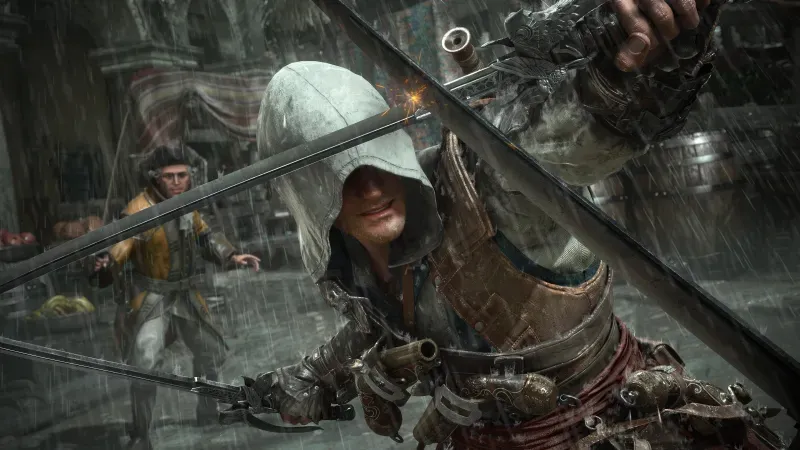

Ubisoft Barcelona workers are escalating strike action as negotiations over up to 51 layoffs focus on severance pay, job transfers, and the studio’s planned shift to Rainbow Six.
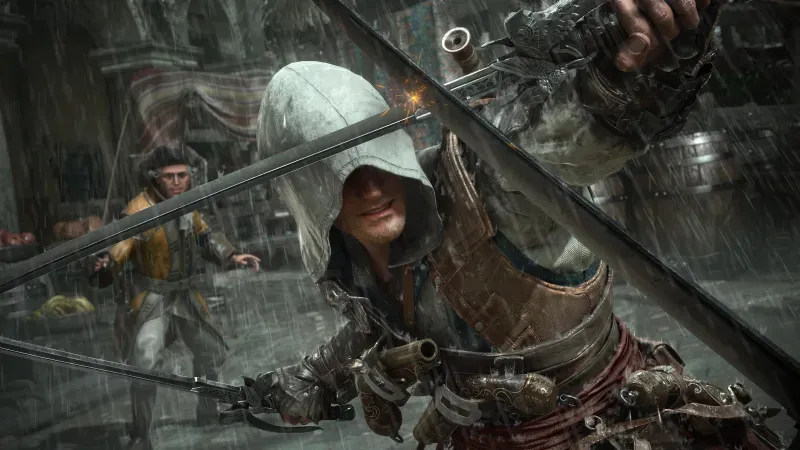
Image: gameinformer.com
Ubisoft Barcelona’s strike has moved from protest to pressure point
Ubisoft Barcelona workers are continuing strike action after negotiations over proposed layoffs hit a dispute over severance pay. According to IGN, an employee at the studio said Ubisoft’s offer for affected workers was “far below the minimum expected,” and lower than what the company had previously offered to other laid-off employees from the same studio. GamingBolt, citing IGN and Ubisoft’s own statement, reported that a larger strike was planned for July 16 as talks continued.
The immediate fight is over up to 51 jobs at Ubisoft Barcelona, a support studio that contributed to Assassin’s Creed Black Flag Resynced and also works on Rainbow Six. Ubisoft has framed the cuts as part of a proposed restructuring intended to reduce costs and concentrate resources on strategic priorities. Workers and union representatives are pushing back on both the layoffs and the terms attached to them, arguing that the company is cutting a team shortly after a commercially successful launch while offering severance they consider inadequate.
The Ubisoft Barcelona strike is also unfolding in stages. Game Developer reported that strikes began on June 30 and were scheduled for Tuesday and Thursday afternoons through July 17. Eurogamer later reported that this week’s action had escalated into a three-day total strike, bringing work to a standstill, with around 90 employees reportedly attending protests. That shift in tempo is the story’s central movement: what began as a targeted labor action over proposed redundancies has become a broader challenge to how Ubisoft is handling restructuring across one of its European teams.
The severance dispute sits at the center of the walkout
The severance issue is the clearest confirmed reason workers are keeping pressure on Ubisoft. IGN reported that striking staff criticized the company’s initial severance offer as below an acceptable standard, with one employee saying the package was below both the minimum expected and what Ubisoft had offered during previous layoffs at the Barcelona studio. GamingBolt repeated that account and reported that negotiations had slowed before breaking down enough for workers to announce expanded strike action.
The dispute is not limited to money, but severance is the sharp edge because it determines what happens to employees who cannot be saved through consultation. The same Ubisoft Barcelona employee told IGN that there were still discussions about saving some jobs, and that at least some workers were likely to move to Rainbow Six, but added that the affected job positions seemed “quite definite” and that the Assassin’s Creed team had “certainly” been cut.
That distinction matters for readers following game industry labor news because Ubisoft’s public language leaves the door open. In a statement quoted by GamingBolt, Ubisoft said the Barcelona restructuring “remains a proposal” and that no final decision would be made until the collective consultation process has concluded. From the workers’ side, though, the reported expectation is that the Assassin’s Creed mandate is gone and that severance will determine the landing for many of the people who shipped recent work. Those two positions are not identical, and the gap between them is where the strike is playing out.
Black Flag Resynced’s success sharpened the dispute
The layoffs landed in the shadow of Assassin’s Creed Black Flag Resynced, which Eurogamer and IGN reported sold 2 million copies in its first 24 hours according to Ubisoft. GamingBolt reported that the cuts at Ubisoft Barcelona came shortly after the game’s launch on PC, PS5, and Xbox Series X/S. The commercial timing has become a key point of tension because Barcelona developers had just finished work on a high-profile Ubisoft release when the redundancy process hit.
The studio’s contribution, as reported by IGN and Eurogamer, went beyond a background support credit. Eurogamer wrote that members of Ubisoft Barcelona detailed work on underwater mechanics, including swimming, underwater biomes, wrecks, and marine life behavior, as well as naval quests, naval contracts, assassin contracts, bosses, and combat AI. IGN reported that Barcelona’s Assassin’s Creed team worked for more than two years on parts of Resynced, including several main quests, a specific in-game region called Gibara, enemy combat AI, bosses, and content reportedly shown during pre-release hands-on previews.
That development work gives the labor dispute a particular sting. In action-adventure terms, the team helped build the connective tissue players feel between open-sea spectacle and close-quarters encounter design: the dives, contracts, boss rhythms, and combat behavior that turn a remake into a playable sequence rather than a museum piece. The sources do not show that Black Flag Resynced’s sales could have prevented the layoffs, and Ubisoft has said the restructuring is about broader cost reduction and strategic focus. But the timing explains why workers and supporters have framed the cuts as a betrayal of the team’s recent output.
Workers are also asking for job security, remote work, and stalled raises
The Ubisoft severance pay dispute is one part of a wider set of demands. Game Developer reported that the strikes, organized by Spain’s Confederación General del Trabajo, sought a binding negotiation for a new studio mandate that would retain the 51 affected staff. Workers also demanded a firm commitment protecting the workforce against future collective dismissal processes for at least five years, compliance with agreed internal promotions that the union said had been unilaterally paused, a formal review of salary improvements and benefits, and a return to a remote work model allowing up to 60 percent monthly work from home.
IXBT Games reported a similar set of demands from the CSVI union, including cancellation of the 51 layoffs, stronger employment guarantees, restoration of the previous remote work policy, and fulfillment of promised promotions and salary increases. Eurogamer reported that union employees were sticking to demands including reducing the number of affected workers in light of Black Flag Resynced’s success, improving severance, and securing assurances against additional layoffs in the short to mid term.
Those demands show that workers are not treating the strike as a single payout negotiation. They are challenging the future shape of the studio: whether Barcelona keeps a broader development mandate, whether workers can plan their lives around stable employment terms, and whether earlier workplace commitments survive the company’s latest cost-cutting push. For Ubisoft workers strike coverage, that is the larger pattern: severance is the immediate trigger, but trust in management commitments is also on the table.
Ubisoft says Barcelona’s Rainbow Six future is still a proposal
Ubisoft’s public position, as quoted by GamingBolt, is that it respects employees’ right to express their views and has initiated a proposed restructuring of Ubisoft Barcelona as part of broader efforts to reduce costs and focus resources on strategic priorities. Under that proposal, the studio would focus solely on Rainbow Six projects, which Ubisoft said may affect up to 51 employees. The company also said no final decision will be made until the collective consultation process has concluded, and that it remains committed to constructive dialogue with employee representatives.
That statement leaves several practical questions unanswered. Ubisoft has not, in the supplied source material, published a final count of affected Barcelona roles, a finalized severance package, or a confirmed post-consultation studio structure. The sources also do not confirm whether the strike has any direct effect on Rainbow Six live operations, release schedules, or player-facing services. Eurogamer reported that the total strike brought all work to a standstill, but the reporting does not connect that stoppage to a specific delay or outage.
What is confirmed is narrower and more concrete: up to 51 Ubisoft Barcelona employees are at risk, negotiations are ongoing, workers have escalated strike action, and Ubisoft is proposing to reorient the studio around Rainbow Six. For players, that means there is no reported need to change buying plans for Black Flag Resynced based on the strike alone. For workers, the stakes are more immediate: the consultation process will decide whether roles can be saved, who may transfer, and what terms apply to those leaving.
The Barcelona fight fits Ubisoft’s wider labor rupture
The Barcelona strike is happening inside a broader Ubisoft downsizing wave. IGN reported that 380 staff are being let go across Ubisoft offices in Winnipeg, Belgrade, Barcelona, and the company’s global publishing division, with Winnipeg and Belgrade closing completely. Game Developer similarly reported that Ubisoft Barcelona was expected to remain open while being restructured to focus solely on Rainbow Six, unlike the shuttered Winnipeg and Belgrade subsidiaries.
That context changes how the Barcelona dispute reads. This is not an isolated studio argument after one project ends. It is a local flashpoint in a company-wide reset, with Ubisoft cutting costs, closing teams, and narrowing mandates. Game Developer also noted that the cost-reduction initiative followed Tencent acquiring a stake in Vantage Studios, one of Ubisoft’s new creative houses, and that French unions including Ubisoft workers responded to related news with strike action earlier in the year. The source material does not establish a direct causal chain between Tencent’s investment and the Barcelona layoffs, but it places the strike within a period of major structural change at the publisher.
For Ubisoft’s labor relations, the risk is cumulative. Every proposed redundancy plan becomes a test of whether employees believe consultation is meaningful, whether severance is consistent across sites and past layoffs, and whether success on a shipped game protects a team from cuts. Barcelona workers are using strike action to force those questions into the open. Ubisoft, meanwhile, is trying to keep the language procedural: a proposal, a consultation, strategic priorities, cost reduction. The clash between those two rhythms is why this game industry labor news story has kept moving after the first walkout.