
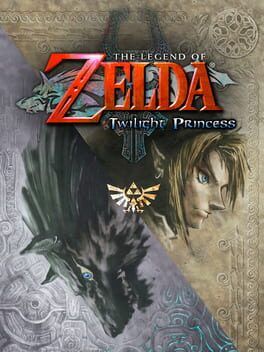

How fan developers turned The Legend of Zelda: Twilight Princess into a native PC experience with modern features, and why it highlights both the promise and peril of fan-driven game preservation.
A Game Stuck On Old Hardware, Finally Breaks Free
For nearly two decades, The Legend of Zelda: Twilight Princess has been trapped on aging Nintendo hardware. Between the original GameCube and Wii versions and the Wii U HD remaster, it has never received a modern, widely accessible release on current systems. In that vacuum, the fan community stepped in.
Dusk, an unofficial native PC port of Twilight Princess based on decompilation work, is the most ambitious attempt yet to bring the game onto contemporary machines. It is not a simple wrapper or emulator configuration. It is a from-source recompile that treats Twilight Princess like any modern PC game, with a full option menu, high-end graphics features, and support for a huge array of input devices.
It is also sitting in a very uncomfortable twilight between preservation project and copyright liability.
What Dusk Actually Is From A Technical Standpoint
Dusk exists because Twilight Princess has been decompiled. Instead of emulating a GameCube or Wii and running the original binary, the community reverse engineered the game code into a high level form that can be compiled natively for PC and other platforms.
In practice, that means several important things:
First, performance and compatibility are no longer bound by GameCube or Wii hardware expectations. The port does not have to pretend to be a Nintendo console, so it avoids many of the quirks and timing issues tied to emulation. Instead, it runs as a regular PC executable, talking directly to modern APIs and operating systems.
Second, the game can be extended in ways that are painful or sometimes impossible in an emulator layer. Dusk exposes engine-level settings like frame timing, shader behavior, camera controls, and UI logic. That is how it can offer tweaks that go far beyond what Dolphin configuration or simple memory patches could do.
Third, users still need the original Twilight Princess data. Dusk is a codebase that expects you to feed it assets from a legitimate GameCube copy. On launch, it pulls in models, textures, music, cutscenes, and scripts from the disc image you supply. The port is essentially new executable logic wrapped around Nintendo’s art and data.
Higher Resolution, Uncapped Framerate, And Modern Displays
The most obvious benefit of going native is the jump in image quality.
The original GameCube release targeted 480p on CRT and early flat panels. Even the Wii U HD version topped out at 1080p and still carried forward compromises made for older hardware. Dusk removes those limits. Resolution can be cranked up to modern standards, with support for high pixel counts, clean image scaling, and sharp HUD rendering.
Just as importantly, the port supports ultrawide and nonstandard aspect ratios. Twilight Princess was never designed for 21:9 displays, but with access to the engine’s camera logic, Dusk can adjust field of view and safe zones so the game fills a modern monitor gracefully instead of sitting in a box surrounded by black bars.
Framerate is another area where the port stretches its legs. The original game was tied to 30 frames per second, and early experiments with doubling that speed quickly broke physics or event timing. Dusk instead lets the renderer run at much higher refresh rates while the game logic keeps its own consistent update cadence. In simple terms, the world still “ticks” at the expected rate, but the image is drawn more often, so motion feels smoother without cutscenes or puzzles falling apart.
For PC players used to variable refresh monitors, G-Sync or FreeSync, and 120 Hz panels, this alone makes Twilight Princess feel less like an artifact and more like a contemporary release.
Quality Of Life: Playing Twilight Princess Without The Friction
The team behind Dusk clearly set out to respect the original game while sanding off pain points that have annoyed players and speedrunners for years.
Climbing, one of the slowest and most criticized actions in the game, can be sped up so traversing ladders and vines no longer feels like a tax on your patience. Wolf to human transformations are shortened, trimming long repeated animations. Dialogue boxes can be advanced more quickly, and certain text interruptions, such as repeated reminders about rupee types, can be reduced or removed.
Content pacing is also adjusted in subtle but meaningful ways. The infamous Tears of Light collection segments, already toned down slightly in Twilight Princess HD, can be streamlined further through instant or faster collection options. A new take on a time control mechanic lets players shift day and night more freely, which is particularly helpful for side quests tied to specific times.
Even the economy gets attention. Where the original game could punish you for opening a chest with a full wallet by simply putting the rupees back, Dusk allows that penalty to be disabled entirely. The result is a game that respects your time without rewriting the core structure.
For returning players who know the story beats by heart, these changes shift Twilight Princess from a demanding replay to a comfortable revisit.
Input, Accessibility, And Steam Deck Support
Running as a PC executable opens the door to robust input and platform flexibility.
Dusk supports traditional controllers, keyboard and mouse, and gyro aiming. In a sense, it gathers the best of all previous versions. The pointer precision that made the Wii version’s bow and slingshot satisfying can now be approximated with gyro on PC pads and on handhelds like Steam Deck.
With full keyboard remapping, menu navigation and combat can be customized to suit accessibility needs. Players who struggle with rapid button presses or cramped gamepad layouts can reorganize inputs in ways that a fixed console release rarely allows.
Portability is also no longer locked to Nintendo hardware. Reports of rock solid performance on Steam Deck and other handheld PCs suggest that Twilight Princess finally exists in a truly portable, modern form, not just as a relic preserved on a single discontinued platform.
Modding Hooks: Texture Packs, Models, And Visual Tuning
Decompilation inherently makes modding easier, and Dusk embraces that reality rather than hiding it.
The port supports custom texture and model packs, allowing fans to refresh the game’s look in ways that go beyond the Wii U remaster. HD textures, reauthored UI elements, and even alternate character models can be loaded as external assets. For a game whose muddy low resolution art was often cited even at launch as a weak point, the ability to push its moody art direction into genuinely crisp territory is significant.
On top of modding hooks, Dusk exposes graphics settings that change the character of the image. Bloom, a major part of the original’s look, can be toned down or disabled for players who found it overpowering. Shadows and ambient lighting can be tweaked to taste. There is even a “Dusk mode” look that subtly shifts the presentation while remaining faithful to the original.
What might have been a fixed snapshot of 2006 art direction is instead a flexible baseline, sitting somewhere between preservation and reinterpretation.
Preservation Or Just A Better Way To Play?
Projects like Dusk raise an important question: when does convenience become preservation?
On one hand, everything about this port serves historical and archival aims. It runs Twilight Princess natively on modern systems, breaking free from hardware that is aging, scarce, and no longer sold. It respects the original logic and behavior to the point of reproducing known glitches and speedrun setups. It codifies the game in a form that should be easier to maintain in the long term than an opaque, proprietary binary for a discontinued console.
On the other, Dusk does not simply freeze Twilight Princess in amber. It aggressively modernizes it. Faster climbing, instant Tears of Light, economic tweaks, and built in cheats all turn the game into something more convenient and in some cases much easier.
For preservationists, that dual nature is both exciting and slightly uncomfortable. Use of original assets and retention of original code paths means Dusk can act as a reference point, a kind of living archive for how Twilight Princess behaved. Yet the most promoted features are often the ones that change that behavior for comfort or fun.
The project tries to square this circle by keeping quality of life features optional and by pushing a notion of console accuracy as a baseline. You can disable the extra conveniences and play something far closer to the original releases, simply running at higher resolution and on new hardware. It is a compromise that recognizes how players actually interact with old games.
What Dusk Says About Demand For Native Nintendo PC Experiences
The sheer enthusiasm around Dusk, from Steam Deck coverage to forum threads dissecting options menus, underscores a growing reality: there is intense demand for Nintendo experiences that feel at home on PC.
For years, emulation has been the de facto answer, but it carries layers of friction. Emulator setup, performance tuning, controller configuration, shader cache stutter, and game specific hacks are routine. Native decompilation based ports strip away that friction. What players see is an icon on their desktop, a settings menu like any other PC game, and compatibility with their familiar hardware.
Fan projects like the Ocarina of Time PC port, Super Mario 64 decomp forks, and now Twilight Princess Dusk are all part of the same trend. They do not just exist because people want higher resolution. They exist because PC style control, modding ecosystems, flexible performance tuning, and platform choice have become baseline expectations.
Nintendo, by keeping its back catalog locked to proprietary consoles and trickling out remasters at an uneven pace, has left a wide gap between what fans want and what is officially available. Dusk fills that gap for Twilight Princess in a way that is hard to ignore, especially as official HD versions remain confined to the Wii U.
The Legal And Ethical Twilight Zone
This is where the story becomes far more complicated.
Legally, the Dusk team positions the project as code only. You must provide your own GameCube disc image, and the port does not distribute Nintendo’s models, textures, music, or scripts. In theory, that keeps it closer to historical cases like Bleem on PlayStation and recent legally tolerated decomp ports, where reverse engineered engines were judged acceptable as long as users supplied their own game data.
In practice, the picture is messier. Even if no Nintendo assets are shipped, the entire purpose of Dusk is to run a copyrighted Nintendo game outside Nintendo hardware. The branding, characters, and world all belong to Nintendo. The code, even in a decompiled or reimplemented form, is derived from copyrighted work.
Nintendo historically does not look kindly on fan projects that touch its IP at this scale. From fan remakes to ROM sites, the company has frequently taken aggressive legal action regardless of whether money changed hands. Decomp projects often rely on a careful, clean room process to avoid directly copying original source, but that does not guarantee immunity from litigation.
Ethically, opinions split along lines that have become familiar in emulation debates.
One camp views Dusk as a vital preservation effort that only exists because the rights holder has failed to keep its own history accessible. Under this view, requiring an original disc image respects ownership, while modern features simply ensure the game remains playable and enjoyable on current hardware.
The other camp sees any redistribution of executable code or effort to enable Nintendo games on non Nintendo platforms as a violation of the creator’s wishes, regardless of technical safeguards. For them, the proper solution is official rereleases and ports, not fan work that skirts the edges of what copyright law may or may not allow.
The reality is that Dusk lives in a space lawyers would call nontrivial risk. It leans on precedent from past decomp based projects, but it also revolves around one of Nintendo’s flagship series. Until or unless Nintendo issues a statement or legal challenge, it will remain an open question how sustainable projects at this scale really are.
A Blueprint For The Future, If It Survives
Whatever its legal fate, Dusk is a startling proof of concept.
From a technical angle, it shows how far decompilation has come. Running Twilight Princess as a native PC application with high resolutions, ultrawide support, uncapped framerates, dynamic visual settings, and robust input options demonstrates that early 3D console games are not doomed to live forever on aging plastic. They can be transformed into first class citizens on new platforms.
From a preservation angle, it shows what a community can achieve when official support is absent. Even if Dusk eventually disappears under legal pressure, the work and knowledge behind it will inform future efforts to keep other titles alive.
From a player’s perspective, it makes a simple, powerful argument. When classic games are allowed to take advantage of modern hardware, they do not just hold up. They thrive.
Twilight Princess Dusk is perhaps the clearest example yet of how tightly interwoven preservation, fandom, and legal gray areas have become. It is the best way to play one of Nintendo’s darkest Zeldas, and also a reminder that the path to keeping games alive is rarely straightforward.