
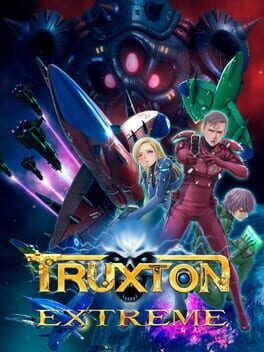
Masahiro Yuge returns to guide a legendary arcade shooter into the modern era as Truxton Extreme brings white hot vertical shmup action to contemporary platforms without losing its old school soul.
Truxton has always been one of those names shmup fans say with a little extra weight. In 1988, Toaplan’s brutal vertical shooter, known as Truxton in the West and Tatsujin in Japan, helped define what arcade difficulty, pattern memorization, and white knuckle survival could look like. Then, after 1991’s Truxton II, the series went quiet.
Thirty eight years later, Truxton Extreme is finally giving the franchise a true revival, and it is doing so with the one person who matters most back at the helm.
A comeback almost four decades in the making
The gap between Truxton II and Truxton Extreme is longer than the entire lifespan of many modern shooter studios. In that time, the genre shifted from pure arcade boards to console ports, then online leaderboards, then indie revivals and dense bullet hell danmaku styles.
That is what makes this new entry feel less like a routine sequel and more like a full blown historical event for shmup fans. Publisher Clear River Games and developer Tatsujin are not dusting off a name for nostalgia alone. They are treating Truxton as a living lineage that has finally caught up with the present.
The new game is positioned very clearly as a continuation of that 80s and early 90s arcade DNA. It keeps the vertical scrolling perspective and tightly tuned enemy waves, but it is built for a 2026 audience on modern hardware. After an initial reveal as a PlayStation 5 project, the revival has broadened out. Truxton Extreme is now targeting Nintendo Switch 2 and the current Switch alongside PlayStation 5, Xbox Series consoles, and PC, with a July 30, 2026 launch window.
For a series that once lived and died in smoky arcades, the idea that its return will arrive simultaneously on almost every major gaming platform is a quiet revolution.
Masahiro Yuge’s return and why it matters
The real heart of this comeback is Masahiro Yuge. As a Toaplan veteran, Yuge was both programmer and composer on the original Truxton. He approached shooter design from a musician’s mindset, treating enemy waves and bullet patterns like phrases in a piece of music. The original games asked players to build muscle memory the way a pianist runs scales.
With Truxton Extreme, Yuge is not just giving his blessing from a distance. He is directly involved again, shaping both game design and soundtrack. That means the elements that made Truxton stand out in 1988 are hard wired into this revival rather than mimicked from the outside.
For long time fans, his return is a rare chance to see a classic creator revisit their own work with decades of additional experience. For newer shmup players who discovered Toaplan through ports and collections, it is an opportunity to play a brand new release that comes from the same mind, not a retro inspired imitation.
The soundtrack is a particular point of focus. Truxton’s music has always been iconic, and the new game leans into that legacy with reimagined tracks from the original games alongside new compositions. It is built as a bridge between eras, ensuring that the sonic identity of the series hits just as hard through modern audio setups as it did through arcade cabinets.
From arcade board to living room: platforms and reach
The original Truxton was something you had to hunt down in specific arcades or import on 16 bit hardware. Truxton Extreme is taking the opposite approach, aiming for broad accessibility without compromising difficulty.
The new entry is coming to PlayStation 5, Xbox Series X|S, PC through Steam and other storefronts, and crucially both Nintendo Switch and Nintendo’s next generation Switch 2. That multi platform strategy matters more than it might seem at first glance.
Vertical shmups today live in a niche that cuts across dedicated genre fans and curious newcomers attracted by strong visuals or online buzz. By ensuring Truxton Extreme hits all major ecosystems at once, Tatsujin and Clear River Games are giving that niche the widest possible stage.
For a once dormant franchise, this kind of reach is also a statement of confidence. Truxton is not returning as a limited boutique curiosity. It is staking a claim as a current, living shooter series.
Modernizing Truxton without losing the arcade soul
The biggest tension in any legacy revival is how far to modernize. Go too far and you lose the ruthless clarity of an old arcade board. Stay too rigid and the game collapses under outdated expectations. Truxton Extreme is walking that line very deliberately.
Visually, the game makes the jump to full 3D while holding onto strong, readable silhouettes and color choices that echo Toaplan’s sprite work. The screen still scrolls vertically, enemy ships still slice in from the edges, and bullets still form patterns that can be parsed with practice rather than devolving into visual noise.
Under the hood, though, there are clear concessions to 2020s design sensibilities. A dedicated Training mode lets players drill the sections that give them trouble rather than paying for repeated arcade continues. Tutorials explain core systems and weapon behavior without demanding players learn purely by failure. Arena style challenges and structured modes help short sessions feel meaningful instead of like throwaway credits.
Story Mode is perhaps the boldest departure. Rather than a minimal set of stage intros, Truxton Extreme builds a manga styled narrative around three playable characters, complete with leveling and progression layers. This gives players used to modern action games more to latch onto, while still anchoring the experience in the moment to moment demands of pattern dodging and resource management.
For purists, Arcade Mode strips away those trappings to chase pure score and survival. It aims to recreate that old loop of chasing just one more stage, one more extend, one more shot at a no miss run.
The new tools of destruction
A key part of Truxton’s identity has always been its weapons. In Extreme, those tools return with modern feedback, visual flare, and tightened roles.
The Power Shot operates as a straightforward, high impact option that rewards staying close and aggressive. The Truxton Beam pays tribute to the piercing lasers of classic arcade shooters, carving lines through tightly packed waves. Thunder Laser shakes up enemy formations with heavy visual presence, while the Homing Shot is built to help players manage threats without needing pixel perfect manual aim.
Together, these weapons define a rhythm of play that still feels very much like Truxton. You weave through fire, switch tools to match enemy types, and constantly weigh risk against the reward of getting close for more damage or item pickups.
Modes that respect both veterans and newcomers
One of the most striking aspects of the announcement is how many modes are explicitly tuned to different kinds of players while still respecting the core challenge.
Story Mode is built for those who want an ongoing sense of progression and a reason to replay beyond score. Arcade Mode exists for long time fans who want the clean, unforgiving structure of a traditional clear. Team Mode introduces co op with shared lives and scores, a clever twist that keeps tension high even when playing with friends.
On top of that, Training, Arena, and Tutorial options give players a way to practice, experiment, and understand systems without burning out. The extras such as a Model Viewer and the quirky Pipiru Village hub nod to collectors and lore diggers who love poring over ships, enemies, and world building details in between runs.
Crucially, none of this works if the game loses its bite. All communication from Tatsujin and its partners stresses that Truxton Extreme remains a demanding vertical shooter. Accessibility here is not about removing difficulty but about giving players better tools to learn how to overcome it.
What shmup fans should be watching for
For dedicated shooter fans, the announcement is more than a nostalgia hit. It is a test case for how a legacy arcade franchise can be revived in today’s market.
One key question is how the game balances visibility and spectacle. The shift to 3D can easily make bullets harder to read if effects are overdone. Early footage suggests that Truxton Extreme favors clarity over chaos, but the final tuning of enemy density, bullet speed, and hitbox size will determine whether it feels fair in that classic Toaplan way.
Another area to watch is scoring depth. Modern shmups often live or die on their scoring systems, from chaining and grazing to rank manipulation. Truxton’s roots are in straightforward survival with high but readable difficulty. How Extreme layers modern scoring hooks on top of that without overwhelming its audience will say a lot about how adaptable the old design is.
Finally, longevity matters. Online leaderboards, score sharing, and the way different modes feed into replay value will decide whether this is a one and done nostalgia play or the start of a sustained new chapter. The inclusion of multiple modes at launch and a robust training setup is a good sign that Tatsujin understands how people engage with shooters today.
A legacy reborn, not just remembered
Truxton Extreme is not only significant because it is the first new entry in 38 years, or because the original creator is back, or because it is landing on everything from Switch to high end consoles. It matters because it treats Truxton as something still evolving.
If the final game can preserve the harsh but fair spirit of its arcade ancestors while giving players modern tools to learn and improve, it may become a blueprint for how other long silent shooter series can return. In a genre built on memorization and iteration, there is a certain poetry in seeing a classic finally get another pattern to master.
For now, Truxton Extreme stands as one of the most intriguing legacy revivals on the horizon, a vertical line stretching from 1988’s arcades straight into today’s living rooms, with Masahiro Yuge once again at its center tightening every shot, ship, and note.