
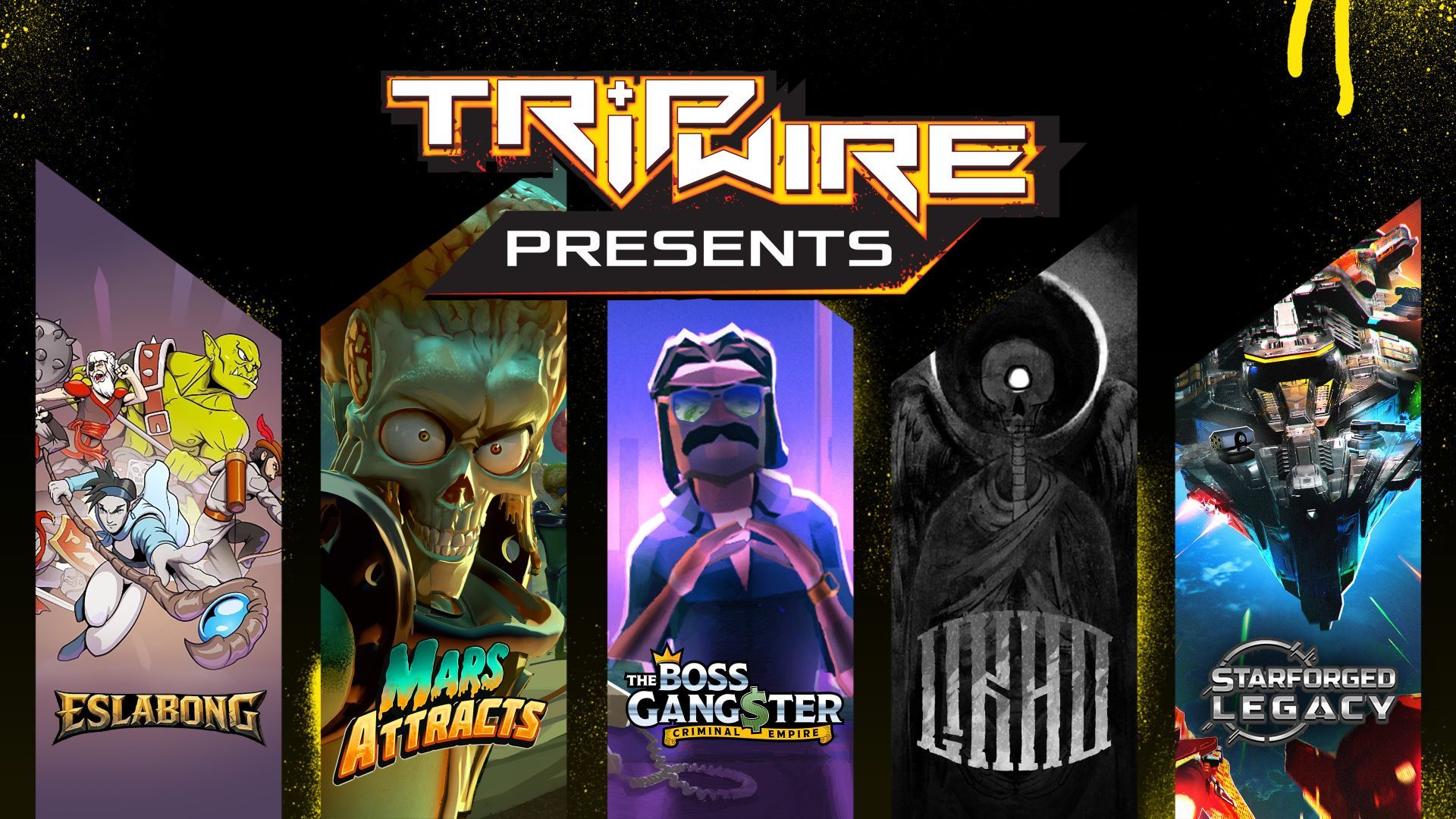

Tripwire Presents is expanding its indie publishing support with five smaller games, flexible commercial help, and an unanswered question about terms in a tighter market.
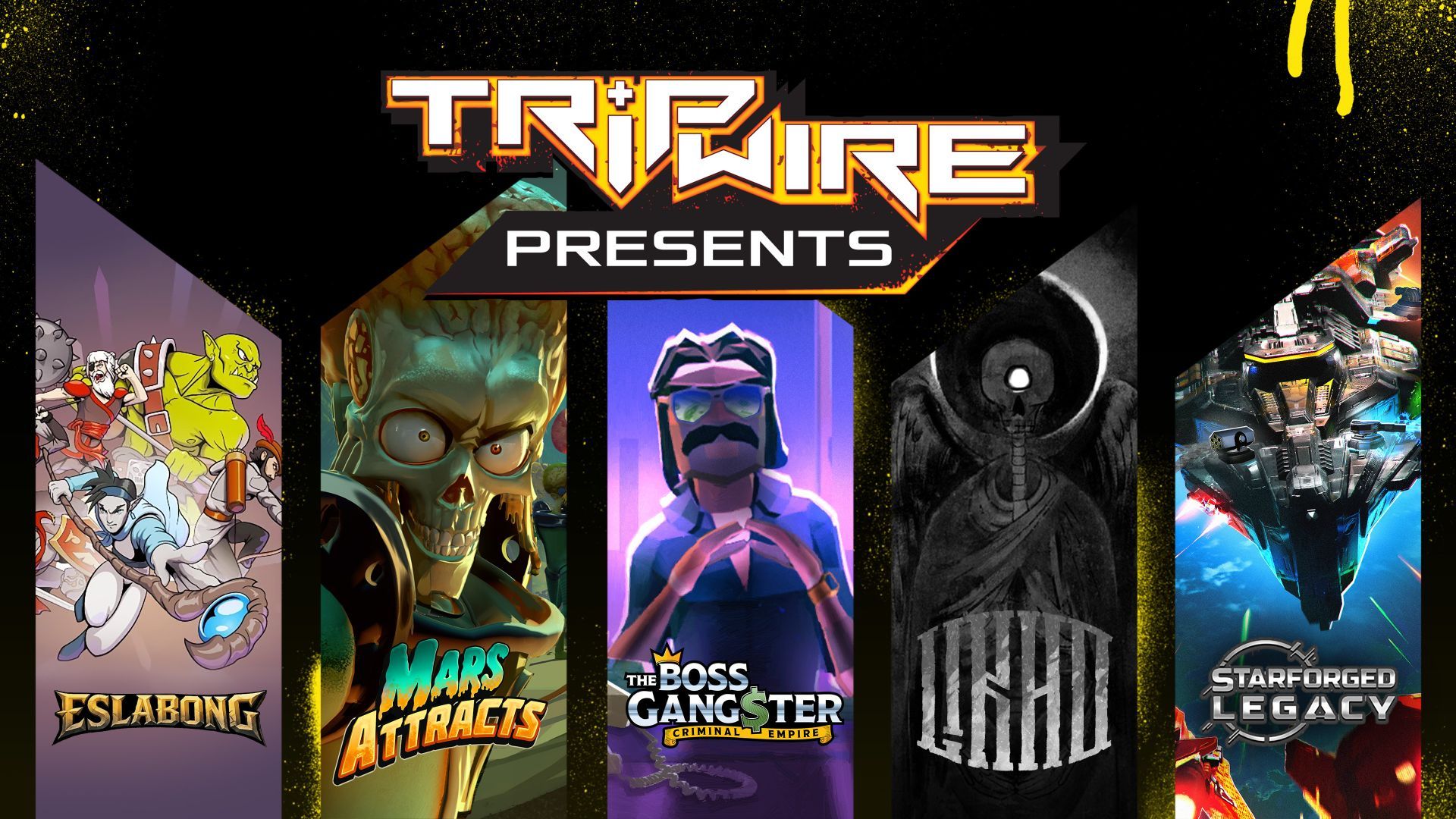
Image: monstervine.com
Tripwire Presents is widening its publishing lane
Tripwire Presents, the publishing division of Tripwire Interactive, is expanding its business with a new program aimed at smaller independent developers, and the first slate is already public: The Boss Gangster: Criminal Empire, Starforged Legacy, Mars Attracts, One-Eyed Likho, and Eslabong.
The concrete offer, according to Tripwire’s announcement as reported by GamesIndustry.biz, GameDeveloper, GamesBeat, Inven Global, DayOne, and MonsterVine, is scaled publishing support for self-published indie games at different points in their lifecycle. That includes pre-release games, Early Access projects, and titles that have already launched.
The tension is in what Tripwire has announced and what it has not. The company is promising support in areas that can decide whether an indie survives Steam’s churn, including cross-promotion, storefront relationships, commercial strategy, public relations, creator outreach, events, pricing, discounts, sale timing, promotional calendars, and lifecycle management. GamesIndustry.biz notes that Tripwire did not disclose the commercial terms. None of the provided reports confirms whether advances, minimum guarantees, recoupable funding, porting budgets, or production financing are part of the program.
That makes this expansion worth reading carefully. For indie developers, Tripwire publishing may look like a new route through a tighter market, but the confirmed pitch is not a blank-check funding program. It is a publishing services play built around visibility, commercial planning, and platform access, areas where small teams often lack leverage after spending their resources making the game.
The offer is built around leverage, not ownership language
Tripwire’s public framing is deliberately flexible. GamesIndustry.biz reports that the company described the partnerships as flexible and “dev-friendly,” with the goal of helping games reach more players while ensuring the developers who created them benefit the most. GamesBeat, citing the press release, says Tripwire will provide access to its engaged player community, platform and storefront relationships, promotional calendars, and strategic guidance on pricing, discounts, sales timing, and lifecycle management.
Publishing Director Bryan West positioned the initiative around games that have already carried their own weight. “Tripwire Presents is starting this new program to give additional visibility to great self-published indie games that we feel Tripwire fans will absolutely love,” West said, according to multiple reports. He added that the titles come from “scrappy developers” who have handled both creation and promotion themselves.
That language matters because the program appears designed for a particular indie pain point: teams that have a finished or playable product, some market proof, and too little reach. A traditional publisher might enter much earlier with development funding, milestone oversight, production support, and distribution planning. Tripwire’s announced model, at least from the information now available, sounds more modular. It can attach to a game before release, during Early Access, or after launch, then push on commercial decisions that affect the game’s long tail.
From a strategy perspective, that is a different kind of bet. Tripwire does not have to guess as blindly as it would with a concept-stage project, and developers may be able to avoid giving up the same level of control they might in a broader publishing deal. The missing piece is the contract. Without terms, revenue split, marketing commitments, exclusivity language, duration, or funding details, developers should treat the announcement as a signal of opportunity rather than proof of a universally favorable deal.
A five-game slate shows Tripwire is not chasing one genre
The launch lineup is broad enough to show that Tripwire Presents is not building the initiative around a single genre community. The Boss Gangster: Criminal Empire, from BEF Games, is described by MonsterVine and Inven Global as a hybrid action, simulation, and criminal empire management game. It left Early Access on October 27, costs $18.99 on Steam, has a free demo, and was listed with a 20% discount through November 10.
Starforged Legacy, from Second Shift Games, is in Steam Early Access for $7.99. The sources describe it as a single-player sci-fi action roguelike or roguelike bullet hell in which players build a spacecraft with salvaged weapons and augmentations. Resources from failed runs contribute to permanent progression, which gives it the retention logic publishers like to see in Early Access: repeated sessions, visible upgrade paths, and an obvious structure for balance updates.
Mars Attracts, from Outlier Games, is a park management sim based on the Mars Attacks universe. According to MonsterVine and Inven Global, it recently left Early Access and costs $24.99 on Steam. A free update has already added another enclosure type and limited-time Halloween decorations. That post-launch update cadence fits Tripwire’s stated focus on lifecycle management, because a management sim can benefit heavily from event timing, themed updates, and discount windows.
One-Eyed Likho comes from Morteshka, the developer of Black Book. The reports describe it as a first-person folk horror adventure rooted in Slavic folklore, with fire-based puzzles and monochromatic artwork. It is available for $19.99. Eslabong, from shirowita, combines tactical strategy with mercenary club management in solo or co-op play, with changing rosters, randomized stats, and seasonal league and cup competitions. It is in Steam Early Access for $14.99 and has a free demo.
The common thread is not genre. It is commercial stage. Several of these games already have Steam pages, prices, demos, Early Access histories, or full-release status. That gives Tripwire something concrete to amplify: a store page to optimize, a discount to schedule, an update to promote, a creator pitch to target, and a player segment to test against its existing audience.
Steam visibility is the immediate battlefield
The confirmed launch details in the provided reporting are centered on Steam. Inven Global frames the first wave as five Steam games, and MonsterVine links each title to a Steam store page while listing prices, demos, discounts, and Early Access or full-release status where applicable. GameDeveloper quotes the initiative as spanning different genres and platforms, but the source material supplied here does not confirm console versions or non-Steam storefront availability for the five launch titles.
That platform gap is important for players and developers. For players, the practical answer is simple: the currently documented way to follow or buy these games is through Steam. The sources confirm demos for The Boss Gangster: Criminal Empire and Eslabong, Early Access availability for Starforged Legacy and Eslabong, and full-release or post-Early Access status for The Boss Gangster: Criminal Empire and Mars Attracts. One-Eyed Likho is reported as available at $19.99.
For developers, Steam is also where many discoverability problems become most visible. Pricing, discount depth, seasonal sale timing, capsule art, creator coverage, update beats, and wishlist conversion can move a game’s trajectory without changing the core design. Tripwire’s offer directly targets those levers. It is not glamorous work, but it is often the difference between a game that gets one launch spike and a game that keeps earning attention across patches, themed events, and sale periods.
That is where Tripwire Interactive’s own background becomes relevant. GameDeveloper identifies Tripwire Interactive as an Embracer subsidiary and notes that the company is best known for Killing Floor, while GamesIndustry.biz describes it as the Killing Floor and Maneater studio. A publisher with established platform relationships and an existing player community can give a small developer access to timing and audience advantages that are difficult to build alone.
The tighter-market question is about risk allocation
This announcement lands in an industry environment where smaller teams are looking for ways to reduce commercial risk without surrendering the whole board. The provided sources do not include a market-wide investment analysis, but GamesIndustry.biz does note that Tripwire Interactive conducted layoffs in March affecting 23 people. That detail does not define the whole initiative, yet it is a reminder that publishers and developers are both operating with sharper cost discipline.
In that context, Tripwire Presents’ scaled model is strategically coherent. A full publishing deal can be expensive for a publisher and restrictive for a developer. A lighter partnership can spread risk differently: the developer brings an existing game or near-term launch, while the publisher contributes promotional access, commercial planning, and a signal boost. If the game is already live or in Early Access, both sides can evaluate real audience response before committing to larger campaigns.
The unanswered financial question is still central. If the program includes no direct funding, it may help teams that already survived production but may be less useful for developers who need salaries covered, localization paid for, console ports financed, or quality assurance scaled up before launch. If it does include some form of funding in individual deals, Tripwire has not disclosed that in the provided reports.
For indie developers, the smart read is to separate visibility support from capital support. Tripwire Presents is now publicly offering help with the commercial systems around a game. That can be valuable, especially for teams that have already built something players like. It should not be confused with a confirmed financing pipeline unless Tripwire announces deal structures or developers share the terms of their partnerships.
What to watch as Tripwire Presents adds more games
Tripwire plans to share more information about the initiative and additional titles later, according to MonsterVine, which also points readers to Tripwire’s official publishing page. The next round of announcements will reveal whether this is mainly a curated spotlight program for already-proven Steam games or the start of a broader indie game publishing pipeline with earlier-stage production involvement.
The most useful signals will be practical ones. Watch whether future Tripwire Presents titles get coordinated sale campaigns, creator pushes, festival placements, timed demos, major update beats, or platform expansions. Also watch whether Tripwire begins naming commercial structures, because “flexible” can mean many things in publishing. It can mean a light-touch marketing deal, a revenue-share partnership, a services agreement, or a deeper publishing relationship with funding and commitments.
For players, the immediate benefit is discovery. The five launch games cover crime simulation, roguelike space combat, licensed park management, folk horror, and tactical club management, with several available now and some offering demos. For developers, the opportunity is more conditional. Tripwire Presents may become attractive to teams that have product-market evidence but need help converting attention into sales over time.
That is the strategic shape of this expansion: Tripwire Interactive is not announcing a giant new indie fund in the material provided, and the company has not published terms. It is opening a smaller, targeted publishing lane at a moment when visibility, pricing discipline, and lifecycle planning can matter as much as launch-day noise. In a crowded market, that kind of support can be a route forward, provided developers know exactly what they are getting in return.