
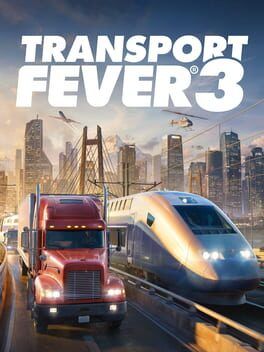

Hands‑on previews show how Transport Fever 3’s scenario‑driven campaign, city‑shaping tools, and new disaster systems push the series closer to Cities: Skylines territory – without losing its logistics core.
Transport Fever has always been about the poetry of timetables. You laid down tracks, tuned line frequencies, and watched chains of factories hum to life. Transport Fever 3 keeps that core, but the latest hands‑on previews suggest something more ambitious taking shape: a transport sim that increasingly behaves like a full city builder, with people getting sick, festivals collapsing, and entire road networks buckling under your bad decisions.
At the heart of that pivot are three pillars. The new scenario‑driven campaign that turns logistics into historical drama, the expanded city‑shaping tools that give you real influence over how settlements grow, and disaster systems that finally make bad planning feel like more than a temporary dip in profits. Together they pull Transport Fever 3 surprisingly close to the systemic storytelling of Cities: Skylines, while still feeling unmistakably like Transport Fever.
A campaign about people, not just vehicles
Earlier games used their campaigns as guided history tours of transport tech. Missions were mostly excuses to unlock the next locomotive. Transport Fever 3 still spans 1900 to 2030 and remains obsessed with rolling stock, but the campaign in the previews is framed around people and events rather than just machines.
Missions are delivered through talking‑head characters who bicker, pressure you, or offer terrible advice. Instead of reading dry objective text, you are yelled at by a festival organiser, patronised by a clueless producer, or nudged by an engineer who actually understands how sewers work. The writing is gentle rather than laugh‑out‑loud, yet it builds a clear sense that your decisions affect specific groups of citizens rather than abstract numbers.
That tonal shift starts immediately. One early tutorial is couched as "kidnapping" alligators for a camera test, then releasing them. It is a deliberately goofy way to teach you the basic interface, but it also signals that Transport Fever 3 is no longer content to be a textbook in simulation form. This is a transport game that wants to have scenarios you swap stories about.
Woodstock: when logistics meets bodily functions
Nowhere is that clearer than in the Woodstock mission, which both previews single out. On paper it is a classic Transport Fever setup. There is a rural campsite, some suppliers, and the task of moving food and materials in to support an event. The twist is that the event is Woodstock 1969, the campsite can explode into a small city, and people will quite literally get sick if you treat sewage like just another commodity.
You begin by hauling food into a modest camp. As supplies flow, the festival grows. More tents appear, traffic increases, and that once‑sleepy road into the site starts to clog. This is familiar transport sim territory, except now the growing crowd has needs beyond burgers and vinyl records. There are no toilets.
Build latrines and you trigger the next layer of the scenario. Waste has to go somewhere. A producer character gently encourages you to dump it into the nearby river, because it is cheap and quick. Treat it as just another logistics puzzle and you can route sewage directly to the water, freeing up trucks for more lucrative freight. The game, however, tracks the consequences with uncomfortable precision.
Festival goers bathe in the now‑contaminated river. Illness spreads. The Woodstock mission that began as a cheerful throughput challenge turns into a crisis management story about your negligence. You scramble to pivot your fledgling network, sending waste to a proper treatment facility and hauling medicine back to the site, all under a real time pressure that has little to do with balance sheets and everything to do with whether your festival becomes a public health disaster.
Mechanically, this is still about line design, vehicle choice, and depot placement. What changes is the context. Instead of the campaign gently prodding you toward profitability, it weaponises the very tools that made you money minutes earlier. A few reckless clicks can poison your own citizens. That is more in line with the cascading failures that define the best Cities: Skylines stories than with the relatively frictionless optimisation of previous Transport Fever campaigns.
Disasters that grow out of your own network
The Woodstock fiasco is the clearest example in the previews of Transport Fever 3’s disaster systems, not as random pop‑ups, but as consequences of how you use the simulation. There is no magic "plague" event that strikes at arbitrary intervals. Illness arrives because you poisoned a river and invited thousands of people to camp beside it.
This approach hints at how other scenarios can push the series closer to disaster‑prone city builders. One mission about saving Mardi Gras after a storm, for instance, uses bad weather as a catalyst for network stress. Your roads are flooded, demand spikes for certain goods, and suddenly a route that seemed resilient in free play reveals its weak spots under pressure.
These are not disasters in the cinematic SimCity sense. You will not be watching a tornado rip through your rail yard. Instead, they are systemic shocks that expose the hidden dependencies in your routes. If a single arterial road into a city is carrying food, waste, and medicine, any disruption there is a multi‑layered crisis. Because citizens are simulated and cities grow dynamically around your infrastructure, those shocks can ripple outward in ways you did not predict.
In effect, Transport Fever 3 is leaning into a softer form of city management. You are still a transport magnate, but the game increasingly treats you as the emergency planner, environmental regulator, and urban designer as well. That broader responsibility is what nudges it toward the same mental space that Cities: Skylines occupies, where the real game is about anticipating how today’s efficiency will become tomorrow’s vulnerability.
Cities that grow around your mistakes
Underpinning all this drama is a more responsive city growth model. Previous entries already let towns expand along your tracks and bus routes. Transport Fever 3 deepens that interplay so that roads, traffic, and pollution actively shape the urban form, not just in appearance but in function.
Set up a profitable haul into a sleepy village and you will watch it densify into an industrial hub. That part is expected. The twist is that the roads you hammered down in the rush to connect suppliers can calcify into permanent arteries. What started as a quick dirt road becomes the main route through town. Load it with trucks and private cars, and congestion plus noise and emissions begin to slow growth or redirect it along quieter spurs.
Previews talk about the pleasure of watching your own shortcuts come back to haunt you. A tight S‑bend you once carved to thread a truck line between houses becomes a constant bottleneck as the city wraps around it. Fixing that is not just a matter of upgrading the road type. You have tools to redesign junctions, reroute freight traffic away from residential areas, and in the process steer where future development tends to cluster.
That is classic city builder thinking. It is no longer just "connect factory A to town B" but "design an entire transport grid that lets the town breathe." Add in the fact that citizens’ behaviour shifts over the 1900–2030 timeline, with cars taking over from trains mid‑century, and you have traffic problems that sound remarkably like the ones Cities: Skylines players script for themselves.
The key difference is that your main levers remain vehicles and routes. You are not directly zoning neighbourhoods, placing schools, or tinkering with tax policy. Instead, you shape cities by deciding who can get where, how fast, and at what environmental cost. That indirect control is exactly what makes the new disaster systems sting. Mistakes cannot be fixed with a quick budget slider adjustment; they require tearing up and rethinking the network that birthed them.
More granular control, more responsibility
Transport Fever 3 also tightens your control over cargo flow, a change that slots neatly into this emergent‑storytelling agenda. In Transport Fever 2, industries handled a lot of the routing logic automatically. You could lay lines and let the game decide what goods went where.
Here, that automation is dialled back. Multi‑product businesses let you specify exactly what a vehicle should pick up, in what proportions, and which stop gets priority. You are essentially programming intent into every truck and coach. That can feel like extra micromanagement on paper, but in practice it gives the campaign scenarios more toys to play with.
In Woodstock, for example, it matters a lot whether your limited fleet is prioritising food, sewage, or medicine at any given moment. In a sleepy sandbox map where nothing is on fire, you can indulge a slightly messier configuration. Under disaster conditions, those toggles turn into moral choices disguised as logistics. Do you keep the merch flowing to keep profits up, or clear an entire line so ambulances and waste haulers can run uninterrupted?
Vehicle stats further sharpen those choices. Every truck, train, and tram is defined not only by capacity and running costs, but also by speed, comfort, and noise. A louder but cheaper set of buses might be fine trundling through an industrial quarter, but thread them through a historic city centre and you contribute directly to the very congestion and environmental pressure that can stall growth. Once again, the systems that make you rich are the same ones that can quietly wreck your cities if misapplied.
How it stacks up for Transport Fever and Cities: Skylines fans
For Transport Fever 2 players, the big question is whether this pivot toward scenario‑driven, consequence‑rich play dilutes the open‑ended logistics sandbox. The previews suggest the opposite. Campaign missions seem to function as elaborate tutorials for problems you will eventually face in free play, rather than as a separate story mode bolted on top.
Saving Mardi Gras from post‑storm gridlock, or rescuing Woodstock from dysentery you caused, both teach you about redundancy, road hierarchy, and mixed‑use freight lines. Those lessons carry straight back into the series’ traditional long‑haul maps. The more expressive road tools and cargo controls only deepen the scope for pure optimisation once you leave the campaign behind.
For Cities: Skylines fans, Transport Fever 3 looks less like a competitor and more like a complementary flavour of the same obsession. Where Cities lets you sculpt every block with zoning and utilities, Transport Fever focuses ruthlessly on what moves through those blocks. Its disasters are quieter yet more intimately tied to your own decisions. Instead of a random sinkhole, you get a pandemic at a festival that you accidentally poisoned to save a few truckloads of fuel.
The main concern raised in hands‑on coverage is pacing. The fastest simulation speed currently feels too slow for focused scenarios, leading to long stretches of waiting while networks spool up. For a game leaning more on narrative beats and time‑sensitive crises, that is a real problem the developers will hopefully address before launch.
Even in this early state, though, Transport Fever 3 looks like a meaningful evolution of the series’ identity. It keeps the satisfying, almost meditative rhythm of watching trains glide through a landscape, but it layers on systems that turn those routes into the nervous system of living cities. That transport‑first lens on urban drama is exactly what sets it apart from traditional city builders, even as it edges ever closer to sharing their spotlight.