
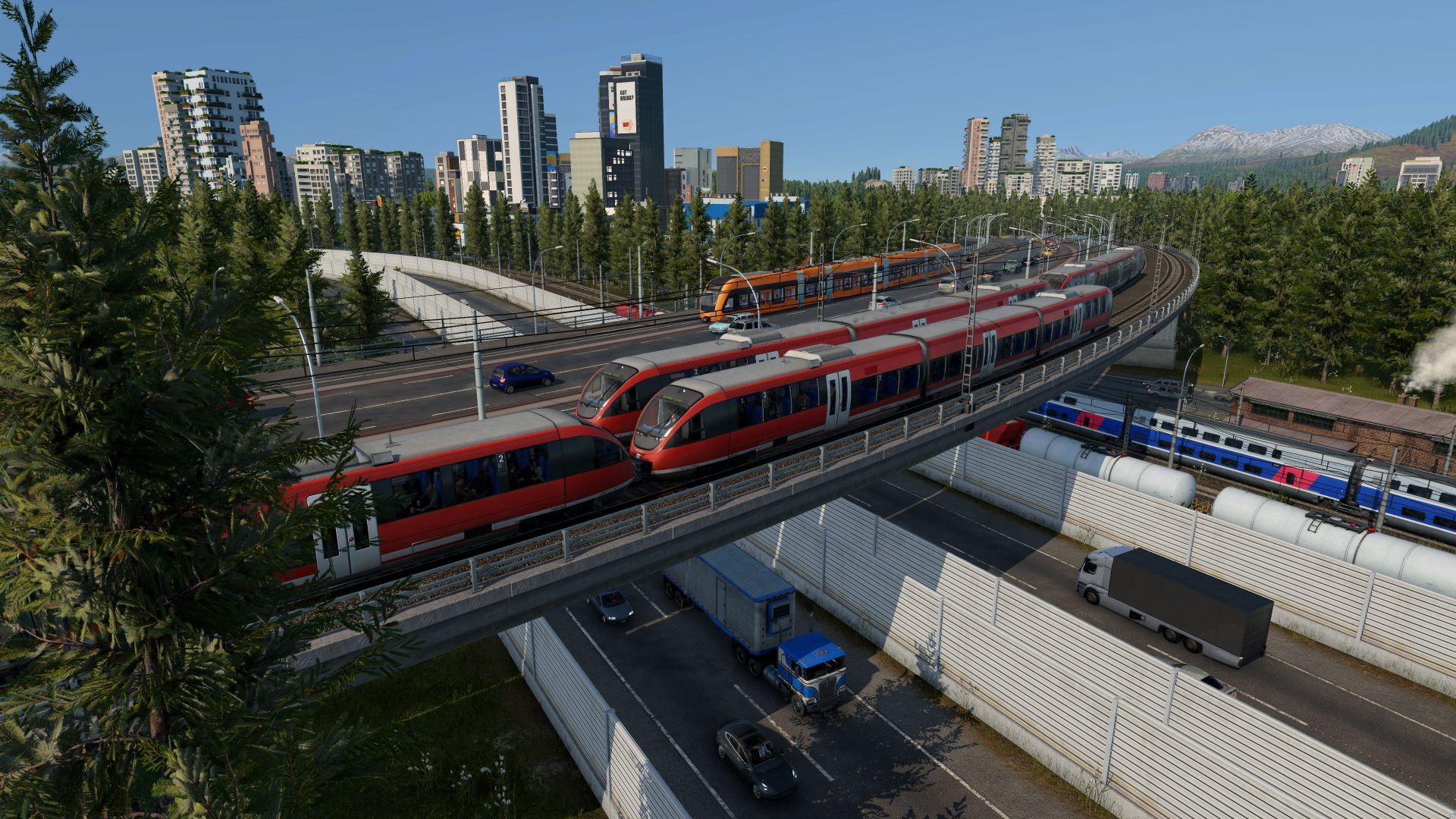
Urban Games’ latest Transport Fever 3 showcase details dynamic biomes, industry challenges, road and line management, cross-platform mods, and a vehicle roster topping 300 machines.
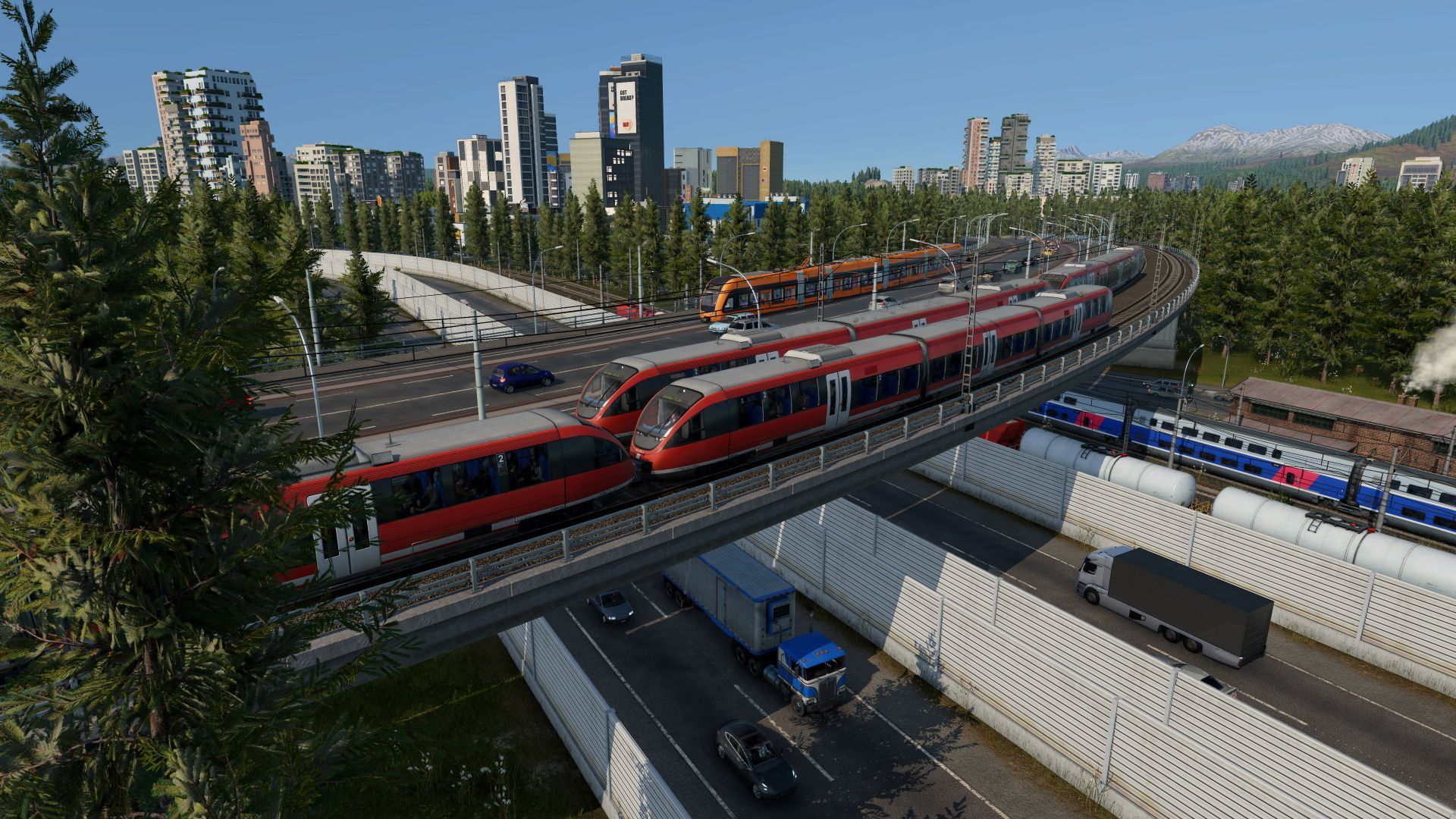
Image: monstervine.com
Urban Games puts systems depth at the center of the new showcase
Urban Games has released the fifth episode in its Transport Fever 3 First Look series, and the most concrete development is that the studio is now tying the sequel’s scale to several specific management systems: dynamic environments and biomes, industrial challenges, road and line management, gameplay options, and modding support. GamingOnLinux reports that the showcase was released by Urban Games together with its new publisher, Paradox Interactive, and that these features are planned for the game’s 2026 launch.
That matters for how management sim players should read this reveal. The headline number, more than 300 authentic vehicles, is easy to market. The harder question is whether Transport Fever 3 features enough operational pressure to make those vehicles matter across a long campaign. The new First Look suggests Urban Games is trying to answer that through environmental variety, industry rules, and route-management tools rather than relying only on a larger catalog of trains, trucks, ships, and aircraft.
GamersHeroes, citing the latest First Look and press materials, describes the sequel as adding deeper long-term tycoon progression, an overhauled user interface, and new gameplay systems. The official Transport Fever social account also framed the episode as being influenced by closed beta feedback, saying Urban Games is focused on making the third entry the most detailed, extensive, and dynamic game in the series. That is a publisher and developer positioning statement, not a review verdict, but it tells us where the studio wants players to look: long-run planning, readability, and systemic variety.
Dynamic biomes could change the planning problem, if they affect more than scenery
According to GamingOnLinux, the new episode includes details on dynamic environments and biomes. The accompanying press release, as reported by the outlet, says Transport Fever 3 will initially feature distinctive environments, each with its own set of challenges and gameplay possibilities.
The confirmed detail is the presence of different environments with unique challenges. The open question is how deeply those challenges cut into transport economics. A biome system in a transport management sim can be cosmetic, making routes look different without changing player decisions, or it can be structural, shaping demand patterns, vehicle suitability, construction costs, travel reliability, and network expansion priorities. The source material does not specify those mechanics in numerical terms, so any assumption about terrain penalties, weather effects, or regional economy modifiers would go beyond what has been announced.
Still, the phrasing around “dynamic” environments and “unique” gameplay possibilities is a signal that Urban Games is presenting the map itself as a management variable. For players who optimize around throughput and capital efficiency, that raises the important question for future showcases: will each biome push different vehicle choices and infrastructure layouts, or will the best strategy remain a familiar race toward high-capacity corridors? The latest First Look does not settle that, but it places environmental design in the same conversation as industry and line management, which is the right place for it.
Industry challenges suggest a longer campaign curve
The First Look also covers industrial challenges and gameplay options, according to GamingOnLinux. GamersHeroes adds that Transport Fever 3 is set to include deeper long-term tycoon progression. Taken together, those two reported points suggest Urban Games is aiming at a broader campaign arc, where players are asked to adapt as their network matures rather than simply extend the same profitable line pattern forever.
The useful distinction is between confirmed feature category and unconfirmed implementation. It is confirmed through the reports that industrial challenges are part of the showcase and that long-term tycoon progression is being highlighted. It is not yet confirmed, from the provided sources, exactly how industries evolve, whether production chains will be rebalanced, how failure states will work, or whether late-game pressure will come from logistics complexity, capital requirements, competition, environmental constraints, or passenger demand.
For strategy-minded players, the implication is cautiously positive. Transport management sims live or die on pacing. If the early game is about scraping together profitable routes and the late game is about watching money accumulate, the economy loses friction. If industry challenges create shifting incentives, then vehicle variety, route design, and infrastructure investment stay relevant for longer. Urban Games is clearly using the First Look to point toward that kind of progression, but the details that would prove the balance are still absent.
Road and line management are the quiet make-or-break systems
The vehicle roster will draw the screenshots, but road and line management may be the most important Transport Fever 3 features shown in the latest developer materials. GamingOnLinux identifies road and line management as part of the fifth First Look episode, while GamersHeroes says the broader player experience includes an overhauled user interface.
That pairing is important because route complexity in transport sims usually fails in one of two places. Either the simulation lacks enough control to express a good plan, or the interface makes that plan painful to maintain. If Transport Fever 3 is adding more vehicle classes, more environments, more industrial demands, and deeper progression, then the line-management layer has to absorb a larger strategic load. Players will need to diagnose bottlenecks, compare service patterns, update networks as cities and industries change, and avoid turning late-game optimization into menu labor.
The source material does not define the new interface tools, and it does not provide a full mechanical breakdown of line management. That leaves several practical questions unanswered: whether players can expect better filtering, clearer profitability and capacity data, stronger route visualization, or tools for bulk editing complex networks. The confirmed point is that Urban Games is treating road and line management as showcase-worthy, which is encouraging because those systems determine whether a large transport management sim remains playable after the map is full.
More than 300 vehicles, now with helicopters
The press release cited by GamingOnLinux says Transport Fever 3 will launch with over 300 authentic trains, buses, trams, trucks, ships, planes, and, for the first time in the series, helicopters. That is the clearest vehicle headline from the First Look cycle, and it gives the sequel a broad modal spread across land, sea, air, and urban transit.
The addition of helicopters is the new wrinkle. The sources confirm their inclusion, but they do not explain how helicopters are integrated into the economy. That leaves room for several possible roles without confirming any of them: premium passenger transport, difficult-terrain access, specialized industrial links, or late-game flexibility where conventional infrastructure is expensive or impractical. Until Urban Games details the use cases, the safe read is that helicopters expand the toolset, not that they automatically solve a specific strategic problem.
The larger number also needs to be evaluated through balance, not collection value alone. In a simulation game, 300 vehicles only matter if their cost curves, capacities, speeds, emissions or operating assumptions, maintenance burdens, and era relevance create meaningful tradeoffs. The reported authenticity claim tells players to expect recognizable transport categories, but the management value will depend on whether the game gives each class a reason to exist beyond aesthetics. The showcase has established breadth. The next layer to watch is whether that breadth creates differentiated decisions.
Modding, platforms, and Paradox’s publishing role broaden the audience
GamingOnLinux reports that Transport Fever 3 will include cross-platform mods from day one. That is a significant confirmed detail for a series whose long-term life is likely to depend on community scenarios, vehicles, maps, and quality-of-life additions. Cross-platform mod availability at launch also matters because Transport Fever 3 is targeting consoles as well as PC.
GamersHeroes reports that the game is planned for PlayStation 5, Xbox Series X|S, PC via Steam, and the Epic Games Store. GamingOnLinux separately notes that native Linux support had already been confirmed, which gives the PC release a wider technical footprint than many management sims. The provided sources do not include final system requirements, performance targets, Steam Deck details, console frame-rate targets, or a price, so buyers should treat those as unannounced for now.
The publishing context is also worth noting. GamingOnLinux describes Paradox Interactive as the new publisher for Transport Fever 3, and GamersHeroes includes an official Transport Fever social post from May saying the team-up with Paradox was a positive surprise, that the vision for the game remained unchanged, and that development continued as planned. For players, that statement draws a line between a business change and a design change. It does not prove there will be no production impact, but it is the public position from the game’s official channel.
The practical read for management sim players
Transport Fever 3 is confirmed for a 2026 release window in the provided source material, with GamersHeroes stating it is set to release this year. The announced platforms are PS5, Xbox Series X|S, Steam, Epic Games Store, and native Linux. No exact release date, launch price, system requirements, or edition structure appears in the supplied sources.
For now, the latest First Look is strongest as a direction-of-travel reveal. Urban Games is not only showing Transport Fever 3 vehicles, even though the roster count and helicopters are the easiest details to grasp. The studio is also emphasizing environment-driven challenges, industry progression, road and line management, an overhauled UI, and day-one cross-platform modding. Those are the systems that will decide whether the sequel holds up as a long campaign game rather than a bigger sandbox with prettier machinery.
The sensible buyer stance is to watch the next showcases for implementation details. Management sim players should look for concrete examples of biome effects, late-game industry pressure, helicopter use cases, interface workflows, mod distribution rules, and performance across PC and consoles. The First Look gives Transport Fever 3 a more ambitious strategic outline. Whether that outline becomes a durable economy is the question Urban Games still has to answer before launch.