
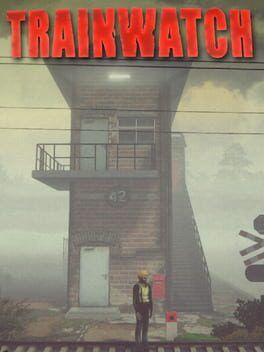

Trainwatch is drawing attention by turning railway gatekeeping into an uneasy mix of life sim routine, time management pressure, and indie horror from Harvester Games.
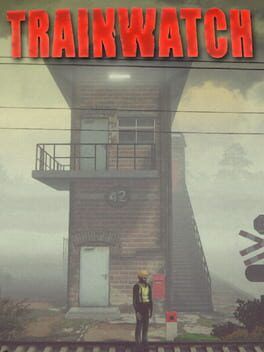
Image: IGDB
Store links: Trainwatch on Steam
A gatekeeping job becomes the hook for an unusual horror life sim
Trainwatch has become one of the stranger indie horror prospects to watch because its central action is deliberately ordinary: you play Troy, a new Gatekeeper assigned to a desolate railway crossing, and your job is to close the gates when trains are due. According to previews from Rock Paper Shotgun, GamersHeroes, DualShockers, and VGTimes, the tension comes from how that routine collides with a life sim about sobriety, a time management game about punctual labor, and a horror story built around the places glimpsed from a tower beside the tracks.
Harvester Games is the developer behind Trainwatch, with Remigiusz Michalski, known for The Cat Lady, Downfall, Lorelai, and Burnhouse Lane according to DualShockers, leading the project. 11 bit studios is also attached: a social post from 11 bit studios embedded by GamersHeroes describes Trainwatch as a new title joining its portfolio, created by solo developer Rem Michalski from Harvester Games. That pairing is part of the interest, since Michalski’s past work gives Trainwatch immediate credibility with players who follow bleak, character-driven horror, while the premise pushes away from the monster-chase template that dominates a lot of Steam horror discovery.
The confirmed frame is grim but practical. IndieBunny’s listing describes Troy as a man trying to earn back his wife’s trust, prove he can stay sober, and become better by working at an isolated tower for one month. GamersHeroes similarly reports that Troy takes the role as a redemption arc tied to Agatha. The horror, then, is attached to a schedule, a phone, a gate, a body that needs care, and a relationship that may be beyond repair.
The work is simple until the clock starts eating your safety margin
The most useful way to understand the Trainwatch game is to start with the job loop. DualShockers reports that most of the play is centered on Troy running around the tower and nearby area while waiting for trains to arrive. When the phone rings, he must answer it, close the crossing gates, watch the train pass, and reopen the gates on time to earn good ratings. Rock Paper Shotgun’s demo account describes the same pressure from a more miserable angle: Troy’s lot is to close the crossing when ordered by the big red phone and stop pedestrians from being demolished by an incoming train.
VGTimes adds that the trains run on a pre-planned schedule, although the schedule can occasionally be adjusted through reshuffled or canceled entries. In that preview’s closed demo, this reportedly happened once. That detail matters because it shows Trainwatch is not presenting time management as abstract menu work. The player is managing attention. The danger is not whether a spreadsheet is optimized, but whether Troy is in the right room, in the right state, at the right second.
The life sim layer complicates those seconds. DualShockers says Troy must maintain sanity by eating food and stamina by resting, drinking coffee, using the bathroom, and regularly cleaning himself. It also reports that completing tasks rewards EXP used to unlock helpful skills. GamersHeroes saw a day-night cycle, character progression, and inventory management in its demo. Rock Paper Shotgun describes downtime activities including phoning home to try to shore up Troy’s marriage, watering a pot plant, eating in the canteen, and using the office computer.
That mix is the source of the game’s current word-of-mouth. Trainwatch horror life sim is not a label slapped onto a walking simulator. The reported play loop is about choosing between duty, survival maintenance, personal repair, and curiosity while the next train is always coming.
The horror comes from leaving the tower and returning too late
Trainwatch’s strongest idea is that the railway tower is both workplace and trap. Rock Paper Shotgun reports that the game centers visually on a foggy crossing gate and a narrow lookout tower, with rooms shown in side-on or cutaway views that create a dollhouse-like symmetry. The outlet also notes that the camera can tilt into more alarming angles during events, comparing the effect to Silent Hill’s early alleyway unease.
DualShockers also connects the surrounding fog to Silent Hill, describing the area around the tower as constantly covered in a foreboding mist. VGTimes frames its preview around a Papers, Please meets Silent Hill comparison, placing Trainwatch in the lineage of job simulators where routine tasks become a narrative pressure cooker. These are preview impressions, not developer genre promises, but the repeated comparison across outlets explains why the game is gaining attention among horror players: the fear appears to come from compromised attention rather than a single creature design.
Rock Paper Shotgun reports that the developer calls the surrounding area a semi-open world, with trees, buildings, and peculiar spaces buried in the mist. The same preview mentions a strange bearded figure in blue robes behind the tower who urges Troy to listen for secrets whispered through the roar of the trains. That is a sharp horror hook because the soundscape itself becomes suspect. In survival terms, listening is usually a tool for locating danger. Here, the roar of the train may also be a lure.
The practical risk is clear from the reported systems. If Troy goes exploring, he may find story threads, secrets, or supplies. If he lingers, the phone may ring, the gates may stay open, and someone may be crushed. DualShockers says failure to manage duties and needs can leave Troy insane, sick, too weak to work, or responsible for people being hit by incoming trains. That is a different kind of survival pressure than ammunition scarcity, but it is pressure all the same.
Troy’s body is another schedule to maintain
The life sim side of Trainwatch is not being presented as cozy domestic filler. In the previews, it is a resource model tied to a man barely holding together. GamersHeroes says players must contend with sobriety, danger, and sanity. IndieBunny’s game page frames the month at the tower as Troy’s chance to stay sober and rebuild trust with his wife. Rock Paper Shotgun describes Troy as heartbroken and alcoholic, while GamersHeroes names his wife as Agatha.
That framing gives small tasks a harsher edge. Eating, washing, resting, and taking coffee are not flavor actions if they determine whether Troy can reach the gate controls when the phone rings. Rock Paper Shotgun’s preview jokes grimly about exhaustion and delirium born from repeatedly failing to wash hands, but the underlying system is serious: personal neglect becomes operational failure. DualShockers reports that sanity and stamina maintenance are required to keep Troy functional.
For horror players, this is the part worth watching. Many indie horror games use vulnerability by removing combat. Trainwatch appears to use vulnerability by giving the player too many obligations and too little clean time. If the demo impressions reflect the full game, the fear will come from degraded routine: the sink missed, the meal delayed, the phone ignored for one step too long, the gate left open while the fog offers something stranger to chase.
That also makes the premise stand out on Steam. The storefront-friendly tags around indie horror can blur together quickly, especially when projects lean on VHS filters, mascot threats, or short-form jumpscares. Trainwatch’s reported design is more administrative and bodily. The monster in the room may be a missed call, a weakening body, and a marriage represented by things Troy still has time to tend, if the shift allows it.
Release timing, platform details, and listings are still messy
The Trainwatch Steam situation is straightforward in one sense and unclear in another. GamersHeroes links to the official Steam page for wishlisting and says Trainwatch is set to release in 2027. IndieBunny’s game page says Trainwatch is scheduled to release in 2026 on Steam, while its trailer post lists the release date as 2026 and platforms as PC Windows. DualShockers reports that Trainwatch is set to launch on PC later this year. Those claims conflict, so the safest confirmed reader guidance is that Trainwatch is announced for PC via Steam, but the exact release window should be treated as unsettled until the Steam page or publisher gives a single current date.
Price is also unannounced in the supplied listings. IndieBunny marks Trainwatch’s price as TBA. No source material here confirms console versions, Game Pass, a demo release, or regional pricing. GamersHeroes and other outlets discussed demo or closed demo impressions, but that does not mean a public demo is available.
The PC requirements listed by IndieBunny and VGTimes suggest a modest technical target, though there is an odd listing detail worth flagging. IndieBunny’s requirements page lists Windows 7, 8, 10, and 11, DirectX 11, 4 GB of storage, and graphics hardware starting around a GeForce GT 705 or AMD Radeon HD 8450G. VGTimes lists 8 GB RAM in its system requirements, while IndieBunny’s page says 8 MB RAM, which is almost certainly a listing error but remains printed that way in the source. Recommended specs from both include an Intel Core i7-4770 or AMD Ryzen 5 1600 and a GTX 960 or Radeon HD 7870-class GPU.
For now, players interested in Trainwatch indie horror should wishlist on Steam if the premise works for them, then wait for the release window, pricing, and any demo availability to settle. The pitch is strong enough to track, but not enough is confirmed to plan a purchase date.
The appeal is in the contradiction: a fixed job beside an unknowable landscape
The reason Trainwatch is drawing attention is not that it combines several genres on a store page. It is that the reported systems pull in opposite directions. The Gatekeeper job demands repetition and punctuality. The life sim layer demands maintenance and emotional repair. The horror layer invites disobedience, exploration, and listening to things no stable person should trust. Every train becomes both a scheduled task and an interruption of the strange world outside the tower.
Rock Paper Shotgun’s preview captures that contradiction in its details: a microwaved meal in the canteen, a button that can prevent pedestrians from dying, a pot plant with emotional weight, a tower that looks too narrow to live in, and a foggy world larger than the railway first suggests. VGTimes points to the monotony of answering calls, lowering the gate, watching the train pass, and raising it again, then notes that downtime belongs to the player. DualShockers emphasizes the stress of balancing gate duty with sanity, stamina, sickness, and risk to bystanders.
That is the strongest case for a Trainwatch preview right now. Its fear is not only in what Troy sees from the window, but in what the player chooses to ignore while looking. If Harvester Games can keep that balance sharp across the full month, Trainwatch could occupy a rare space between job sim, character study, and horror survival pressure. If the routines become too predictable or the horror fails to threaten the schedule meaningfully, the premise could flatten into novelty. The demos reported by multiple outlets suggest the foundation is there, but the full release will have to prove the tower can stay frightening after the player learns its timetable.