

Hands-on impressions of the Trails beyond the Horizon story demo on Nintendo Switch and Switch 2, focusing on how the prologue sets up characters, tone, combat, localization, and performance for both longtime Trails fans and newcomers.
A Carefully Measured First Step Beyond Zemuria
Falcom has spent nearly two decades building toward the promise that "everything is connected," and The Legend of Heroes: Trails beyond the Horizon is where that promise finally tilts toward an ending. The new story demo on Nintendo Switch and Switch 2 is not a flashy vertical slice stuffed with late‑game spoilers. Instead, it quietly hands you the opening hours and asks a simple question: do you want to live with these characters for another 80 to 100 hours?
After playing the story demo on both systems, the answer, at least for me, is yes.
The sample is essentially the full prologue: the ominous Claude Epstein prophecy, the lead‑up to humanity’s first orbal rocket launch, and the moment that pulls three Trails protagonists into the same orbit. It is slow by design, heavy on voiced cutscenes, and surprisingly generous in how much story it lets you see. Your progress will also carry over into the full game if you apply the day one patch, which makes this feel less like a throwaway taster and more like a true early start.
A Crossover Cast That Actually Breathes
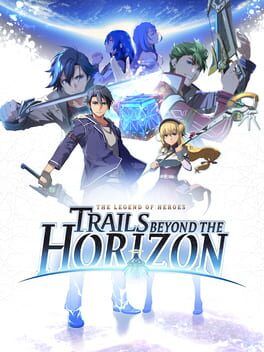
Trails beyond the Horizon juggles three leads: Van Arkride from Daybreak, Rean Schwarzer from Cold Steel, and Father Kevin Graham from the Sky / Crossbell corner of the series. The demo’s big achievement is that it lets each of them arrive in their own tone instead of collapsing into pure fanservice.
The opening stretches lean on Van first. The Calvard noir flavor of the Daybreak games is still there, but Horizon shifts the mood away from street‑level detective work toward a broader, slightly eerie science fiction tension. Van’s scenes have a lived‑in feel that makes it easy for returning players to slip back into his world, yet the writing is careful about explaining who he is and what Spriggans do without turning dialogue into a lore dump for newcomers.
Rean’s introduction is more reserved than his Cold Steel days. He comes across as a veteran soldier trying very hard not to be the center of the room anymore, and that restraint actually helps sell how much time has passed. Kevin, on the other hand, walks in with a mix of gallows humor and quiet gravity that will immediately click for Sky and Crossbell veterans, but the localization treats him as a fresh character rather than assuming you know his whole history.
What matters is that the demo gives each route enough quiet moments that you start to understand their emotional baggage before the big sci‑fi stakes show up. NPCs comment on the looming launch, rumors about the end of the continent drift through background chatter, and even incidental party banter is already hinting at the central mysteries. For new players, this is where the demo shines: it feels like the beginning of a character drama first and a massive continuity crossover second.
Tone: End‑Times Melancholy With Room For Goofs
If you came from Daybreak’s mix of crime drama and neighborhood hangouts, Horizon’s prologue feels more subdued and ominous. Claude Epstein’s prediction that "all that we know will come to an end" hangs over almost every scene. The Kunlun Mountains facility, the rocket prep, the strange tension around who gets invited to this "training exercise" all give the early hours a sense of waiting for the other shoe to drop.
At the same time, this is still Falcom. There are pratfalls, oddball merchants, and the kind of ultra‑specific NPC dialogue that hints at side stories you will probably never see pay off. The English script balances this well. Jokes read naturally, especially the little verbal jabs between returning characters, but the localization never undercuts serious scenes with quips. When Kevin’s past brushes against the stakes of the rocket project, for example, the dialogue lets the moment breathe.
Veterans will spot the usual Trails groundwork: loaded proper nouns that are not fully explained yet, brief references to incidents from Sky, Crossbell, Erebonia, and Calvard, and early foreshadowing for what looks like a major revelation about Zemuria’s place in the wider universe. Newcomers are more likely to read these as simple worldbuilding details. The impressive part is that the demo feels coherent either way.
Combat: Real‑Time Flow, Turn‑Based Crunch
On the gameplay side, the story demo finally lets Switch players feel the hybrid battle system that Japanese releases have had for a while. Core fights are still turn‑based at heart, but you move your characters in real time during exploration and can initiate encounters directly, tag enemies for advantage, or swap between modes for different levels of control.
Compared to the Cold Steel and Daybreak systems, Horizon’s big twist lies in how much it wants you to think about spacing, especially with the Zone of Control (ZOC) mechanics that carry over from the battle demo on other platforms. Even without that dedicated combat sampler on Switch, the story demo introduces ZOC and the new Blitz options early. Tutorial pop‑ups are succinct, and the in‑battle prompts are easy to recheck, which helps first‑timers who might be overwhelmed by Trails’ usual status effect soup.
Veterans will notice how much faster normal encounters resolve. Arts and Crafts fire off with snappier animations, line attacks feel clearer to position thanks to a slightly more readable camera, and turn order manipulation seems a bit more constrained which discourages the kind of infinite stun‑locking you could abuse in older entries. The demo only gives you a handful of party setups, but you can already see interesting synergies between Van’s craft toolkit, Rean’s more focused physical builds, and Kevin’s mix of support and burst.
For newcomers, the important thing is that you do not have to fully grasp every subsystem in the prologue. Basic attacks, a couple of Crafts, and early Arts are enough to carry you. But the moment you start poking into the orbment menu and experimenting with quartz, you can feel the depth waiting down the road.
Localization: Confident and Caught Up
Coming off Daybreak and the back‑to‑back releases that brought the series west, Trails beyond the Horizon’s English script feels like the work of a team finally in sync with Falcom’s tone. Terminology is consistent with previous localizations, honorifics are mostly stripped where they would sound unnatural, and there is a clear effort to keep returning characters’ voices familiar.
Van’s dry sarcasm, Rean’s self‑effacing politeness, and Kevin’s mix of flippancy and priestly gravitas are all intact. New NPCs lean into regional flavor without turning into caricatures. Most importantly, dense exposition around the orbal rocket and Zemurian history is broken up into smaller, digestible exchanges instead of single monologues.
There are still a few spots in the demo where sentences run long or a line feels like it is trying to cram in one too many series references. But nothing in this early slice feels unpolished or first‑draft. Voice direction has also tightened up. Deliveries land closer to lip flaps than in early Trails releases, and emotional beats come through clearly, even if you are not carrying fifteen years of attachment to these characters.
Performance: Old Hardware, New Stakes
The obvious question for any late‑generation RPG hitting Switch now is "how well does it run" and "is the Switch 2 version more than a resolution bump." Based on the story demo, the answer to both is encouraging, if not transformative.
On the original Nintendo Switch, Trails beyond the Horizon targets 30 frames per second and mostly holds it in exploration and standard battles. Busy cutscenes in the rocket facility, with multiple particle effects and camera pans, dip a little, but never to the point of feeling choppy. Image quality is comparable to Daybreak: slightly soft in handheld, cleaner in docked mode, with some shimmering on distant geometry.
On Switch 2, the demo benefits from higher resolution rendering and a generally steadier frame rate. Environments are noticeably sharper on a 4K display, character outlines look less jagged, and texture detail on outfits and orbal machinery stands out immediately. Performance stays close to a smooth 60 frames per second in battles and hovers above 30 in elaborate story scenes, which makes the game feel snappier without changing its underlying pacing.
Loading times are where the difference really shows. Area transitions that take several seconds on original Switch shrink to near‑instant on Switch 2. Fast travel between points in the facility or city streets feels truly seamless, which helps the game’s stop‑and‑chat style of storytelling feel less interrupted.
Crucially, there are no missing features or content between the two versions in this demo. Control options and visual settings are identical, so you are getting the same game experience, just with a cleaner presentation on the newer hardware.
How The Demo Sells The Full Game
A lot of RPG demos either spoil too much or show too little. Trails beyond the Horizon’s story demo is more of a commitment. By letting your save carry forward, it invites you to treat these hours as the true beginning, not something you will have to replay.
Structurally, it is clever. You get a self‑contained arc built around the rocket launch preparations, several small dungeons and combat encounters to feel out the updated systems, and a handful of meaningful character beats for all three leads. The demo ends at a natural inflection point, right as the scope of the threat starts to widen and the promise of long‑teased answers comes into view.
For series veterans, this is essentially a vibe check. Does the ensemble dynamic feel closer to Reverie’s celebratory crossover or to Daybreak’s grittier street stories. Based on the demo, Horizon leans toward Reverie’s big ensemble energy but filtered through a more mature, end‑of‑an‑era melancholy. If you have been following Zemuria since Liberl, it is hard not to feel hooked.
For newcomers, the story demo works because it keeps immediate stakes relatable. You are not asked to care about the entire lore bible on day one; you are asked to care about a handful of people stepping into a project that might change the world, and about whether they are ready to face what comes after. The fact that long‑time fans can read ten extra layers into every line is a bonus, not a requirement.
If the full release can maintain this balance of accessibility and payoff, Trails beyond the Horizon looks set to be both a culmination and a surprisingly welcoming starting point. As far as first steps go, this story demo is exactly the kind of measured, character‑driven beginning that has kept Trails relevant for so long.