
Where Trails Beyond the Horizon fits in the Trails saga, what the Story and Battle demos actually show, and how your demo progress will carry into the full 2026 release.
Where Trails Beyond the Horizon Sits In The Trails Saga
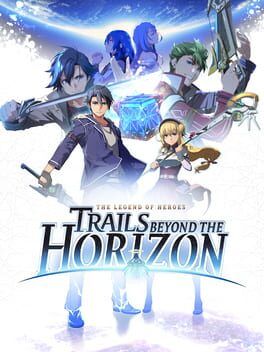
The Legend of Heroes: Trails Beyond the Horizon is the next big chapter in Falcom’s long running Trails series and the third entry in the Calvard arc after Trails through Daybreak and Trails through Daybreak II. If you played the Crossbell or Erebonia games, this is set on the same continent of Zemuria, but in the eastern nation of Calvard.
Beyond the Horizon is built as a payoff game. It continues Van Arkride’s story from the Daybreak duology while pulling in heavy hitters from earlier arcs like Rean Schwarzer and Father Kevin Graham. It is also the game that finally puts several long running Trails mysteries about Zemuria’s future and the Orbal Revolution in the spotlight, framed around an orbal rocket launch and an impending “end of all we know” predicted decades earlier.
You will get more out of Beyond the Horizon if you have at least played the Calvard titles, but the worldwide marketing and the official primer materials make it clear that the team wants lapsed or new players to be able to jump in. The Story Demo is structured to help with that by reintroducing Van, explaining why Rean and Kevin are involved, and giving context for the new threat without assuming you remember every prior plot thread.
The Two Demos At A Glance
NIS America and Falcom have released two separate demos:
The Story Demo is available on Nintendo Switch, Switch 2, PS4, PS5 and PC. It covers the full prologue of the game, including event scenes, exploration and early combat. Crucially, save data from this demo carries over into the full game when it launches in January 2026. If you are on Switch or Switch 2 you will need the day one patch applied to make sure the carry over works.
The Battle Demo is only on PS4 and PS5. Instead of story, it drops you into a Grim Garten dungeon segment with multiple prebuilt parties. It is there to let you stress test the new combat systems, see high level crafts and S Crafts, and get a feel for how field and command battles flow once the training wheels are off. Because it uses fixed parties and a self contained dungeon, none of your progress or settings from the Battle Demo carry into the full game.
Both demos share the same basic battle foundation, but they are framed very differently. Think of the Story Demo as your early game save file and the Battle Demo as a hands on systems showcase.
What The Story Demo Shows About Narrative
The Story Demo walks you through Beyond the Horizon’s opening chapter and sets up why this crossover cast is even working together.
You start with Van Arkride back in his role as a spriggan, the “problem solver” who takes on jobs neither the police nor Bracer Guild want to touch. The prologue reintroduces his agency, his close allies and the Calvard setting. It does a quick job of grounding you in the nation’s political tension and the technological push toward space with the planned rocket launch.
Very quickly, the scale escalates beyond a simple local case. Rean Schwarzer appears in his Ashen Chevalier capacity, and Father Kevin Graham returns as a representative of the Septian Church’s Gralsritter. The demo uses their first major joint operation to sketch out how disparate groups Bracers, the Church, Erebonian authorities and Calvard’s own agencies are reluctantly pooling information around a looming continental crisis. The private military group Marduk acts as the structural excuse for this crossover, coordinating these powerful individuals under one roof.
If you are a returning Trails player, the fun is in the character dynamics. Van’s grounded, street level work collides with Rean’s war scarred sense of duty and Kevin’s world weary exorcist outlook. The Story Demo gives them enough shared screen time that you can already see how the full game intends to bounce their worldviews off one another.
If you are newer to Trails, the prologue is written to stand on its own as a mission that begins as a spriggan job and widens into something that clearly ties into bigger, older forces. You will meet a focused slice of the cast rather than every familiar face at once, and the script does enough light recap work that you are not just hearing a parade of names with no context.
What The Story Demo Shows About Gameplay
Because it is the prologue, the Story Demo is also the best look at Beyond the Horizon’s early game systems and pacing. You will move through town and field areas, take on at least one spriggan style request and fight a set of tutorial battles that explain both sides of the game’s dual battle system.
Field Battles are the snappy, action flavored encounters on the map itself. You can tag enemies with basic attacks, use short cooldown skills and try to thin out groups before fully engaging. This system rewards positioning, quick reactions and smart use of movement tools to avoid being surrounded.
Command Battles are the classic Trails turn based layer where you place characters on a grid like field, queue Arts and Crafts, and manipulate turn order. In Beyond the Horizon, new options like Shard Commands and the time freezing ZOC add more ways to control tempo. Shard Commands give the party immediate, shared benefits triggered by your quartz loadouts, while ZOC segments can lock down space or protect allies when big enemy attacks are coming.
The prologue keeps your party small and your toolkit limited, which makes it easier to learn the new systems without being overwhelmed. You will see how Field and Command battles feed into one another: ambushing properly in the field still sets you up for safer, more advantageous turn based encounters.
What The Battle Demo Shows About Combat
Where the Story Demo slowly introduces tools, the Battle Demo throws the doors open. Set in the Grim Garten, a configurable challenge dungeon, it gives you three preset parties to run through combat scenarios that feel much closer to mid or late game.
You start from a dungeon hub, choose which route to tackle and then chain battles and events as you progress. With the safety of a non canonical sandbox, the developers give you access to much stronger Crafts, Arts, combo techniques and party synergies than you have in the prologue.
This is where Shard Commands and Awakening really shine. You can test different ways of timing your shared commands to spike enemy weaknesses, chain follow ups or squeeze extra turns out of the timeline. Awakening scenarios let you see what happens when characters enter their powered up, limit break like states and how that interacts with ZOC manipulation. Enemies in this demo are deliberately aggressive, forcing you to juggle area denial, buffs, debuffs and mitigation rather than simply charging in.
The Battle Demo also lets you feel the practical difference between field control and command tactics once parties get more complex. Positioning, turn delay, line and circle Arts, and breaking enemy guards all matter more when every unit has a deep move list. If the Story Demo leaves you thinking the systems are just an iteration on Daybreak, the Battle Demo is there to show how dense the late game combat sandbox can be.
How Demo Progress Carries Into The Full Game
Only the Story Demo supports progress carry over into the January 15, 2026 release, and it is worth planning your time there as if you are already playing the final game.
Your Story Demo save transfers your cleared prologue state directly into the full version on the same platform family. That means you do not need to replay the entire opening, and you keep the character levels, quartz setups and basic items you earned along the way. It is essentially an early start on your real save file.
On Switch and Switch 2, you must have the launch day patch installed before importing or the game will not recognize the demo data correctly. On PlayStation and PC, saves are recognized automatically as long as you are using the same account.
The Battle Demo does not transfer anything. Because it gives you high level parties, extra powerful tools and a non story dungeon, it would break the early game balance if any of that content carried over. Treat it as a lab where you can theorycraft team compositions and get a feel for which characters you may want to prioritize when the real run begins.
Who Should Play Which Demo
If you already know you are buying Trails Beyond the Horizon and you are sensitive to story spoilers, the Story Demo is actually safe to play. It is the same prologue you will see in January, and your time there will simply shorten the opening stretch on release. You will also get a sense of whether the English localization, character dynamics and pacing all click for you.
If you care more about combat feel than narrative or you are on the fence about the new systems, download the Battle Demo if you have a PS4 or PS5. It contains no crucial story context and is tuned to be a mechanical stress test, so you can focus on action speed, UI clarity and how the Field and Command layers blend together.
And if you are new to Trails and just wondering where to start, Beyond the Horizon is not a bad entry point as long as you know you are jumping into the middle of a long running epic. The Story Demo gives you a low commitment way to see if Falcom’s very talky, character driven style is for you before you invest in the earlier arcs.
Both demos together paint a clear picture of what Trails Beyond the Horizon aims to be: a culmination of Calvard’s storyline, a celebration of returning heroes, and a refinement of the hybrid action and turn based combat formula that has defined Trails for nearly two decades.
With your save file ready from the Story Demo and your combat chops sharpened in the Battle Demo, you will be well prepared when the full game launches in 2026.