
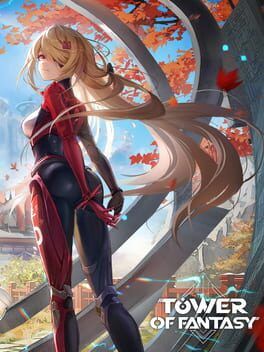
Hotta Studio’s new Warp Server rips out gacha from Tower of Fantasy on that shard and rebuilds progression around time, play, and trade instead of luck. Here is exactly what’s gone, how unlocks work now, what veterans keep, and what this means in a Genshin‑dominated space.
Tower of Fantasy has spent its life in Genshin’s shadow as “the other anime gacha.” With the new Warp Server, Hotta Studio is trying something far more radical: a version of Tower of Fantasy that strips out gacha and leans into being a more conventional MMO where you buy time with effort, not outcomes with luck.
This is not a global relaunch. The classic servers keep their pulls and banners. Warp is a fresh ruleset shard that reimagines how you get weapons, matrices, and cosmetics, and how the game makes money around them.
Exactly what monetization is being removed on Warp
On Warp, the core gacha infrastructure is gone. You do not roll for weapons or matrices any more. The familiar gold and black nucleus banners that define Tower of Fantasy’s monetization on the classic servers do not exist on Warp. There are no limited character weapons to chase through pity, no rate up banners, and no resin‑style stamina system designed to push refresh spending around those pulls.
This wipes out the main revenue loop from the original version, where players turned real money into premium currency, into pulls, and finally into random SSR weapons, matrices, and dupes. Without that system, Warp cannot monetize on “whales” buying thousands of rolls, so Hotta is rebuilding progression and spending hooks around play time, trading, and more predictable rewards.
Crucially, this removal applies only to the Warp Server. If you log into your old shard, the traditional gacha economy is still present and unchanged.
How weapon and matrix unlocks work now
On Warp, weapons and matrices convert from lottery drops into direct progression rewards. The broad shape is closer to a theme park MMO where you earn power by simply doing content on a schedule.
Key drops now come from event and daily activity rewards. Instead of saving premium currency to hit pity, you run daily missions, seasonal activities, and special events that award specific weapon unlocks and upgrade materials outright. The system is presented as transparent and deterministic. If you want a particular piece, you follow the content path that lists it as a reward rather than feeding a banner and hoping the odds go your way.
Dark Crystals now sit at the center of this new flow. Previously they were best known as pull fuel. On Warp they are positioned as a functional in game currency you gain by playing that lets you buy resources and participate in the new trade ecosystem. Where gacha blurred the line between real money and progression, Warp tries to localize that friction inside a system that looks more like an MMO economy.
The matrix system follows the same philosophy. Instead of matrices being the ultra random, ultra expensive part of a build, they are earned via events, dailies, and progression milestones. That does not necessarily mean you will be showered in top tier sets on day one, but it does mean clearance now depends more on how much content you clear than how lucky your last ten pull was.
Cosmetics, seasons, and what you pay for now
With the original money maker removed, Warp needs a replacement that does not undercut the promise of a non gacha server. The early outline is a structure built around seasons, cosmetics, and MMO style grinds instead of randomized characters.
The most obvious anchor is the new season system. Each season brings its own progression emphasis, modes, and a reward track that includes outfits. In other live service games that typically translates into a battle pass structure. Hotta has not laid out exact pricing or pass tiers for Warp, but the framing strongly suggests that cosmetics, seasonal themes, and possibly accelerators will be the backbone of monetization.
Cosmetic distribution shifts away from loot box logic and onto clear reward ladders. Outfits and skins are described as seasonal rewards you can see in advance rather than random wardrobe pieces slotting out of crates. That should make spending feel more like a store purchase or a pass commitment and less like feeding money into a slot machine.
The new Crew Base feature also doubles as a potential cosmetic and social hub. Guilds get a shared space to gather in, and in most MMOs those spaces become natural homes for decorations, furniture, and vanity items. While Hotta has not spelled out a housing cash shop, the move toward a shared base system fits the broader pitch that Warp will sell expression and community ornamentation rather than raw power.
Trade, economy, and the “buy time, not luck” promise
The other pillar holding up Warp is a more traditional trade system. The classic gacha model tries to keep players inside a closed loop where the only reliable way to get what you want is to roll the banner. Warp cracks that open by letting players obtain things through the market and resource exchanges instead of luck.
Dark Crystals are recontextualized into a trading currency. You earn them by participating in daily content and events, then spend them on resources and goods other players can also pursue. In practice, this makes Tower of Fantasy act more like an MMO where your grind output can be turned into what you need, whether that is progression materials or upgrade items, without a random table in the way.
The net result is that Warp tries to position Tower of Fantasy as a game where you buy time with effort and, optionally, with money, but you do not buy lottery tickets. If you swipe your card, you are paying to speed up how quickly you get defined rewards, not to tilt invisible odds on a banner. That is a philosophical shift that aligns the game closer to subscription and cosmetic led MMOs than to the mobile gacha scene it launched into.
What existing players actually keep
Warp is a parallel world, not a replacement. Your existing account, characters, weapons, matrices, and pulls on legacy servers stay exactly where they are. The gacha you invested in remains fully valid on those shards. You can continue to play with your current roster, progress your account, and roll on new banners as usual.
Warp characters are separate. You start fresh on that server under its new ruleset. There is no migration of gacha generated gear into the Warp environment because that would undermine its entire non randomized progression model and instantly distort the new economy.
From a player perspective, this gives you a clear choice. If you want to keep your sunk cost and your gacha progress, log into your old server and treat Warp as an optional side experiment. If you are burned out on pulls or are a new player who never touched Tower of Fantasy because of its monetization reputation, Warp is the entry point that lets you experience the game without buying into that history.
How this plays in a Genshin dominated space
Tower of Fantasy launched into a market that was already in love with Genshin Impact’s specific blend of open world exploration and polished gacha. It tried to compete by leaning harder into MMO structure and co op, but from the outside it was still “another gacha” next to a more refined rival.
Warp is Hotta Studio’s attempt to pivot Tower of Fantasy into a different conversation. By stripping gacha out on one server, it stops trying to win purely on banner design and pity math and instead asks players to compare it to more traditional online RPGs. In a space where the dominant anime game is also a titan of randomized monetization, that alone is a strong differentiator.
If Warp delivers on its promises, Tower of Fantasy becomes the answer for players who like the art style and combat of the genre but want something closer to an MMO season grind than a character lottery. That could carve out a niche alongside Genshin instead of chasing its tail, especially as more mobile and PC players grow wary of loot box style systems.
There are still big question marks. The details around season monetization are deliberately vague, and history suggests that any free to play service game has to balance fairness with aggressive revenue targets. Whether Warp really stays “buy time, not luck” over the long haul will depend on how strongly Hotta resists reintroducing randomization through side systems, limited chests, or indirect gacha.
For now, though, Warp is one of the boldest experiments in a live gacha game stepping away from its core money machine without turning off the old tap. It acknowledges that a chunk of the audience is ready for a world where your progress in an anime RPG is gated by how many nights you log in, not how many banners you clear, and it gives that audience a place to play.