
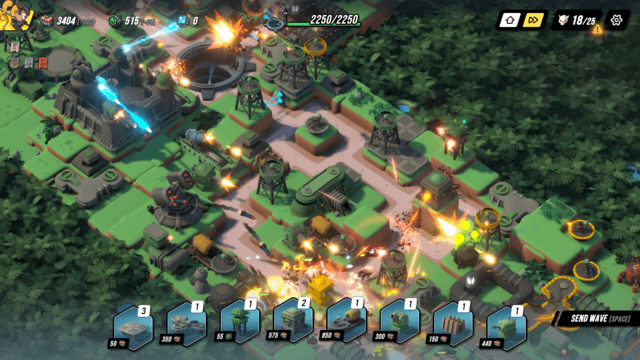

Tower Dominion is out on Nintendo Switch after its PC run, with Xbox coverage also pointing to launch availability. Here is what the trailer push and listings say about its roguelike tower defense systems, platforms, and replay value.
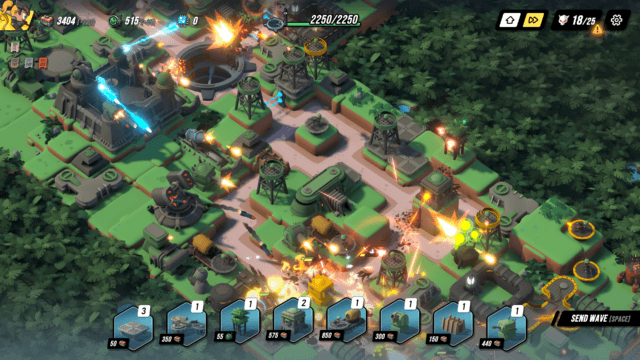
Image: monstervine.com
Tower Dominion’s console push starts with a Switch trailer and an Xbox launch signal
Tower Dominion has received a new launch trailer tied to its Nintendo Switch release, according to Nintendo Everything, putting Parallel 45 Games’ roguelike tower defense game in front of console players after what that outlet describes as a successful PC run. Nintendo Insider previously reported that publisher Forever Entertainment had confirmed a worldwide Nintendo eShop release for Nintendo Switch on August 13, 2026, while Nintendo Everything covered the launch trailer on August 14 and said the title is now located on the Nintendo eShop.
The platform picture is broader than Switch, but the supplied sources support it unevenly. Nintendo Everything and Nintendo Insider clearly confirm Nintendo Switch, with Nintendo Everything also noting PC as the game’s earlier platform. TheXboxHub’s August 14 coverage frames Tower Dominion as launching on Xbox, with its shared page description citing an Xbox launch and naming the same core systems, including modular maps, 70-plus buildings, 50 weapons, 30 heroes, and 180 doctrines. The provided TheXboxHub excerpt does not include a full storefront breakdown, price, or exact Xbox console list beyond the page categories and share text, so PlayStation availability should not be treated as confirmed from this material alone.
For players searching Tower Dominion platforms, the confirmed practical read is this: Switch is live on the Nintendo eShop, PC existed before the Switch release, and Xbox launch coverage is present in the supplied material. Pricing, performance targets, install size, and any cross-save or upgrade details are not provided in the sources.
The hook is battlefield authorship, not fixed-lane optimization
The clearest distinction in Tower Dominion gameplay is that the map is part of the build. The publisher overview quoted by Nintendo Everything and Nintendo Insider says each run begins with a partially generated map that can be expanded and customized through a modular building system. In standard tower defense, the player usually solves a preset route with tower placement, economy timing, and upgrade sequencing. Tower Dominion’s pitch shifts part of that problem upstream: before asking which weapon counters the next wave, it asks what shape of battlefield your strategy needs.
That difference matters for the long-term meta. A partially generated layout introduces adaptation, while modular expansion gives players agency over chokepoints, exposure, pathing pressure, and defensive density. If the system is tuned well, the best run will not come from memorizing a single dominant layout. It will come from recognizing which map skeleton supports a chosen faction, hero perk, doctrine set, and weapon package.
The launch trailer page does not give a frame-by-frame breakdown of footage in the supplied text, but it pairs the Tower Dominion trailer with the publisher’s overview, and that overview is specific enough to set expectations. The advertised fantasy is not passive tower placement. It is a run-based strategy engine where map construction, doctrine selection, and enemy escalation collide.
Roguelike structure gives the tower defense economy a longer tail
Tower Dominion is described by Nintendo Everything, Nintendo Insider, and TheXboxHub as a roguelike tower defense game. That label is useful here because the feature list points to persistent variety rather than a one-and-done campaign path. The publisher lists five difficulty levels, additional endgame challenges, an Extended Mode beyond the standard run length, and unlocks that open new possibilities over time.
For a strategy player, Extended Mode is the detail to watch. Standard tower defense balance often peaks around the designed final wave, where a build either survives the scripted pressure curve or collapses. Extended Mode suggests Tower Dominion gives players a place to stress-test late-game scaling after the normal finish line. That changes how you evaluate builds. A setup that clears a standard run may still fail once late-wave units and compounding modifiers expose its weak damage type, poor lane coverage, or overreliance on a single synergy.
The five difficulty levels also imply a cleaner learning ladder than roguelike tower defense games sometimes offer. The sources do not state whether difficulty changes enemy health, wave composition, economy, map generation, Pits modifiers, or some combination of those systems. Until the console versions are examined directly, the safest expectation is that Tower Dominion’s replay value rests on repeated build drafting, not on a fixed mission checklist.
The numbers point to a build-crafting game with real balance risk
The publisher’s feature list is dense: three playable factions, 30 heroes, 22 enemy types, more than 70 buildings, 50 weapons, and 180 doctrines. Those numbers, cited across the Switch coverage and echoed by TheXboxHub’s Xbox launch framing, are the strongest evidence that Tower Dominion wants to compete on combinatorial depth.
That kind of spread is exciting, but it is also where balance lives or dies. Thirty heroes with unique perks and synergies create a wide possibility space before the player even chooses buildings or weapons. Add 180 doctrines, and the game’s strategic identity depends on whether doctrines produce meaningful tradeoffs rather than obvious arithmetic upgrades. A healthy meta would let players find several viable routes: faction-specific economies, hero-centered spikes, doctrine packages that reward risk, and defensive layouts built around map manipulation.
The risk is familiar to anyone who follows strategy patches. Large option pools often produce early chaos, then quickly collapse around a small group of dominant synergies if late-game enemies fail to punish them. The sources do not mention a post-launch balance roadmap, patch cadence, or developer commentary on tuning. That is an unanswered question for players planning to treat Tower Dominion as a long-term strategy game rather than a weekend diversion.
The Pits system is the wildcard for replayability
Among the listed features, the Pits system is the least explained and potentially the most important. Nintendo Everything and Nintendo Insider both quote the publisher saying Pits add new modifiers and variety to every run. The sources do not define whether Pits are map tiles, hazards, mutators, reward nodes, enemy-spawning conditions, or some other layer.
That lack of detail creates useful caution. Modifiers can deepen tower defense when they force different responses from run to run. They can also become noise if they simply inflate numbers without changing decisions. If Pits alter positioning constraints, wave behavior, resource pressure, or doctrine incentives, they could be the system that prevents the modular map from becoming solved. If they are mostly passive rule changes, the long-term freshness may rely more heavily on heroes and doctrines.
For the Tower Dominion launch, the smart read is to treat Pits as a promising but under-documented feature. The trailer campaign and store-style overview clearly sell them as part of the game’s variety, but the supplied material does not provide enough mechanical detail to judge their depth.
Should strategy players jump in now or wait for platform-specific impressions?
Players who already enjoy roguelike structure in strategy games have the clearest reason to pay attention to Tower Dominion. The confirmed feature mix emphasizes replayable runs, modular battlefield design, faction variety, hero perks, doctrine experimentation, higher difficulties, and an Extended Mode for pushing builds beyond the standard endpoint. If that is the tower defense loop you want, the Tower Dominion launch gives Switch owners an immediate way in through the Nintendo eShop, while the supplied Xbox coverage indicates a simultaneous console push beyond Nintendo’s platform.
Players who mainly want a tightly authored tower defense campaign should be more cautious. The sources supplied for this assignment do not mention campaign structure, story content, local or online features, accessibility options, price, performance, handheld readability on Switch, controller interface quality, or Xbox-specific technical details. Those omissions are especially relevant for a game with large build menus and many interacting systems, since UI clarity can determine whether strategy depth feels elegant or exhausting on a console controller.
The Tower Dominion trailer push makes the game’s identity clear enough: this is tower defense built around replayable system interaction rather than static puzzle maps. The open questions are practical ones. How well does the modular map interface work outside PC? Are late-game waves readable on Switch? Do doctrines create multiple viable metas, or does one path dominate? Those are the questions that will decide whether Tower Dominion’s console launch becomes a durable strategy favorite or a promising port that needs post-launch tuning.