
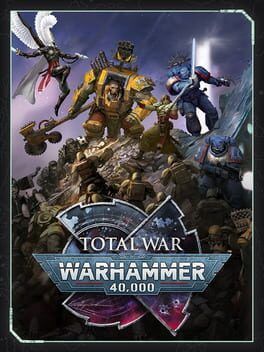
Creative Assembly’s move into the grimdark future with Total War: Warhammer 40,000 reshapes both the Total War formula and Games Workshop’s 40K games. Here is a strategy-focused breakdown of the reveal: starting factions, campaign structure, console plans, modding tools, and why this crossover matters for both communities.
Total War has finally made the jump from Old World fantasy to the grimdark future of Warhammer 40,000. After three massive fantasy entries, Creative Assembly is bringing its grand strategy and real-time battles to a universe of bolters, Titans, and exterminatus.
For strategy fans and long-time 40K players, this reveal is more than a simple spin off. It is a structural shift in how Total War handles ranged warfare, armored units, and a galaxy-spanning setting. Here is a focused breakdown of what the reveal tells us about starting factions, how the campaign is framed, what to expect on console, how modding will work, and why this crossover matters so much.
Initial Factions: Who You Command At Launch
Total War: Warhammer 40,000 leans into the most recognizable sides of the setting for its launch roster. Creative Assembly has confirmed that the focus is on a small number of highly distinct factions instead of a huge spread of slightly tweaked armies.
The Imperium of Man sits at the center of the reveal. You can expect at least one flagship Space Marine Chapter as a front-facing campaign faction, backed by the Astra Militarum’s massed armor and infantry. The Imperium’s appeal is obvious from a design perspective. It lets CA mix elite, low count power armor units with expendable Guard formations and heavy armor like Baneblades, giving the battle layer a strong contrast between shock troops and attritional warfare.
On the other side, Chaos provides a natural ideological and mechanical foil. Traitor Astartes, corrupted engines and daemonic support tie directly into the Warhammer fantasy trilogy’s experience with magic and monstrous entities, but now transplanted into a world of plasma fire and artillery. Chaos also opens an angle for more aggressive, micro focused players who want fewer, harder hitting units supported by terrifying centerpieces.
Xenos factions round out the starting line up to ensure the campaign map is not just a civil war with reskins. Orks bring a horde playstyle with volatile, ramshackle war machines and a focus on momentum in battle. A more technologically advanced faction like the Aeldari or Necrons gives CA a reason to explore extremely specialized units, battlefield mobility, and powerful, cooldown driven abilities.
From a strategy standpoint, the immediate message is that every launch faction is being tuned to feel like a different answer to the same problems. Holding territory, controlling key systems and managing war fatigue will look very different if you are playing a plodding, armor heavy Imperium campaign versus a hit and fade xenos force.
Campaign Structure: From Provinces To Star Systems
The biggest systemic question around Total War in a 40K setting is how you replace the familiar provincial map with something that feels galactic without becoming unmanageable. Creative Assembly’s solution is a layered campaign structure where the old province model is translated into star systems and sectors.
Each system effectively acts like a classic Total War province. You fight over planets, orbital installations and key military facilities instead of towns and ports. Control a system and you gain its resources, recruitment options and defensive infrastructure. Strings of systems form sectors, and sectors define the main strategic theaters of your campaign.
Critically, movement and logistics are no longer about marching across countryside. Fleets are your armies on the campaign map. You redeploy forces between systems using warp routes and stable corridors, which introduces new choke points to contest. A narrow warp corridor into a resource rich sector effectively functions like a fantasy mountain pass, but one that can be disrupted by events or enemy actions.
Economy and tech are tuned to reflect endless war. Promethium, manufactory output and population tithe replace food or basic gold income. This gives you reasons to hold less glamorous worlds that are industrial powerhouses or logistics hubs even if they are not front line shrine worlds or fortress planets.
The overall pacing is designed to feel like a constant war of fronts rather than a gentle expansion curve. You push a sector, secure or purge key worlds, then pivot ships to plug a hole somewhere else. For players used to late game map painting, this structure should make overstretch and attrition meaningful threats rather than mild inconveniences.
Battles In The 41st Millennium: Firepower As The Default
On the tactical side, Total War: Warhammer 40,000 has to solve a unique design problem. Almost every unit in 40K has a ranged weapon, and battles are decided by volume of fire as much as by charges and flanking. CA’s solution, according to the reveal information, is a more deliberate emphasis on suppression, armor profiles and verticality.
Infantry units now pay a far higher price for being caught in the open. Cover is no longer just terrain decoration but a core layer of the ruleset. Systems for suppression fire, pinned units and morale shocks from concentrated barrages are central to how you control space. Line of sight matters more, and the maps show larger structures, trenches and wreckage fields that can mask advances or force armor into predictable kill zones.
Heavy armor and walkers take center stage as the equivalents to fantasy’s dragons and giants. Titans, Knights and massive super heavy tanks function as literal anchors for an army’s plan. Losing one is closer to losing a legendary lord in a previous Total War entry than simply losing a unit of cavalry.
Most important for high level play, abilities and cooldowns are integrated around battlefield roles rather than being tossed on top as flavor. Orbital strikes, artillery barrages, commander auras and psychic powers serve as tempo tools that let you break stalemates or punish overextension. The result, at least on paper, is a battle model that rewards patient positioning, trading fire efficiently, and decisive, well timed pushes instead of constant melee blobs.
Console Support: Total War Finally Commits To Living Room Strategy
One of the big structural stories in this reveal is that Total War: Warhammer 40,000 is being built for PC and consoles together. That contrasts with earlier Total War games which were PC first and only saw ports years later, if at all.
CA is reworking interface density, radial command wheels and context sensitive controls so that issuing orders with a controller is viable in real time. Expect assisted camera tools, streamlined group creation, and priority commands that make it possible to micro key units without having to drill through menus.
Under the hood, targeting a consistent spec for PlayStation 5 and Xbox Series X|S also influences battle scale and pathfinding. The studio is talking about battles that retain the spectacle of the fantasy trilogy but are designed to run across all launch platforms. For competitive and co op players, that should translate into more consistent performance environments and a clearer baseline for balance decisions.
For the wider strategy space, this is significant. It positions Total War: Warhammer 40,000 as one of the first fully modern, big budget real time and campaign strategy titles that treats console as a first class citizen instead of an afterthought. If it works, it sets a template for future Total War releases to launch day and date on both PC and consoles.
Modding Tools And The New Engine
The reveal also sheds light on modding, which has been a foundational part of the Total War ecosystem for decades. Total War: Warhammer 40,000 is built on a new internal tech stack that CA has been referring to in interviews as a Warcore style engine, and that comes with both opportunities and delays for modders.
At launch, players will have access to the familiar level of configuration options, but the official, fully featured modding suite will arrive later. Creative Assembly wants to ship stable tooling that does not break every time the underlying engine is patched, so the plan is to gather data post launch, iterate on their pipelines and then release tools that support new asset formats, more advanced scripting and deeper campaign editing than before.
The pay off for that wait is that the new tools are being built with console parity in mind. While user made content distribution on consoles is always more constrained, the explicit goal is to allow curated mod packs and balance overhauls that can be shared between platforms instead of remaining a PC exclusive feature.
For the mod scene itself, the scale of the 40K setting is a dream. Even if launch focuses on a tight set of factions, official tools plus a dedicated community almost guarantee rapid expansion with custom Chapters, craftworlds, homebrew xenos and alternate timelines. Just as the fantasy trilogy grew into a platform for countless sub settings, Total War: Warhammer 40,000 is being pitched as a foundation that can host everything from small narrative campaigns to total conversions.
Why This Crossover Matters For Total War And 40K Communities
For veteran Total War players, this game represents a proof of concept. If CA can translate their mixed campaign and battle formula into a fully ranged, high tech universe without losing clarity or control, it opens the door for the series to explore other settings that were previously considered too modern or too gun heavy.
The campaign changes and focus on firepower also refresh core habits. Players used to heavy infantry lines and flanking cavalry will need to relearn concepts like overlapping firing arcs, suppression management and armor trading. High level play should skew more toward reading sightlines, timing disruption abilities and controlling deployment zones than simply stacking the most efficient melee units.
For the Warhammer 40,000 community, this is the largest scale representation of the setting yet attempted in a strategy game. You are not just pushing tokens on a hex map or commanding a small company of units. You are driving sector wide wars, managing planetary destruction and dealing with the political weight of the Imperium and its enemies.
The crossover also influences how Games Workshop’s IP can be expressed. Total War’s emphasis on long form campaigns and emergent narratives is well suited to 40K’s endless war backdrop. Named characters, relics and major events can appear organically, shaped by which sectors fall, which Chapters are recruited, and which planets burn.
Most importantly, both communities are being invited into a shared space. Warhammer tabletop players who have never touched Total War get a grand strategy frame for their favorite factions. Total War players who only knew Warhammer through the fantasy trilogy are introduced to 40K’s tone, technology and lore at a scale that respects both.
If Creative Assembly delivers on the strategic ambitions signaled in this reveal, Total War: Warhammer 40,000 will not just be another licensed spin off. It will be the defining digital war campaign for the 41st Millennium, and a new pillar for both Total War and Warhammer 40K for years to come.