
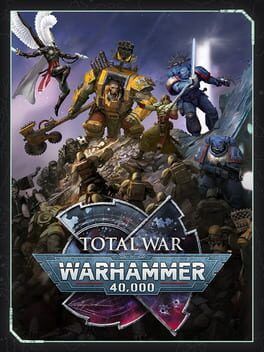
Gamescom hands-on reports suggest Total War: Warhammer 40,000 is leaning on ranged combat, cover, Ork horde pressure, and battlefield positioning to translate 40K into Creative Assembly’s large-scale strategy format.
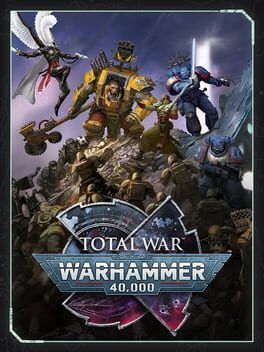
Image: IGDB
Store links: Total War: Warhammer 40,000 on Steam
Creative Assembly’s 40K test is already exposing the tactical fault line
The clearest signal from the latest Total War Warhammer 40K preview cycle is also the most practical one: Space Marines can cut down Orks by the hundreds from prepared positions, but they can still be swallowed if the green tide reaches them on bad ground. Rock Paper Shotgun’s Gamescom hands-on describes a demo in which the writer played roughly 20 minutes of a battle tutorial, 20 minutes of campaign tutorial, and 20 minutes of a scenario pitting Space Marines against an overwhelming Ork assault. The writer came away unable to judge the finished game, but still eager to play more.
That matters because the first public hands-on reports are converging on the same tension. Total War: Warhammer 40,000 is still being described by outlets as recognizably Total War, with armies, terrain, tactical matchups, and a campaign layer. Yet the 41st Millennium changes the combat grammar. Rock Paper Shotgun notes that almost every soldier in this game is armed with a gun, which pushes the battlefield toward ranged exchanges. IGN says trebuchets are out, while tanks and walking mechs are in. TheSixthAxis reports battlefield destruction, craters, rubble, and scrap being used as cover. GameWatcher says the real-time battle interface is cleaner in the build it played, with larger HUD elements and clearer icons for formations and stances.
The question for a strategy audience is whether Creative Assembly can make Warhammer 40,000 feel like a Total War game without reducing it to two gunlines deleting each other at range. The answer suggested by these demos is that positioning is being treated as the control valve. The Orks create the pressure. Cover and elevation create the answer. Misread either side of that equation and, according to the hands-on reports, even Space Marines can be made to look very mortal.
Positioning appears to be the core design answer to 40K’s firepower
Rock Paper Shotgun’s preview gives the cleanest description of the battlefield logic. Put Space Marines in cover on top of a hill and they will tear apart Ork Boyz trying to climb into melee. Reverse the positions and those same Marines can be overwhelmed by the charging mass. That is a simple lesson, but it says a lot about how Creative Assembly seems to be adapting Warhammer 40,000 into Total War scale.
Battle product owner David Petry told Rock Paper Shotgun that many RTS games emphasize matchup logic, citing the familiar rock, paper, scissors structure of games such as Age of Empires. Creative Assembly still cares about matchup, Petry said, but in Total War positioning is one of the most important things and should “almost trump match up.” That comment lines up with the structure described across multiple previews: the Space Marines are durable and powerful, the Orks have numerical pressure, and terrain decides whether quality can hold back quantity.
There is an important series thread here. Rock Paper Shotgun says Total War: Warhammer 40,000 revives Empire: Total War’s cover system, now in a game where ranged combat is central rather than supplemental. TheSixthAxis also saw cover become part of the field through destruction, with buildings blasted apart and craters forming during battle. If the final game follows the demo’s direction, cover will not function as passive decoration. It will be part of the economy of time. A squad in the right place buys firing time. A squad in the wrong place spends that time being closed down.
For veteran Total War players, that is the promising part of this Total War Warhammer 40000 preview. The old question of frontage, hills, flanks, and timing has not vanished. It has been reframed around bolters, suppression, orbital tools, and whether a unit can maintain a firing solution before melee contact.
The Orks are being used as a stress test for the new battle model
The Orks in these previews are doing useful design work. They are not simply present because they are iconic 40K antagonists. They create a readable pressure test for Total War 40K gameplay: can small elite units hold against a huge, aggressive enemy that wants to collapse distance?
GamesRadar writes that its tutorial began with 35 Space Marines fighting more than 1000 orcs, odds the outlet says it would not take in another Total War game. TheSixthAxis describes Orks blowing open part of a crashed Inquisitorial ship and spilling out in a mass of bodies during the tutorial, then says later battles made the hordes look like a flood of green across the planet. GameWatcher similarly reports that the Space Marines were the only playable faction in its demo, facing Orks across tutorial, campaign, and advanced battle slices. In that build, Bolter-carrying troops marched toward enemy hordes while longer-range soldiers supported from more strategic positions, and melee units with chainswords could charge into the waves.
That setup is doing two things at once. It sells the fiction of 40K, where Space Marines are elite and Orks are often defined by momentum, volume, and violence. It also lets Creative Assembly show that the battle system can tolerate extreme asymmetry without breaking into spectacle alone. If a few dozen Marines can survive four-digit enemy counts, the answer cannot be raw unit parity. It has to be terrain, armor, ranged output, support abilities, and timing.
The risk is balance readability. If elite units are too durable, Ork pressure becomes scenery. If the horde closes too easily, positioning becomes a binary pass or fail test. The previews suggest Creative Assembly is aware of that knife edge. TheSixthAxis quotes Petry explaining that cover matters differently depending on unit and opponent. Against the Ork army in the demo, he said, cover helps against some fire, but the bigger problem is an enemy that wants to get in and punch. For Astra Militarum, by contrast, he said cover matters far more because they are much more fragile. That distinction is exactly where a Warhammer 40000 strategy game has to live: different armies should ask different positional questions, not simply reskin the same answer.
WarCore is carrying the scale, destruction, and new control demands
Several outlets identify WarCore as the new engine behind Total War: Warhammer 40,000. GameWatcher describes it as powering the carnage, massive armies, and destructible scenery pieces in the real-time battles. IGN calls this the first run with Creative Assembly’s new WarCore engine, while TheSixthAxis connects it to the studio’s latest in-house technology and the game’s large battles.
The most visible engine-side shift, based on these accounts, is the battlefield itself becoming less static. TheSixthAxis saw ruinous buildings blasted apart, craters created, and rubble or scrap becoming cover. IGN describes Marines vaulting over cover, chainswords clashing with Ork axes, and bullets flying overhead when zoomed in. Niche Gamer similarly reports individual soldiers moving around cover, projectiles crossing the battlefield, and chainswords colliding with Ork weapons once the lines met.
Those are visual details, but in a strategy game they become balance questions quickly. Destructible cover sounds exciting until the player has to understand whether a position is still safe, whether line of sight has changed, and whether a crater is a liability or a new anchor point. GameWatcher’s note about clearer battle UI is therefore more than a quality-of-life aside. If Total War is adding strafe-firing, suppression, drop pods, orbital support, cover states, and heavy vehicles, then the interface has to communicate battlefield state quickly enough for players to act.
IGN reports that the tutorial introduced movement, cover, missile strikes, strafe-firing, suppression, and calling down drop pods from orbit with fresh forces. It also notes that it did not see an ammo bar. That last detail is small but strategically meaningful if it reflects the final design. Without ammunition attrition as a primary constraint, ranged combat needs other governors: exposure, firing arcs, morale or equivalent pressure systems, cooldowns, support availability, melee threat, and the terrain game described across these previews. The demo material points to that direction, but Creative Assembly has not answered every systems question yet.
The campaign layer is still the least proven part of the preview build
The battles are producing the strongest impressions because that is where the Gamescom demos appear to have spent their most informative time. The campaign layer, by contrast, remains more guarded in the available reports. Rock Paper Shotgun says its brief campaign slice involved building bases, moving armies, and launching battles, calling it very Total War, but the outlet did not see the interplanetary elements that would distinguish this entry from earlier games in the series. It also says it did not see much of the base building that provides additional battle support.
That last point is worth watching. Petry told Rock Paper Shotgun that base building will be important for “teeing up the right stuff for a battle,” and the preview mentions off-map pieces that can be used to tip fights, though the provided source text cuts off before fully detailing them. TheSixthAxis reports that Space Marines can call in reinforcements by drop pod and use a wealth of orbital supports. IGN also saw drop pods from orbit and missile strikes during the tutorial. Those systems suggest the strategic layer may feed directly into battle tools rather than staying confined to army stacks and settlement upgrades.
If Creative Assembly gets that connection right, Total War: Warhammer 40,000 could have a sharper pre-battle planning loop than the demo slices can yet prove. Traditional Total War preparation often means recruiting the right units, bringing enough force, and choosing where to engage. In 40K, based on these previews, preparation may also mean deciding which support assets are available once the fighting starts. That creates room for more interesting campaign economy decisions, but it also creates a balance headache. Off-map power can easily flatten tactical mistakes if it is too generous, or feel ornamental if cooldowns and availability are too restrictive.
For now, the confirmed facts are narrower than the implication. Outlets played limited slices at Gamescom, with Space Marines as the playable focus, Orks as the primary enemy in the described battles, and only a brief look at campaign structure. Interplanetary strategy, faction variety, economy pacing, long-campaign difficulty, and late-game battle complexity remain open questions in the supplied preview material.
Accessibility is being addressed, but the veteran test comes later
GameWatcher reports that Total War: Warhammer 40,000 was easier to get into than past Total War entries during its hands-on session, citing a cleaner real-time battle interface, larger buttons and HUD elements, and more descriptive icons. The outlet also notes that stances and army formations occupied a larger part of the surface-level interface, making them harder for newcomers to miss. It says the session was played with mouse and keyboard, while also reporting it was told gamepad controls were already feeling good after the reveal that Total War was making its console debut.
That console context raises a useful tension. A cleaner UI helps new players and gamepad readability, but Total War’s long-term audience will judge the game on whether accessibility has compressed tactical expression. GameWatcher says it saw no major mechanical causes for worry, while also predicting diehards and 40K experts will have things to say once they can play it themselves. That is probably the correct level of caution. A one-hour Gamescom build can show whether the basics are legible. It cannot show whether campaign management, army composition, faction asymmetry, AI behavior, and battle controls stay satisfying after dozens of hours.
The Space Marines are also an unusually forgiving preview faction. GameWatcher describes them as lumbering warriors suited to a first hands-on. TheSixthAxis emphasizes their staying power and tactical options, while Petry’s comment to that outlet frames Astra Militarum as much more dependent on cover. That means the first Total War Warhammer 40000 Orks demos may be teaching the game from the safest side of the equation: elite armor, powerful guns, orbital support, and a horde enemy that makes the lesson visually obvious.
The real strategic test will come when Creative Assembly shows factions that cannot absorb mistakes as easily, enemies with stronger ranged tools, and campaign situations where the player cannot always choose a textbook defensive position. The preview build suggests a coherent battle philosophy. It does not yet prove the full metagame.
A promising preview, with release-day judgment still out of reach
The current Total War Warhammer 40000 preview picture is encouraging because the same design theme appears across independent hands-on reports. Rock Paper Shotgun highlights terrain and positioning over simple matchup logic. GamesRadar stresses the shock of tiny Space Marine numbers holding against enormous Ork counts. TheSixthAxis focuses on destruction, cover, drop pods, and orbital support. IGN points to suppression, strafe-firing, cover movement, and the absence of visible ammo bars in its demo. GameWatcher emphasizes WarCore, clearer interface design, and the readability of unit roles.
Taken together, those details suggest Creative Assembly is not trying to make a conventional fantasy Total War with bolters pasted over bows. It is building around the specific tactical problem 40K creates for a large-scale strategy game: ranged lethality must be powerful enough to feel right, but not so dominant that movement, cover, melee, and pressure collapse. Orks are the ideal first public answer to that problem because they force the issue. They make bad positioning visible in seconds.
Readers looking for practical buying guidance should keep expectations measured. The sources provided do not confirm a release date, price, PC requirements, final platform list, faction roster, or campaign scope. They do confirm Gamescom hands-on sessions built around tutorial play, a campaign glimpse, and a large battle challenge, with Space Marines playable and Orks heavily featured as the opposing force. They also confirm Creative Assembly is using WarCore and leaning into cover, destruction, support abilities, and ranged warfare.
For now, the smart read is that Total War: Warhammer 40,000 has cleared the first conceptual hurdle. It can put bolters, Ork hordes, drop pods, tanks, cover, and Total War-scale command into the same tactical space without losing the importance of where units stand. The harder question is whether that holds across a full campaign, multiple armies, and the late-game pressure cooker where Total War systems usually reveal their real balance.