
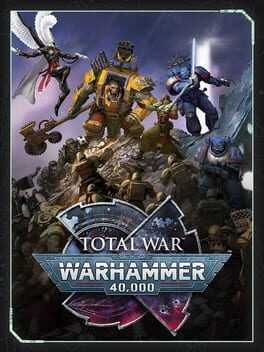
Creative Assembly’s latest in-universe “transmission” primes Total War: Warhammer 40,000 for a blowout at the PC Gaming Show. We break down what the Minerva teaser implies about launch factions, campaign scale across the stars, and how 40K’s grimdark warfare could reshape Total War’s strategy mechanics.
The latest “transmission” from Creative Assembly is doing more than just telling Warhammer fans to tune in to the PC Gaming Show. It is quietly sketching the shape of Total War: Warhammer 40,000 itself, from which factions will open the campaign to how CA might translate grimdark galactic war into the familiar blend of turn-based grand strategy and real-time battles.
The Minerva Transmission And A PC Gaming Show Payoff
GamingBolt’s breakdown of the new teaser focuses on Minerva, a system sitting in the wider Armageddon subsector, where the Imperium of Man is preparing a brutal counterattack against entrenched Ork forces. The video plays out as an in-universe military broadcast, ending on the line “there is no peace among the stars” and a final message: “Next Transmission Update Scheduled — 17 Cycles.”
Seventeen days lines up almost exactly with the PC Gaming Show date, and the article rightly reads this as a signal that the real blowout is being saved for that stage. The important detail is where CA chose to set the teaser. Armageddon and its surrounding theater are iconic examples of industrial hellscapes, meat-grinder warfare and endless Imperial logistics. Building the marketing around this front suggests the campaign will lean into vast theaters of war and attritional operations rather than a single planet-bound conflict.
The teaser also hammers home that this is not a side project. It is presented as a full-fat Total War, complete with meticulous 40K flavor and in-universe jargon, aimed squarely at the PC audience that made the fantasy trilogy such a phenomenon. The likely reveal beats at the PC Gaming Show are obvious: a cinematic plus a first look at the campaign map and the initial faction roster in action.
Four Launch Factions And How The Teaser Frames Them
Across official press materials and follow-up reporting, Creative Assembly has already confirmed four launch factions: Space Marines, Astra Militarum, Orks and Aeldari. The Minerva broadcast effectively narrows how at least two of those are going to behave on the campaign map.
The focus on an Imperial counteroffensive implies that Astra Militarum will be the backbone of any Armageddon-flavored theater. Expect regimental naming, rotating commanders and a huge emphasis on artillery, armor and sacrificial infantry. The teaser’s language about a “swift and brutal counterattack” fits the image of Guard high command throwing wave after wave of bodies and tanks into fortified Ork territory while struggling to keep supply lines intact.
On the other side, the Ork occupation of the subsector telegraphs their role as the invasive, expanding threat. Mechanically, they almost beg for a system where fighting more battles and causing more destruction feeds a Waaagh-style momentum meter, triggering new hordes, temporary buffs and ramshackle constructs that spill across the star map. The teaser’s depiction of the region as on the brink of boiling over is exactly the kind of pressure Ork gameplay thrives on.
Space Marines and Aeldari are not explicitly foregrounded in the Minerva trailer, but they exist as natural foils to the two spotlighted factions. Marines give the Imperium a scalpel to go with the Guard’s hammer, while Aeldari can exploit a destabilized front for their own inscrutable agendas. The PC Gaming Show is the perfect stage to showcase that contrast: multi-planet siege campaigns driven by Guard and Orks, punctuated by elite, interventionist operations from Marines and Aeldari.
Campaign Scale: From Mortal Empires To Galactic Crusades
The biggest design question Total War: Warhammer 40,000 has to answer is scale. The fantasy trilogy was continent-spanning, but it still took place on a single world. 40K’s entire identity is built on wars that stretch across subsectors, sectors and entire crusade routes.
The Minerva transmission, framed as one system inside the wider Armageddon subsector, hints at a layered galactic map rather than a flat globe. A likely structure is a sector-level campaign where each system hosts one or more key planets functioning like provinces. Minerva, for instance, could be a cluster of manufactorum worlds and hive cities, each with its own settlement slots, building chains and corruption-style modifiers representing things like Ork infestation or warp instability.
In that context, “crusades” become a natural campaign pillar. Reports and interviews around the announcement already lean on the language of galaxy-spanning crusades and narrative arcs that all factions intersect with. At the PC Gaming Show, expect Creative Assembly to trot out a version of this that recalls Mortal Empires and Immortal Empires, but framed as a multi-theater war instead of a single supercontinent.
Practical implications for campaign design include:
In place of climate and corruption systems, sectors could be defined by warp storms, supply challenges and local allegiance to the Imperium, Xenos or Chaos. Some routes might regularly close under warp storms, forcing you to plan offensives around narrow travel windows. The teaser’s bleak messaging about “no peace among the stars” already sets this tone of a galaxy that resists long-term stability.
Settlements are likely to skew heavily toward hives, forge worlds and fortress moons. Each offers an obvious gameplay identity: production multipliers on forge worlds, massive defensive bonuses for fortress systems and political control from hive cities. The Minerva teaser’s focus on industrialized war hints at CA embracing these as core campaign levers rather than just flavor text.
The map itself could use something like province stances or sector-wide edicts that reflect high command directives. Raise conscription quotas, divert promethium to a different front or authorize Exterminatus protocols if Creative Assembly really wants to embrace the darkness of 40K.
Grounding Mechanics In 40K’s Factions
Beyond geography, the real excitement lies in how Creative Assembly can riff on its existing systems to capture each faction’s distinct style of war. The teaser’s focus on an Imperial counteroffensive against entrenched Orks is a perfect setup for asymmetric mechanics.
Astra Militarum: Logistics, Attrition And Endless Regiments
The Guard have to feel fundamentally different from anything in the fantasy trilogy. Where Empire and Kislev leaned on balanced rosters and hybrid armies, Astra Militarum is about industrialized warfare and the terrifying expendability of its soldiers.
On the campaign map, you can almost see CA adapting the supply-lines work from Pharaoh and the reworked reinforcement systems from Warhammer 3. Guard armies should be strongest when they fight under the umbrella of intact supply chains, artillery parks and air support. Disrupt those with Ork raids or Aeldari strikes and the same forces begin to crumble.
Regimental customization also offers a clear hook. Rather than the named LL and faction-specific tech of the fantasy games, Guard players might manage regiments of renown, each with a history of battles, favored theaters and attached commissars or tank aces. The Minerva campaign could showcase this with specific Armageddon-pattern formations that gain bonuses in ash-choked hive environments.
Space Marines: Elite Strike Forces And Limited Numbers
IGN’s coverage of Dawn of War’s devs paints Total War: Warhammer 40,000 as complementary to more traditional RTS takes on 40K, not a direct competitor. That separation is important for Space Marines. On the tabletop and in Dawn of War, Marines are frequently the poster boys, but in a grand strategy frame they work best as rare, elite forces inserted into key battles.
A potential solution is to treat Marines more like a hero-heavy, limited-entity faction. Instead of fielding multiple 20-stack armies, a Marine chapter might run only a handful of strike forces, each built around powerful characters and elite squads with high upkeep and strict recruitment caps. On the campaign layer they could deploy via orbital strike, deep strike or drop pod mechanics, letting you bypass terrain and hit the heart of enemy logistics.
The Minerva teaser’s tone of an Imperium stretched thin but willing to unleash overwhelming force in specific hotspots fits that fantasy perfectly. PC Gaming Show footage that juxtaposes an Astra Militarum meat grinder on Minerva’s surface with a surgical Marine drop against an Ork warboss would send exactly the right message about faction asymmetry.
Orks: Waaagh Momentum And Improvised War Machines
If any faction is already speaking through the Minerva teaser, it is the Orks. The idea of an occupied Armageddon subsector supports a playstyle built around overextension, ramshackle conquest and a feedback loop where constant fighting generates more Orks, more scrap and more unstable contraptions.
Mechanically, the Waaagh system from the fantasy trilogy is an obvious starting point, but 40K opens the door to folding in tech capture and loot-based progression. Total War’s post-battle screens are tailor-made for letting Ork players bolt salvaged Imperial tank hulls and Aeldari wraithbone fragments onto their vehicles, gradually mutating their roster with battlefield trophies.
On the strategic side, Ork factions could lean on “bash, loot, move” cycles where they must keep rolling or watch their warbands implode into infighting. Provinces might be less about careful development and more about turning every captured world into a gun-forge or scrap town that barely holds together long enough to fuel the next war.
Aeldari: Mobility, Webway Control And Long Games
While the Minerva teaser does not name-drop Aeldari, any 40K campaign built on crusades and multi-system wars invites them in as master manipulators. Aeldari strategy works best when the player feels like they sit half a step sideways from the normal campaign rules.
Think of something akin to the Chaos Realms in Warhammer 3, but inverted. Instead of diving into detached realms, Aeldari might weave private webway routes between key systems, ignoring warp storms and conventional chokepoints at the cost of meticulous planning. Control over these pathways then becomes a campaign resource, letting you pop up in exposed Ork backlines or evacuate doomed worlds in a single turn.
Battle mechanics could emphasize glass-cannon combined arms and psychic synergy, borrowing some of the spell density and micro from factions like Tzeentch, but anchored in 40K’s lethality. The PC Gaming Show is an opportunity for CA to show off how far their engine has come in handling ranged firepower, line-of-sight and cover, all crucial for making Aeldari feel like actual skirmish and ambush specialists.
From Fantasy Magic To 40K Firepower And Psykers
All of this sits on top of a more fundamental shift: replacing fantasy magic with 40K’s blend of ranged devastation, battlefield technology and psychic warfare.
Total War’s previous Warhammer titles have steadily pushed the battle engine toward higher projectile densities and active abilities, but 40K raises the bar. Lasguns and bolters must feel omnipresent without turning every engagement into a static firing line. The Minerva-focused teaser, with its talk of brutal counterattacks and industrial warfare, hints at a combined-arms approach where artillery barrages, armored thrusts and air support matter as much as infantry formations.
Warp-based psyker abilities can plausibly occupy the same design space as spell lores, but Creative Assembly has room to add unique risk-reward layers. Perils of the Warp miscasts, lingering warp anomalies on the battlefield and abilities that directly interact with morale and suppression would suit the fiction and make 40K magic feel distinct from the fantasy trilogy.
Meanwhile, doctrine systems could replace or evolve out of army abilities and tech trees. Guard regiments choosing between siege, armored spearhead or airborne assault doctrines, or Marine chapters swapping combat doctrines mid-battle, would give players the kind of mid-fight flexibility 40K is known for without undermining Total War’s fundamentals.
Why Dawn Of War’s Creators Are Not Worried
IGN’s report on the Dawn of War IV team’s reaction to Total War: Warhammer 40,000 is telling. They do not see Creative Assembly’s project as a rival so much as a complement. Dawn of War is about tight-knit squads, cover arcs and base-building or capture-point control in real time. Total War scales that experience out to tens of thousands of troops, logistics networks and empire-level decisions.
From a player’s perspective, the Minerva teaser speaks straight to that difference. It is not about a single company of Space Marines storming a stronghold, but about a whole subsector on the brink, Imperial high command looking at star charts and making hard choices about where to commit their limited strength. That is exactly the kind of problem Total War is built to simulate.
Rather than cannibalizing each other, the two games are poised to bookend the Warhammer 40K strategy experience: Dawn of War at the tactical, boots-on-the-ground level, Total War at the grand strategic level. The PC Gaming Show is essentially CA’s chance to stake out that upper tier in the public imagination.
What To Watch For At The PC Gaming Show
Going into the showcase with the Minerva teaser fresh in mind, there are a few signals worth watching for that will clarify just how ambitious Total War: Warhammer 40,000 really is.
If CA opens with a sector or galaxy map flyover, that will confirm the multi-system campaign many fans are hoping for. Any mention of crusades, sectors or subsectors as discrete campaign layers will give us a sense of how far they are departing from the continent model.
Focal battles set on ash-choked hive worlds or orbital shipyards will show how deeply the engine can lean into verticality, cover and long-range firepower without losing the clarity that makes Total War battles readable.
Finally, pay attention to how they frame each of the four launch factions. If the Imperium is truly split between Astra Militarum and Space Marines with distinct campaign roles, and if Orks and Aeldari each bring their own economic and movement quirks, then Total War: Warhammer 40,000 will be more than a reskin. It will be the next major evolution of the series, reshaped by the demands of 41st-millennium war.
However much of that we actually see on stage, the Minerva transmission has already done its job. It has taken Total War’s shift to the far future from rumor to inevitability, and it has made one thing clear: there really is no peace among the stars, but there might soon be a new benchmark for galactic-scale strategy on PC.