
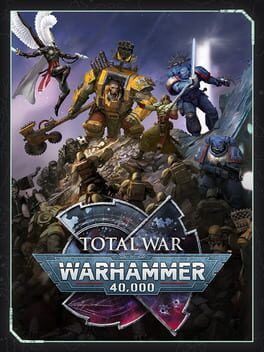
Gamescom hands-on previews suggest Creative Assembly is rebuilding Total War around Warhammer 40K's ranged warfare, cover, destruction, and campaign scale.
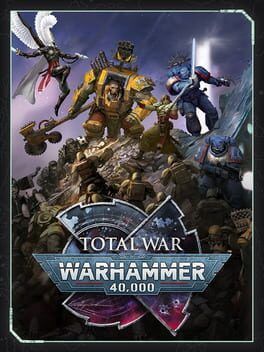
Image: IGDB
Store links: Total War: Warhammer 40,000 on Steam
Creative Assembly’s 40K pitch is ambitious, and the demos finally show the cost
The strongest concrete takeaway from the Total War 40K Gamescom showings is that Creative Assembly is treating Warhammer 40,000 as a structural problem rather than a skin swap. Eurogamer reports that a Creative Assembly brand manager told press the studio is hoping to make the definitive game for the 40K universe, and the hands-on sessions described by Eurogamer, IGN, GamingBoulevard, and PC Gamer all point to the same central tension: Total War has to become a ranged, cover-driven battlefield without losing the legibility and scale that define the series.
That is a major shift for a Creative Assembly strategy game. Total War has always had missiles, muskets, artillery, monsters, and magic depending on the era, but the series’ battle language has usually been built around formations meeting, holding, folding, or breaking. Total War Warhammer 40000 has a different baseline. According to Eurogamer, the new game is built around ranged combat, sightlines, ruined cover, and units capable of destroying defensive positions. IGN’s preview adds suppression, strafe-firing, drop pods, tanks, walking mechs, and Creative Assembly’s new WarCore engine to that list.
The early critical response is unusually strong for a first hands-on slice. Eurogamer’s preview says the writer left convinced of the game’s merit after a tutorial campaign section, a main campaign slice, and a large-scale battle. PC Gamer’s headline says one hour with the game was the highlight of the writer’s year. Those are preview impressions, not verdicts, and all of them come from guided early builds. Still, the consistency matters: outlets are not simply praising the presence of Space Marines and Orks. They are responding to how the battlefield rules appear to have changed.
A ranged-first Total War changes the value of terrain
The most important design change described across the Gamescom previews is the elevation of cover from useful battlefield feature to primary tactical currency. Eurogamer says ruined buildings and makeshift battlements are spread across maps, and that positioning around those areas is paramount. GamingBoulevard, writing from the perspective of someone who does not play Total War every week, reached the same practical conclusion: sending Space Marines straight at Orks might work briefly, but putting them into decent protection gives them a much better chance of surviving.
For long-time strategy players, that is the meta shift to watch. In a melee-centric Total War battle, terrain often modifies engagement timing, line of sight, fatigue, charge value, or missile exposure. In Total War Warhammer 40000 impressions from Gamescom, terrain sounds closer to a contested resource. If cover defines survivability and firing positions, then the opening minute of a fight becomes less about forming a clean front and more about claiming angles, denying approaches, and keeping fallback positions alive.
Eurogamer’s examples are especially revealing because the cover is not static. The outlet describes an Ork truck accelerating through light cover, flattening the position and throwing Space Marines out of it, and also reports an Ork Stompa walking through a building. That has big tactical consequences if it holds across the full game. A defensive line that looks safe may be temporary. Heavy units become tools for changing the map, not simply damage dealers. The player who treats terrain as permanent risks building a plan around assets that can be demolished by the enemy’s next push.
Eurogamer compared the importance of cover to the old Dawn of War real-time strategy games. That comparison is useful, but the reported Total War scale changes the equation. Dawn of War asked players to manage squads in cover on a focused RTS map. Creative Assembly now has to combine that style of firefight logic with Total War’s larger formations, wide fronts, reinforcements, and cinematic mass.
The spectacle is doing tactical work, not only selling the license
The previews also suggest Creative Assembly knows that 40K credibility depends on sensory accuracy. Eurogamer says the presentation looks and sounds right, citing bolters with the expected force and a dreadnought moving with appropriate weight. The same preview notes that zooming close to fights feels like entering Warhammer 40,000’s grim darkness, and reports that this is Creative Assembly’s first 18-rated game, with Orks erupting in heavy gore when they run into a firing line.
That presentation detail would be cosmetic if the combat layer were unchanged. Instead, the spectacle appears to reinforce battlefield readability. A dreadnought’s weight matters because big units can plausibly alter space. Bolter fire matters because ranged pressure is now central rather than supporting. Explosions, suppressive fire, and drop pods are not background noise in the previews; they are how the player reads momentum.
IGN’s hands-on account describes pausing and zooming into Space Marines and Orks fighting in bloody close-quarters clashes while bullets pass overhead. That detail is important because it answers one obvious fear around Total War Warhammer 40000: that a gun-heavy setting might drain the series of melee drama. IGN’s preview says close combat is still present, including chainswords clashing with Ork axes, while the newer systems add suppression, strafe-firing, and orbital drop pods.
The best version of this design is a battle system where the macro view tells you which lanes are collapsing and the close camera confirms why. The risk is visual overload. GamingBoulevard mentions moments of focusing on one group of soldiers before realizing something more important was happening elsewhere on the map. That is classic Total War pressure, but 40K’s lasers, bombardments, tanks, drop pods, cover states, and sightlines could raise the attention tax substantially.
WarCore and 40K force a different kind of Total War battle plan
IGN reports that Total War: Warhammer 40,000 is the first entry using Creative Assembly’s new WarCore engine. The source material does not provide technical specifications for WarCore, so it would be premature to make performance claims. What the previews do support is a design claim: the engine debut is arriving alongside mechanics that ask far more of the battlefield than another rank-and-flank iteration would.
IGN’s tutorial slice introduced movement, cover, missile strikes, strafe-firing, suppression, and calling down drop pods with fresh forces. GamingBoulevard also reports special attacks such as laser strikes and bombardments, plus reinforcements that can be dropped onto the battlefield. These are not small additions if they become core systems. Reinforcement timing, battlefield entry points, and off-map firepower can all punish the comfortable Total War habit of solving the battle during deployment.
The absence of an ammo bar in IGN’s preview is another notable signal, though it should be treated carefully because it comes from an early build. If ammunition limits are not a central constraint, ranged combat will need other balancing pressures: line of sight, reload rhythms, suppression, cover integrity, heat, cooldowns, accuracy, morale, or unit vulnerability. The provided previews confirm some of those pressures, especially sightlines, cover, suppression, and destructive units. They do not yet explain the full economy of sustained fire.
From a strategy perspective, that is where the long-term game will likely live or die. Ranged-first Total War cannot be a simple damage race. It needs reasons to move after finding a good firing position, reasons to risk a melee push, and reasons to bring slower heavy pieces beyond raw spectacle. The Gamescom build appears to be testing those answers through destructible cover, orbital insertion, and vehicle shock, but the public preview material does not yet show enough to judge campaign balance or late-game army composition.
The campaign still sounds familiar, but its scale is pointed in a new direction
The battle changes are the headline, but the campaign layer remains a crucial part of the pitch. Eurogamer reports that its campaign time involved navigating the overworld of a single planet within a solar system. The map was divided into sections controlled by present factions, and Eurogamer says the mechanics look very similar to prior Total War games. The aesthetic, however, is described as far stranger: barren wasteland, alien flora around scrapyard settlements, space junk above orbit, and a Space Marine battle barge floating over the map.
That planetary framing matters because it suggests Creative Assembly is not simply replacing Old World provinces with a galaxy map in the material shown so far. The provided sources confirm a single-planet overworld within a solar system from Eurogamer’s session, not the final full campaign scope. MMORPG describes Total War: Warhammer 40,000 as a grand strategy game where players will define the fate of the dark future’s key factions, but the excerpts provided here do not establish the full faction roster, the number of playable campaigns, or how many planets or systems will be in the final release.
IGN’s preview says the demo was seen through the helmets of the Space Marines and involved fighting Orks. Eurogamer’s embedded official gameplay trailer is titled Orks vs. The Imperium. GamingBoulevard’s hands-on also describes Space Marines, Orks, tanks, and battlefield abilities. That makes Space Marines and Orks the confirmed hands-on focus in these reports. Anything beyond that should remain in the unannounced category unless Creative Assembly or Sega publishes more specific roster information.
The campaign question for experienced Total War players is how Creative Assembly connects the familiar conquest loop to 40K’s asymmetry. A planet split into controlled regions is easy to understand. The challenge is making orbital presence, faction identity, reinforcements, and battlefield escalation affect the campaign in ways that feel native to the setting rather than detached battle gimmicks. Eurogamer’s note about the visible battle barge is a promising atmospheric detail. The systemic role of fleets is still not clarified by the provided material.
Customization is promising, but the preview build leaves large questions open
IGN lists unit customization as a welcome part of the package, while also saying it is a bit bare-bones at the moment. That caveat is worth keeping near the center of the conversation. Customization could become one of Total War Warhammer 40000’s most important long-tail systems, especially for Space Marines, but the hands-on material does not yet support claims about final depth, progression, cosmetics, wargear breadth, faction-wide army building, or multiplayer balance.
The reason customization matters strategically is simple: 40K units carry identity through equipment. A squad’s battlefield role can change dramatically depending on weapons and support. If Creative Assembly builds that into the campaign economy, players could end up making meaningful tradeoffs between flexible generalist forces, anti-armor tools, suppression platforms, assault units, and objective holders. If customization stays shallow, it may mostly serve flavor. IGN’s current phrasing keeps both outcomes on the table.
The tutorial emphasis also cuts both ways. GamingBoulevard says the tutorial was definitely needed, and the preview describes the learning curve of moving the camera, selecting units, positioning troops, using cover, and tracking multiple fronts. For veteran Total War players, those systems may click quickly. For 40K fans arriving from tabletop, Dawn of War, or shooters, the control density could be the barrier. Creative Assembly’s ability to teach cover, sightlines, off-map abilities, and reinforcement timing will be as important as the power fantasy.
That is especially true because early preview enthusiasm can come from curated scenarios. A one-hour build can showcase the perfect Ork truck smash, the perfect bombardment, and the perfect dreadnought advance. The full game has to make those moments emerge across dozens of campaign hours without turning every battle into noise. The Gamescom buzz says Creative Assembly has found a compelling combat direction. It does not yet prove the pacing, AI, autoresolve, campaign economy, or endgame can support it.
Release details remain limited, so treat the buzz as direction rather than buying advice
For practical reader guidance, the source material provided here confirms Gamescom hands-on access, an early build, Space Marine-focused demo slices, Ork opposition, a campaign tease, a large-scale battle, the WarCore engine, and a ranged-combat design shift built around cover and sightlines. It does not provide a confirmed release date, price, PC requirements, console availability, editions, preorder details, or final faction list.
That makes the current Total War 40K Gamescom coverage useful for judging design direction, not for deciding whether to preorder. The most reliable conclusion is that Creative Assembly is making a serious attempt to adapt Total War’s battle grammar to 40K’s ranged warfare rather than forcing the setting into the old template. Eurogamer’s report of destructible cover, IGN’s account of suppression and drop pods, and GamingBoulevard’s newcomer-friendly description of battlefield pressure all support that reading.
The standout preview response is meaningful because it comes from different angles. Eurogamer frames the game as a possible definitive 40K adaptation after hands-on time. PC Gamer’s headline calls an hour with it a personal highlight. IGN focuses on the future-setting jump, WarCore, and customization. GamingBoulevard stresses how the tutorial and cover systems made the game understandable even for someone outside the weekly Total War audience.
The unanswered questions are now the important ones. Can WarCore handle huge 40K battles cleanly outside a controlled demo? Can ranged combat avoid static firing-line dominance? Will destructible cover and orbital tools create real adaptation instead of spectacle on cooldown? Can the campaign layer give planetary conquest the same staying power Total War players expect? The Gamescom impressions put Total War Warhammer 40000 on the strategy radar for good reason, but the decisive test will be whether these battlefield ideas survive the full campaign grind.