
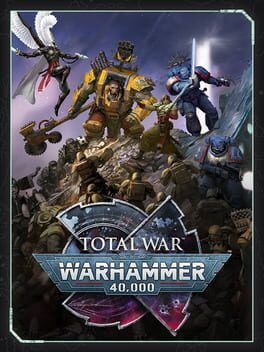
Creative Assembly’s first full Total War: Warhammer 40,000 battle puts strafing, suppression, cover and individual line of sight at the center of combat, signaling a major shift for Total War strategy fans.
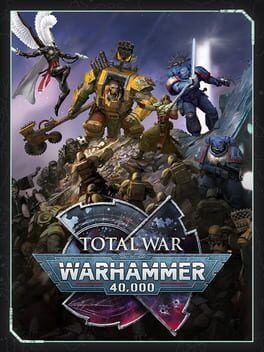
Image: IGDB
Store links: Total War: Warhammer 40,000 on Steam
Creative Assembly’s first full battle puts guns before the charge
Creative Assembly has now shown Total War: Warhammer 40,000 in its first full battle presentation, and the clearest takeaway is concrete: this is a Total War battle built around ranged lethality, cover, line of sight and moving fire rather than the familiar cadence of infantry locking down a front while missile units work safely from behind.
According to PC Gamer and its Yahoo syndication of the same report, the latest Alpha Strike livestream showed the Astra Militarum defending a river crossing against an Ork attack, with Creative Assembly running the encounter three times from the player’s perspective. Rock Paper Shotgun also reported that the developers livestreamed a battle between the Imperium and Orks while discussing systems including drop pods, flamers and evasion stats.
That matters for how strategy players should read this reveal. The interesting point is not simply that Total War Warhammer 40000 has more guns because Warhammer 40K has more guns. The reported systems suggest Creative Assembly is reworking the battle model around who can see, who can shoot, who can keep shooting while moving, and how much control the player gives up to smarter unit behavior. For a series whose battles have often been decided by formation discipline, charge timing, morale shocks and clean target focus, this is a substantial change in rhythm.
Strafing turns repositioning into a live combat decision
The most immediate mechanical break from older Total War habits is strafing. PC Gamer’s report says units can now strafe, firing as they move slowly in a chosen direction, such as a tank backing away from infantry, although accuracy is affected. Rock Paper Shotgun similarly reports that units can fire and perform other actions on the move, with accuracy penalties depending on the unit and context. Space Marines were described by RPS as good at strafing, while Imperial Guard prefer to dig in.
For Total War veterans, that changes the value of movement. In older battles, repositioning a missile unit often meant accepting a window of dead time, a period where the unit was turning, reforming or unable to fire effectively. In the Total War Warhammer 40K gameplay shown here, movement appears to become a gradient rather than a switch. A unit falling back may still contribute damage or suppression, but less efficiently than one planted in a strong firing position.
That creates a different kind of micro pressure. Pulling a tank away from Orks is no longer only about avoiding contact. It also becomes a question of whether the accuracy loss is worth the distance gained, whether the unit can maintain line of fire while moving, and whether another squad can cover that withdrawal. In practical terms, this points toward battles where kiting, staggered retreats, bounding advances and crossfire maintenance could matter far more than in a medieval or fantasy melee-first Total War setup.
The risk is balance. If firing on the move is too strong, durable ranged units could erase melee threats before contact. If the penalty is too steep, strafing becomes visual flavor rather than a real tool. Creative Assembly’s livestream details, as reported, confirm the mechanic and the accuracy tradeoff, but they do not yet prove where the tuning lands.
Suppression and sweeping fire change the purpose of shooting
The reveal also reframes ranged combat as control, not only damage. Rock Paper Shotgun reports that units can suppress attackers for a stat cut, while PC Gamer’s Yahoo-syndicated report says players can suppress enemy units and that some units, including Baneblades, have sweeping fire to maximize ranged damage. RPS describes sweeping fire as an option that spreads damage across the largest quantity of attackers.
That distinction is important. In many Total War battles, the cleanest missile play is focus fire: delete one key unit, then move to the next. The systems described for Total War Warhammer 40000 complicate that old instinct. If fire can be smeared across several enemy units, and if suppression weakens attackers before they arrive, the best target may not be the one you can kill fastest. It may be the unit about to cross open ground, the mob threatening a flank, or the squad whose stat cut buys your gunline time to reload, rotate or retreat.
This is where Warhammer 40K’s tabletop identity appears to be shaping the real-time layer. GameGuide reports that the first battle emphasized cover, line of sight, ranged combat and unit positioning rather than simply overwhelming enemies with numbers. That interpretation lines up with the mechanical details reported by RPS and PC Gamer: suppression, sweeping fire, firing lanes and mobile shooting all push the player toward battlefield management rather than static damage races.
For strategy fans, the practical lesson is to watch for how Creative Assembly communicates suppression state and damage distribution. A control-heavy Total War 40K battle needs readable feedback. Players will need to know whether a unit is pinned enough to ignore briefly, whether sweeping fire is wasting shots on low-value bodies, and whether a target’s current threat is based on morale, distance, weapon type or remaining entities.
Individual line of sight makes units less like blocks and more like squads
The biggest technical shift may be below the surface. Rock Paper Shotgun reports that line of sight is simulated from individual to individual rather than for the unit as a whole, and that the game tracks the contents of individual magazines. PC Gamer’s Yahoo-syndicated report adds that line of fire is individual to entities in a unit, allowing them to fire independently at different units depending on what they can see. That same report says all projectiles are simulated and units have unlimited ammo.
This is a major departure from the mental model many Total War players use. In older games, a unit is often treated as a single tactical object: point the archers at a target, protect them from cavalry, manage their arc and ammunition. In the Warhammer 40000 strategy game Creative Assembly is showing, a squad can contain different entities with different weapons and roles. PC Gamer reports examples such as a commissar, a vox operator and regular soldiers within a unit, all with different stats and loadouts.
Rock Paper Shotgun also reports that individual soldiers target other individual soldiers based on weapons and conditions, and that units may spread fire across several enemy units rather than focusing on one. Troops can switch weapons according to context, including switching to ranged fire during melee if they have a close-range weapon available. Vehicles, according to RPS, may carry several weapons such as bolters and rocket pods, using each against suitable targets.
That extra autonomy is promising because it reduces the absurdity of a mixed weapon squad wasting every shot into a single poor matchup. It also raises a familiar strategy-game question: how much of the battle should the player be expected to understand at a glance? If squads are making many good decisions internally, the player’s job shifts upward toward positioning, orders and timing. If the automation is inconsistent, high-level players will demand overrides, target priorities and clear rules. The reported Sentry Mode is one answer to that need.
Sentry Mode, cover and reserves make the pre-fight plan heavier
Creative Assembly’s showcase, as reported, also puts more weight on preparation before the first volley. PC Gamer says Sentry Mode lets players mark enemy units as priorities before they enter range, and that the game now has a visual indicator for line of sight when targeting. Rock Paper Shotgun describes Sentry as a feature that lets players priority-target an approaching unit before it enters shooting range.
That is a quietly important tool in a game where ranged lethality can spike quickly. If units are tracking individual lines of fire, switching weapons and potentially engaging several targets, pre-setting a priority target helps the player preserve intent. A lascannon equivalent should not waste its opening moment if a vehicle is about to crest a ridge. A flamer team should not be surprised by the first infantry unit to enter a ruin. Sentry Mode sounds like Creative Assembly’s attempt to make reactive gunfights manageable without forcing constant pause-speed micromanagement.
Cover is the other half of the equation. RPS reports that cover, preferably elevated cover, will be important, and notes that battlefield destruction can remove enemy cover, drop buildings on units and create fresh craters for units to occupy. GameGuide similarly reports that terrain, firing lanes and positioning shaped the showcased river-crossing engagement. In a Total War ranged combat model where individual sightlines matter, cover is not a passive modifier sitting in the background. It becomes a resource to seize, deny, destroy or manufacture.
Reserves add another layer. PC Gamer reports that players can choose to deploy reserves or hold them for later reinforcement, with examples including drop pods or Thunderhawks for Space Marines. Its report also says the balance of power bar now visualizes and represents reinforcements off the field. That has campaign and battle implications. A visible reserve system can make the apparent front line deceptive, and it gives Creative Assembly a way to stage Warhammer 40K’s sudden arrivals without turning every battle into an untelegraphed ambush.
Loadouts and command range point toward a matchup-driven meta
The livestream details reported by PC Gamer suggest army construction will carry more tactical weight than a simple unit roster comparison. Units have more stats because they are made of multiple entities with different weapons, according to the report, and heroes will have customizable bodyguards rather than functioning as individual characters in the same way they did in Total War: Warhammer. RPS likewise reports that units can be built as combined-arms forces with specialists such as commissars, and that individual warriors can carry multiple weapons that are used according to context.
For the Astra Militarum, PC Gamer reports that army abilities known as Regimental Orders only affect units near command units and voxcasters, matching the tabletop inspiration cited in the article. That small detail has large strategic consequences if it holds across factions. Command infrastructure becomes part of the battle economy. A vox operator or command unit is not merely a buff source; it defines where your army can efficiently execute its plan.
That suggests Total War Warhammer 40K gameplay may reward layered list-building. A squad’s value will depend on its internal weapons, its ability to benefit from orders, its preferred firing posture, and its relationship to cover and reserves. The meta question will not only be which faction has the strongest front line. It will be which faction can maintain command coverage under pressure, trade accuracy for movement most efficiently, and keep the right weapons pointed at the right targets while the battlefield changes.
There are confirmed details here, but not confirmed outcomes. The sources report mechanics shown or discussed in the livestream. They do not establish final balance, faction parity, campaign economy, artificial intelligence quality or multiplayer implications. Those are the areas veteran strategy players should watch closely as the closed beta approaches and Creative Assembly shows more than one scripted or repeated battle scenario.
The practical read for Total War fans watching the 40K shift
The Steam page confirms a listing for Total War: WARHAMMER 40,000, while WorthPlaying lists the game for PC, PlayStation 5 and Xbox Series X, with SEGA as publisher and Creative Assembly as developer. The source material provided here does not include a release date, price, system requirements or final launch feature list, so those remain unconfirmed for readers deciding whether to wishlist, wait for beta impressions or hold off for performance data.
The safest reading of the showcase is that Creative Assembly is trying to make Total War: Warhammer 40,000 feel like a ranged, cover-aware battlefield without abandoning the mass-unit spectacle that defines the series. The confirmed and reported mechanics all point in that direction: strafing with accuracy penalties, suppression, sweeping fire, individual line of sight, simulated projectiles, Sentry Mode, reserves, destructible cover interactions and mixed-weapon squads.
The open question is whether those systems create clarity or overload. A Total War 40K battle can become richer if squads behave intelligently and players spend their attention on positioning, reserves and command networks. It can become muddy if players cannot tell why a unit is missing, which model has line of sight, how suppression is affecting the fight, or whether a mixed squad’s weapons are selecting sensible targets.
For now, strategy fans should treat this as the first serious evidence of Creative Assembly’s combat thesis for the Warhammer 40,000 setting. The old Total War battle rhythm of formation, contact, flank and rout is being bent around firing lanes, moving guns and pressure management. Until hands-on impressions arrive, the smart position is cautious interest: the design direction is bold, the mechanical pieces are specific, and the final test will be whether the player can read the chaos quickly enough to make better decisions than the Orks charging across that river crossing.