
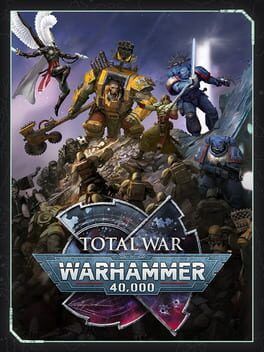

Creative Assembly's latest Total War: Warhammer 40,000 campaign stream points to a 40K strategy layer built around contained star-system campaigns, support fleets, army specialization, and Space Marines that are powerful but strategically painful to replace.
Image: IGDB
Store links: Total War: Warhammer 40,000 on Steam
Creative Assembly’s campaign reveal puts attrition at the center of 40K
Creative Assembly’s latest Total War: Warhammer 40,000 campaign showing has put a hard strategic edge on the fantasy of commanding Space Marines: losing an army is meant to be devastating, not a routine setback solved by a few turns of replenishment. Rock Paper Shotgun reports that the new stream ran for over an hour and showed an expanded version of the build press saw at Gamescom, this time focused on an Ultramarines campaign in the Praevoss system.
The tension is clear from the footage and developer comments cited by RPS. Space Marines are being framed as a compact, durable force, but not one designed to absorb repeated catastrophic losses. Creative Assembly said in the stream that “losing a whole army of Space Marines is pretty devastating,” adding that this is intentional because it represents the loss of a Space Marine chapter and would take “decades to recover from.”
That single design decision does a lot of work. It pushes Total War Warhammer 40000 gameplay away from the familiar rhythm of trading armies, refilling depleted stacks, and snowballing across a giant map. If the stream is representative of the final game, the Space Marine strategy game layer will ask players to preserve elite assets, use support systems before committing to battle, and treat failed invasions as campaign-shaping mistakes rather than temporary inefficiencies.
Praevoss shows how star systems replace the single grand map model
The campaign footage is set in Praevoss, which RPS describes as a middle-of-the-road system in terms of size. It contains three conquerable planets, plus a couple of other planets unsuitable for ground warfare. PC Gamer’s report, reflected in the provided source material, adds that the Praevoss system also includes a gas giant and a dead world that cannot be fought over, and that the showcased Ultramarines campaign begins 23 turns in.
Creative Assembly’s explanation, quoted by RPS, is that each star system functions as a “contained campaign.” Players move from one system to the next, with some army aspects or built-up skills carrying over. The studio said it wanted to represent the scale of the galaxy, something it says would not be possible on a single Total War map players could meaningfully engage with. The structure also lets each system have its own premise, narrative setup, starting point, and victory objectives.
From a strategy perspective, that is the most consequential campaign-format change shown so far. Traditional Total War campaigns often become less tense once the player has reached critical mass. PC Gamer’s report frames the system-hopping format as a possible answer to the familiar late-campaign problem where painting half the map still leaves a long slog before the finish. That is interpretation, but it is grounded in the revealed structure: contained theaters can reset pressure, change opponents, and let Creative Assembly tune difficulty around discrete objectives instead of one endlessly expanding front.
Fleet mechanics look like orbital support, not space warfare
The stream’s fleet systems appear to be about positioning, transport, and battlefield support rather than direct ship battles. RPS says Creative Assembly focused on unit specialization, fleet movement, fleet actions, fleet transportation, and Space Marine fleet buildings during the campaign stream. Ships can be parked above a continent on a planet, where they can support ground forces with reinforcements and bombardment.
That distinction matters for expectations around Total War Warhammer 40000 fleet mechanics. The footage described by RPS does not point to a Battlefleet Gothic-style layer of ship-to-ship combat in orbit. RPS specifically notes that ship presence seems limited to supporting troops on the ground rather than fighting other vessels above the planets. Based on the supplied material, no separate real-time space battle system has been confirmed.
For campaign play, that still gives fleets meaningful weight. If a ship’s location determines where reinforcements can be committed or where bombardment can soften a target, then the fleet becomes part of the pre-battle economy of risk. The player is not only asking whether an army can win a ground engagement, but whether it has been staged under the right orbital umbrella. That fits the Space Marine design Creative Assembly described: elite troops should not be thrown into bad fights when fleet support can change the odds beforehand.
Bombardment and battlefield cleanup carry political costs
The campaign footage also suggests that military efficiency can create political friction. PC Gamer’s report, as reproduced in the provided source text, says that when the Ultramarines take a region they can choose to “scour the battlefield” for a large Requisition payout, but doing so raises Suspicion. Calling in a fleet bombardment before battle can also raise Suspicion because civilians remain in the area.
That is a useful bit of 40K texture with mechanical consequences. The Ultramarines’ objective in Praevoss, according to PC Gamer’s report, is to liberate Imperial planets from an ork scourge. Even so, the local population and authorities are not presented as a blank check for Space Marine intervention. The report says playing more carefully can prevent Suspicion from increasing and reward the Marines with Influence points, which can be spent to gain reinforcements from local Imperial troopers.
The strategic tradeoff is sharper than a simple good-choice, bad-choice meter. Requisition sounds like immediate campaign fuel. Influence, as described, appears tied to access to local support. Suspicion is the pressure valve that keeps the strongest tools from being free. If bombardment can reduce battle losses but worsen political standing, the campaign layer has room to make players choose between short-term preservation of Marines and longer-term access to local reinforcements. Creative Assembly has not, in the provided sources, laid out the full Suspicion economy, so the exact thresholds and consequences remain unannounced.
Unit specialization and gear customization point to smaller, more personal armies
The new showing also put unit specialization and loadout customization in front of players. RPS says the stream focused in part on unit specialization, while PC Gamer’s headline describes the footage as showing gear customization. The Reddit thread for the official “Unit Specialisation & Space Marine Fleets” livestream shows community attention clustering around the unit loadout feature, with one poster reacting to screenshots by calling out the “unit loadout feature” and another saying Creative Assembly appears to be giving players a lot of customization options.
The important confirmed point is that customization is part of the campaign presentation Creative Assembly chose to emphasize. The provided sources do not give a full list of weapons, gear slots, costs, or upgrade constraints, so it would be premature to map out builds or declare a meta. Still, the direction is readable: a faction with fewer, harder-to-replace units benefits from more granular army management. When each unit has greater strategic value, loadouts become a campaign decision rather than cosmetic dressing.
That is where Total War Warhammer 40K gameplay may diverge most from expectations formed by historical Total War or the fantasy Warhammer trilogy. A mass infantry faction can tolerate imperfect specialization because replacements are part of the plan. A Space Marine force built around scarce elite units makes pre-battle preparation and role definition much more expensive to get wrong. If the final systems follow through on the stream’s priorities, the campaign could reward players who build overlapping answers to armor, hordes, sieges, and defensive holds before the map forces those questions.
The Space Marine replacement problem could define the campaign economy
The strongest campaign signal from the stream is that Space Marines are powerful because they are scarce, and scarce because Creative Assembly wants replacement to hurt. RPS reports that the developers described Marines as a small force that is tough to kill, rather than a huge force designed to recover quickly and overwhelm through numbers. PC Gamer’s report says other factions replenish losses after battles more readily, while Marines are much more limited.
That setup has major balance implications. In many strategy games, elite factions risk becoming either too forgiving because each unit wins too much, or too frustrating because every mistake feels unrecoverable. The support systems shown in the stream appear designed to sit between those extremes. Fleet bombardment can reduce danger before battle. Reinforcements can be drawn from local Imperial troopers if the player manages Influence. Gear customization can make a limited roster more flexible. Requisition offers another resource path, but some options that generate it can raise Suspicion.
The unanswered question is how punishing the finished campaign will be once players are outside a curated stream environment. Creative Assembly has said the star-system structure lets it play with difficulty, according to RPS. That could be crucial for Space Marines. If losses matter, failure states need to be legible before players walk into them. The game will need to communicate when an assault is risky, when fleet support is enough to justify the commitment, and when withdrawing preserves a campaign better than chasing a heroic win.
Release details remain thin, so wishlist with expectations in check
Total War: Warhammer 40,000 still has no release date in the provided sources. RPS says the game can be wishlisted on Steam, and the supplied Steam URL confirms a public store presence, but the material here does not confirm price, system requirements, launch platforms beyond the Steam listing, editions, post-launch plans, or a final feature list.
For players tracking Total War Warhammer 40000 campaign details, the practical read is to treat this stream as a systems preview rather than a buying decision. It confirms Creative Assembly is showing contained star-system campaigns, fleet positioning and support, Space Marine fleet buildings, gear customization, unit specialization, Suspicion and Influence pressures, and a replacement model where losing Marines is meant to matter. It does not confirm how all factions will scale, how punishing late-campaign attrition becomes, or whether fleet systems expand beyond support and transportation.
The promising part is that the footage centers on campaign problems strategy players actually care about: attrition, logistics, political cost, and the danger of overextending elite forces. The caution is that these systems will live or die by tuning. Space Marines need to feel rare without becoming a reload prompt after every bad fight. Fleets need to add planning rather than become a bombardment button. Suspicion needs to push decisions without punishing players for using the tools the game gives them. Creative Assembly has shown the shape of a more deliberate 40K campaign. The next test is whether the numbers make that shape hold over a full run.