
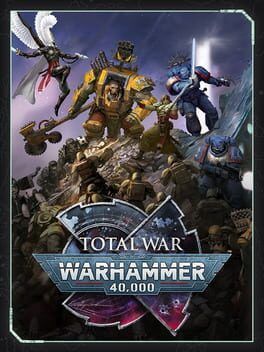
The first Total War Warhammer 40,000 gameplay reports point to cover firefights, Armageddon-scale armies, solar-system campaigns, and a major console bet for Creative Assembly.
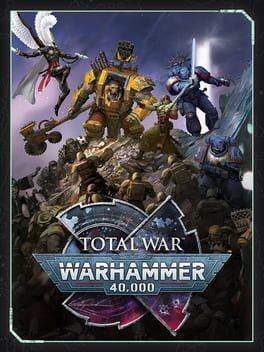
Image: IGDB
Store links: Total War: Warhammer 40,000 on Steam
A reveal with real footage, and one awkward timing question
Total War: Warhammer 40,000 has entered its gameplay reveal phase, but the public record around that first look is already messier than a clean marketing beat. GameGuide reported on June 9, 2026 that Creative Assembly’s Warhammer 40000 RTS-style strategy project showed gameplay at the PC Gaming Show 2026, including Astra Militarum and Orks fighting on Armageddon, and that closed beta sign-ups had opened. Gagadget also reported on June 9 that Creative Assembly had released an extended gameplay video for the game.
Then The Escapist reported on July 10 that a Chinese social media post tied to SEGA, Creative Assembly, and a Total War: Warhammer 40,000 booth at BiliBili World in Shanghai described a “world-first gameplay reveal.” The Escapist was careful to frame that as something that “could” happen, noting that the claim came through translated social media posts shared by Total War communities rather than a standalone Western announcement.
That creates the immediate tension around the Total War Warhammer 40K reveal: if June reports are accurate, BiliBili World would not be the first time gameplay had been shown publicly. It could be a regional first, an in-person first, a different gameplay cut, or simply a translated promotional phrase that does not line up with the broader reveal timeline. Until SEGA or Creative Assembly clarifies the wording, strategy fans should treat the BiliBili language as a signal to watch closely, not as settled chronology.
The footage points to a different kind of Total War battle economy
The most important reported change is not that Creative Assembly is putting Warhammer 40,000 units into a Total War frame. It is that the battle model described by multiple reports would have to rebalance the entire combat economy around ranged pressure, cover, armor, and destructive terrain.
GameGuide says the PC Gaming Show footage showed large-scale battles between Astra Militarum and Orks on Armageddon, with cover-based firefights and massive unit clashes. That single phrase carries a lot of design weight for a series whose Warhammer Fantasy entries are built around melee lines, cavalry pressure, monster impact, magic timing, and leadership cascades. In 40K, the question becomes how Creative Assembly makes ranged lethality readable at Total War scale without turning every engagement into two gunlines deleting each other before maneuver matters.
The reported unit examples suggest the studio is building toward layered battlefield roles rather than simple ranged reskins. GameGuide lists Cadian Shock Troops, Kasrkin, Ogryns, Sentinels, and the Baneblade for Astra Militarum. In practical strategy terms, that points to infantry screens, elite ranged infantry, close-assault bruisers, walkers, and super-heavy armor all needing clear counters and battlefield jobs. If Orks are presented as an overwhelming force built around chaotic mass, as GameGuide’s report indicates, the match-up is already a stress test for the game’s core thesis: can Total War handle asymmetry where one side wants fire discipline and armor coordination while the other wants momentum, numbers, and brawling contact?
This is where Total War Warhammer 40000 gameplay becomes more interesting than a licensing announcement. A 40K Total War cannot lean on the exact muscle memory that carried many fantasy campaign battles. Unit spacing, suppression, terrain destruction, line of sight, and vehicle pathing will decide whether the battles feel like a natural evolution or a mod stretched past the limits of the old formula.
Destructibility is the hinge between spectacle and readable tactics
The Escapist’s earlier reporting on Creative Assembly’s developer material is the strongest context for the reveal. According to that report, Creative Assembly had already shown in-game views of solar systems, a Hive World, a Space Marine ship in nearby space, destructibility on battle maps, Astra Militarum forces on a planetary battlefield, Hive World ruins, and a frozen wasteland planet. The studio was described as emphasizing how destructive it wanted maps to feel, including environmental backdrops and skyboxes.
That matters because destructibility in a Warhammer 40000 RTS or grand strategy hybrid is not free spectacle. If cover-based firefights are part of the battle language, destroyed walls and collapsing terrain cannot be only visual feedback. They need to alter firing lanes, defensive positions, advance routes, and risk calculations. A ruined Hive World should ideally create a different tactical puzzle from a frozen wasteland, not simply change the color palette behind the same formation logic.
Creative Assembly’s problem is information density. Total War already asks players to monitor morale, flanks, unit matchups, terrain, fatigue, abilities, and army-wide timing. Add cover states, armored vehicles, walkers, super-heavy tanks, and potentially destructible firing positions, and the interface must communicate more without slowing the game into noise. That is especially true if the studio wants tens of thousands of units on screen, a scale Gagadget reported for the extended gameplay footage.
The reveal, then, should be judged less by whether a Baneblade looks enormous and more by whether a player can understand why it won a fight, why it lost a fight, and what decision could have changed the outcome. Big armies impress once. A readable combat model survives 500 turns of campaign play.
The campaign map moves from provinces to solar systems
The campaign-layer reports suggest Creative Assembly is also trying to solve 40K at the strategic scale rather than simply staging futuristic land battles. Gagadget reports that the campaign map steps up from provinces to entire solar systems, with planets able to change hands or be destroyed depending on who holds dominance. The Escapist separately notes that Creative Assembly had shown how solar systems look in-game, including a Hive World and nearby Space Marine ship.
That is a major structural move for a Creative Assembly strategy game. Total War campaigns are normally about geography that players can parse at a glance: borders, settlements, chokepoints, ports, mountain passes, seas, and roads. A solar-system campaign has to express control differently. Orbital presence, planetary value, reinforcement travel, invasion staging, and fleet positioning all become candidates for systems that could either enrich the game or bury it under abstractions.
The historical caution raised in Gagadget’s report is useful here. It notes that PC Gamer drew a comparison to Empire: Total War, a 2009 entry remembered partly for ambition that strained the game’s execution. That comparison should not be treated as proof that Total War: Warhammer 40,000 will repeat those problems. It is a warning about scope. The bigger the map layer becomes, the more Creative Assembly must prove that every added layer creates decisions rather than downtime.
From a strategy meta perspective, planets changing hands or being destroyed could be the campaign’s most important lever. If destruction is possible, denial play becomes viable. A faction does not always need to hold territory if it can prevent an enemy from extracting value from it. That would fit 40K’s tone, but it also risks snowballing if dominant factions can erase catch-up paths too easily. Watch the reveal for how planetary loss is priced, how recovery works, and whether the campaign gives weaker factions tools beyond attrition and hope.
Four factions is a small roster only if they play safely
GameGuide and Gagadget both identify four launch factions: Space Marines, Astra Militarum, Orks, and Aeldari. GameGuide also reports that Commissar Yarrick and Ghazghkull Mag Uruk Thrakka appear as faction leaders. Gagadget says faction mechanics are built around lore rather than shared templates, with Orks and Astra Militarum behaving differently rather than feeling like reskinned armies.
On paper, four launch factions can sound thin next to the enormous Warhammer 40,000 setting. In practice, it may be the correct starting point if Creative Assembly is rebuilding combat assumptions around guns, vehicles, cover, and multi-planet campaigns. A small roster with distinct economic and battlefield loops is healthier than a wide roster where half the factions wait years for reworks.
The faction spread also gives Creative Assembly clean design axes. Space Marines can test elite durability and surgical force projection. Astra Militarum can test combined arms, armor, artillery-like pressure, and expendable infantry lines. Orks can test mass, momentum, melee threat, and irregular battlefield behavior. Aeldari can test mobility, precision, and fragility. If those identities are real mechanically, early multiplayer and campaign balance will be fascinating. If they collapse into similar ranged blobs with different model skins, the reveal’s scale will have hidden a weaker strategic foundation.
Creative Assembly’s Warhammer Fantasy trilogy lived and died over time by faction identity, patch cadence, economy tuning, and how well campaign mechanics survived contact with player optimization. Total War: Warhammer 40,000 will face that pressure faster, because 40K fans will immediately ask where missing factions are, while Total War veterans will immediately test whether the first four can stay balanced across campaign, skirmish, and beta feedback.
The console launch raises the hardest interface question
Gagadget reports that Total War: Warhammer 40,000 is planned as the first Total War game to launch on consoles from day one, with PS5 and Xbox Series X|S alongside PC. The same report says Creative Assembly built the game on a new Warcore engine designed with console hardware in mind, while also noting that specifics on UI and control adaptation have not been detailed.
That is a bigger strategic shift for Creative Assembly than any single unit reveal. Total War has traditionally been a PC-first series, and its campaign management, battle controls, camera movement, grouping, and ability use are all comfortable with mouse and keyboard assumptions. A day-one console launch means the studio has to make the command layer legible on a controller without flattening the decision space that PC strategy players expect.
There is also a performance question that the current source material does not answer. Reports describe massive battles and, in Gagadget’s case, tens of thousands of units. They also describe destructible environments, solar-system campaigns, and console-first engine planning. None of the provided sources give PC requirements, console performance targets, price, final release date, or detailed beta access terms. GameGuide and PC Gamer’s guide both reference beta information after the PC Gaming Show, but the source text here does not provide enough detail to say who gets in, when tests begin, or what content the beta includes.
For players, the practical guidance is simple: do not treat the first gameplay cut as proof of technical delivery. Treat it as a checklist. Look for frame pacing when units collide, pathfinding around ruins, camera readability during firefights, how fast orders register, whether vehicles behave cleanly in dense terrain, and whether the UI exposes cover and line-of-sight information without burying the screen.
What to watch in the next showing
The BiliBili World report from The Escapist is still valuable even with the timing conflict, because it suggests SEGA and Creative Assembly are treating the reveal campaign as global from the start. The Escapist also points out that Total War has a large Chinese audience and connects that interest partly to Total War: Warhammer 3’s Grand Cathay. A Shanghai event would therefore be a logical place to court a major strategy audience, even if the “world-first” phrasing remains unclear.
For strategy fans, the next Total War Warhammer 40000 gameplay showing should be watched with a cold eye. The big questions are not whether Armageddon looks war-torn or whether the Baneblade has proper presence. The questions are whether Creative Assembly can translate 40K’s scale into decisions, whether destructible maps produce tactical adaptation, whether ranged combat has counterplay beyond bringing bigger guns, and whether the solar-system campaign creates meaningful logistics rather than a wider map with slower turns.
The reveal cycle has already confirmed enough to make Total War: Warhammer 40,000 one of the most important Creative Assembly strategy game projects in years, at least according to the reporting now available. It has also left the most important details unresolved: release timing, performance targets, beta structure, interface design, and how the studio will balance 40K spectacle against the readable, repeatable systems that keep a Total War campaign alive.
That is the right place for cautious attention. The first gameplay showing suggests ambition on a scale the series has rarely attempted. The next one needs to prove that scale can be controlled.