
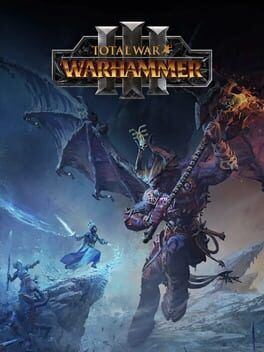
SEGA and Creative Assembly have launched Lords of the End Times for Total War: Warhammer III. Here is how Nagash, Boris Todbringer, the Glottkin and Thanquol reshape Immortal Empires, and what strategy players should watch before starting a new campaign.
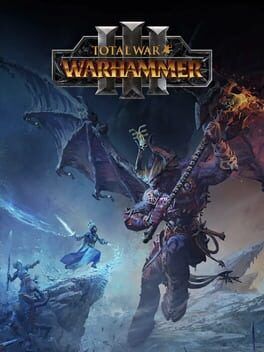
Image: IGDB
Store links: Total War: Warhammer III on Steam, Total War: Warhammer III - Thrones of Decay: Malakai on Steam
The End Times arrive with a different kind of entry point
SEGA and Creative Assembly have launched Total War: Warhammer III: Lords of the End Times for Windows, and the headline is bigger than another lord pack. According to SEGA’s announcement and the GamesPress release, this is the largest DLC in the Total War: Warhammer series’ 10-year history, adding four new Legendary Lords to Immortal Empires alongside a major free update.
The immediate tension for strategy players is access. SEGA says purchasing Lords of the End Times content, either the complete bundle or an individual Legendary Lord, grants access to the Immortal Empires campaign without requiring ownership of any Total War: Warhammer base game. IGN Global Studios’ sponsored article for Total War: Warhammer III describes this as a first for the series. That changes the usual DLC calculation. A player who has avoided the trilogy’s sprawl can now buy into the sandbox through one of these End Times factions rather than navigating three base games and years of piecemeal ownership.
Availability is confirmed on Steam, Epic Games Store and Microsoft Store, with Enduins carrying SEGA’s release wording that the content is available for Windows. The bundle is also being sold with a 15 percent discount, while the individual Legendary Lords can be purchased separately. The practical question is no longer only which faction is strongest. It is whether the campaign you want to play is best served by buying one lord, buying the complete pack, or waiting to see how the free Total War Warhammer 3 update reshapes legacy factions before committing to a long Immortal Empires run.
Four lords, four pressure points on the Immortal Empires map
SEGA’s press materials identify the four paid Legendary Lords as Nagash, Boris Todbringer, the Glottkin and Thanquol. The Total War: Warhammer Wiki’s Lords of the End Times page also organizes the DLC around those same four characters, with separate entries for their factions, mechanics and units. The official descriptions make clear that this pack is built around asymmetry: each lord is being sold as a different strategic experience rather than a set of alternate start positions with familiar tools.
Nagash is the most destabilizing design on paper. SEGA and the GamesPress release describe him as the Supreme Lord of the Undead, seeking to drain the world of life and ascend to godhood. IGN’s sponsored article adds a key campaign implication: Nagash can recruit units from across the undead races. If that works broadly in campaign, he becomes a roster-compression faction, a lord who can solve problems by borrowing from multiple undead identities instead of living inside one traditional army book lane. In Total War terms, that matters because mixed access often softens weaknesses that normally define a faction’s strategic economy, battlefield tempo and counterplay.
Boris Todbringer is framed from the opposite direction. SEGA describes him as the Elector Count of Middenland, fighting to rekindle the flame of Ulric in defence of the Empire. The official release also names the Celestial Hurricanum among the new units in the pack, calling it a magical war altar infused with the eight winds of magic. The sources do not state that the Celestial Hurricanum is exclusive to Boris, so that should not be assumed. Still, Boris’ inclusion gives Empire players a long-awaited northern political and military anchor in a DLC otherwise dominated by apocalypse factions.
The Glottkin bring the Nurgle angle. SEGA says the corrupted siblings spread Nurgle’s gardens across the land, while IGN’s sponsored article describes a campaign focused on corrupting conquered territory and transforming settlements into festering strongholds. Thanquol, finally, is the Skaven wild card. SEGA’s release describes him as orchestrating schemes through master plans, and IGN adds that his playstyle leans into deception, sabotage and overwhelming enemies with Skaven armies while leaving room for plans to go wrong. That last detail is important: a campaign system that occasionally backfires could make Thanquol powerful without becoming frictionless.
Nagash is the campaign design problem every rival must answer
The confirmed information on Nagash points toward a lord built to bend the usual boundaries of undead play. IGN calls him an exceptionally powerful spellcaster and says he can recruit units from across the undead races. The GamesPress and SEGA descriptions frame his strategic goal as draining life from the world and rising to godhood. That combination suggests a campaign that is less about holding a conventional homeland and more about converting the map’s living economies into a death machine.
The balance risk is obvious. Undead factions in Total War: Warhammer have historically been defined by tradeoffs: attrition pressure, low morale concerns handled through crumbling rather than routing, powerful magic, limited missile profiles in some rosters, monster access in others, and economy models that do not behave like standard human states. If Nagash can combine enough of those strengths, his campaign could become the pack’s central power spike.
That does not mean he will automatically dominate. The sources do not provide his start position, economy numbers, recruitment limits, unit caps, corruption spread rate or victory conditions. Those missing details are where Creative Assembly usually controls a lord’s real strength. A spectacular roster pool can still be constrained by expensive upkeep, slow recruitment, geography, diplomatic isolation or unique resource bottlenecks. Before starting a serious Nagash campaign, watch how his cross-undead recruitment is gated and whether the free update’s new endgame scenarios punish snowballing undead expansion or simply feed it.
Boris, the Glottkin and Thanquol test three different kinds of control
Boris Todbringer’s strategic hook is defense, legitimacy and Empire survival rather than world-ending escalation. SEGA identifies him as Middenland’s Elector Count and ties him to Ulric, which places him within the Empire’s fractured political and religious identity. The release materials do not spell out his campaign mechanics in detail, so the safe read is limited: he is the paid lord most likely to appeal to players who want a human military campaign inside the End Times frame, rather than another corruption spreader or apocalyptic conqueror.
The Glottkin appear to be about territorial contamination and compounding pressure. IGN’s sponsored article says their campaign revolves around corrupting conquered lands, turning settlements into festering strongholds and overwhelming enemies through decay. On the battlefield, the official materials describe them as corrupted siblings serving Nurgle, with Otto and Ethrac riding atop Ghurk, a colossal Chaos Spawn. That reads like a single-character centerpiece designed to combine physical and magical threat, but the campaign layer will decide whether they feel like a slow infection or a blunt Chaos rush.
Thanquol is the most interesting from a systems perspective because Skaven are already built around instability: under-cities, ambush logic, expendable bodies and sudden technological spikes. IGN says he rides with Boneripper and specializes in deception, sabotage and vast Skaven armies. It also says players can enact Masterplans to outwit rivals, but those plans may not always unfold cleanly. If implemented well, that creates a decision economy where the player is rewarded for preparing contingencies rather than simply clicking the highest-value scheme on cooldown.
For all three, the same caution applies. The sources confirm themes and broad mechanics, but not patch-note-level values. We know the pack adds new battlefield characters and units, including Verminlords, Putrid Blight Kings, the Khemric Titan and the Celestial Hurricanum, as stated in SEGA’s release. We do not have official unit stats, recruitment chains or faction-specific restrictions in the provided material. Strategy players should treat the fantasy as confirmed and the meta impact as pending live testing.
The free update may matter as much as the paid roster
Lords of the End Times is launching alongside what SEGA and GamesPress describe as one of the biggest free updates in the series to date. The confirmed free content includes Neferata as a Legendary Lord, a full rework for the Vampire Counts and Archaon the Everchosen, all-new endgame scenarios, updated victory conditions for every legacy Legendary Lord and more unspecified changes.
That is the part veteran Immortal Empires players should not skip. New paid lords draw attention, but victory condition rewrites across every legacy Legendary Lord can change the pacing of campaigns players already know. A faction that previously required an exhausting map-painting slog may become sharper. A comfortable short campaign route may be disrupted. New endgame scenarios can also change which factions are safe to ignore and which ones must be contained early.
The Vampire Counts rework is especially relevant because it lands beside Nagash and Neferata. SEGA confirms Neferata as a free Legendary Lord and confirms the Vampire Counts rework, but the provided sources do not explain the rework’s mechanics. Still, the timing creates a crowded undead moment: a paid undead superpower in Nagash, a free Vampire Queen in Neferata, and a reworked Vampire Counts foundation arriving together. If you care about campaign health, the question is whether the update diversifies undead play or concentrates too much power in related systems.
Archaon’s rework is the other major signal. With the End Times framing, Archaon the Everchosen is an obvious pressure point for late-game Chaos identity. SEGA confirms he is part of the free update’s rework slate, but does not provide details in the supplied text. Players planning Chaos campaigns should wait for full patch notes or community testing before assuming old Archaon routes, confederation plans or victory timings still apply.
How to choose before starting your next campaign
For a returning player, the cleanest buying decision starts with campaign appetite. Buy Nagash if you want the most system-warping premise and are comfortable with the possibility that early balance may be volatile. His cross-undead recruitment, as described by IGN, is the sort of mechanic that can feel brilliant when constrained and oppressive when over-open. Buy Thanquol if you enjoy contingency planning, sabotage and campaign chaos that may cut both ways. Choose the Glottkin if corruption spread, settlement transformation and durable centerpiece combat are the draw. Choose Boris Todbringer if you want the End Times from the defensive human side and care about the Empire’s northern identity.
Newcomers have a different calculation. Because SEGA says any Lords of the End Times purchase grants access to Immortal Empires without owning a Total War: Warhammer base game, the cheapest practical entry point may be an individual lord rather than the complete bundle. The bundle’s 15 percent discount is useful if you already know you want all four campaigns, but Immortal Empires is a huge mode. A single-lord purchase could be enough to learn the campaign layer before expanding your collection.
The main reason to wait is information, not uncertainty over whether the DLC exists. The launch is confirmed, the four paid Legendary Lords are confirmed, the Windows storefronts are confirmed, and the free update’s headline additions are confirmed. What remains unconfirmed in the provided sources are the details that decide campaign balance: exact mechanics, numbers, restrictions, starting positions, AI behavior under the new endgame scenarios and how updated victory conditions alter old factions. In a grand strategy sandbox, those details decide whether a faction is a weekend novelty or a hundred-turn obsession.
My advice as a strategy player is simple: if one of the four fantasies already matches how you like to win, buy that lord and treat the first campaign as scouting. If you are chasing the strongest faction, wait for the first wave of live balance analysis after the Total War Warhammer 3 update settles. Lords of the End Times is clearly positioned by SEGA and Creative Assembly as a major campaign reset. The smartest generals will read the new map before committing their empire to it.