
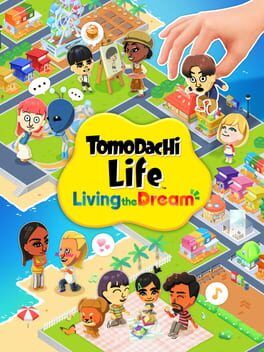

Tomodachi Life: Living the Dream is still No. 1 on the Nintendo Switch eShop charts for August 2026, pointing to sustained demand for Nintendo’s Mii-driven life sim audience.
Image: IGDB
Tomodachi Life is still holding the Switch eShop’s top spot
Tomodachi Life: Living the Dream remained No. 1 on the Nintendo Switch eShop all-games chart for the week of August 22, 2026, according to Nintendo Everything’s latest weekly listing. That puts Nintendo’s Mii-driven life sim ahead of Super Smash Bros. Ultimate at No. 2, Minecraft at No. 3, Mario Kart 8 Deluxe at No. 4, and Super Mario Party Jamboree at No. 5.
The immediate tension is that this is no one-week novelty. Nintendo Everything’s August 1, August 8, August 15, and August 22 charts all list Tomodachi Life: Living the Dream at No. 1 in the all-games category. The outlet described the game as “still dominating” on August 1, said it was on “a huge hot streak” on August 8, and noted on August 15 that it was still “safely in the top spot.” By August 22, Nintendo Everything wrote that there was “little changed” and that Tomodachi Life was “crushing it” again.
That consistency is the story. A life sim built around odd social rhythms, Mii identity, and player-made households is sitting above the Switch’s most durable multiplayer and sandbox staples. The Tomodachi Life Switch eShop chart run is less about a sudden spike than a month-long refusal to drop.
The August charts show staying power, not a quiet week by default
A quiet release calendar can make any chart leader look stronger than it is, so the surrounding movement matters. Across Nintendo Everything’s August 2026 eShop charts, Tomodachi Life kept first place while several other games shifted underneath it.
On August 1, Minecraft was second and Super Smash Bros. Ultimate was third. By August 15 and August 22, those two had swapped positions, with Smash at No. 2 and Minecraft at No. 3. Mario Kart 8 Deluxe held near the top across the same period, landing fifth on August 1 and fourth on August 8, August 15, and August 22. Super Mario Party Jamboree also stayed in the upper tier, appearing fifth on August 8, August 15, and August 22.
Newer and newly listed titles did appear, but they did not dislodge Tomodachi Life. Nintendo Everything reported Kynseed debuting at No. 11 overall on August 8 and No. 2 on the download-only chart. On August 15, The Lord of the Rings: War in the North, Legacy Edition debuted at No. 16 overall and No. 3 on the download-only ranking. By August 22, Pokemon FireRed led the download-only list, with Pokemon LeafGreen second and Stardew Valley third, while Tomodachi Life still led the all-games chart.
That surrounding churn gives the No. 1 position more texture. Tomodachi Life is not simply benefiting from a frozen storefront. It is holding above evergreen giants, party games, Pokemon releases, legacy titles, and a visible cozy-game cluster that includes Animal Crossing: New Horizons, Stardew Valley, Disney Dreamlight Valley, Moonlight Peaks, Tiny Bookshop, Kynseed, and Hello Kitty Island Adventure across the August lists.
The life sim audience on Switch is broadening in plain sight
The most useful read on Tomodachi Life Nintendo Switch demand comes from the company it keeps. On August 22, Animal Crossing: New Horizons sat at No. 9 on the all-games chart, while Stardew Valley was No. 23 overall and No. 3 on the download-only chart. Moonlight Peaks was No. 30 overall and No. 5 on the download-only chart. Disney Dreamlight Valley, Tiny Bookshop, Kynseed, Date Everything, and Is This Seat Taken also appeared on August download-only lists reported by Nintendo Everything.
Those games are not identical. Animal Crossing is built around daily island routines. Stardew Valley wraps farming, relationships, and town life around a longer-term resource loop. Tiny Bookshop, Moonlight Peaks, and Disney Dreamlight Valley point toward different slices of cozy play, from small-scale management to character-led collecting and life-sim scheduling. Tomodachi Life occupies a stranger lane: social simulation through Miis, unpredictable interactions, and a dollhouse structure where much of the appeal comes from watching tiny personalities collide.
That makes its chart lead sharper. The Switch audience has repeatedly shown patience for games that are low-pressure, identity-driven, and easy to visit in short sessions. The August 2026 charts suggest that this appetite has not been absorbed by one franchise. It is spreading across Nintendo’s first-party catalog, indies, download-only releases, and licensed cozy titles.
For a platform known for clean-feeling platformers, party games, and handheld-friendly indies, the appeal is practical as much as emotional. Life sims fit the Switch rhythm. They can be played in short bursts, shared in screenshots or stories, and revisited without the friction of relearning a complex control scheme. Tomodachi Life: Living the Dream appears to be converting that format into sustained storefront attention.
Reported sales claims add scale, but the chart has limits
The eShop chart confirms ranking position, not exact Tomodachi Life sales. Nintendo Everything’s weekly posts list placement, but the provided chart reports do not include unit totals, revenue, pricing, discount status, regional splits, or digital-versus-physical breakdowns for Tomodachi Life: Living the Dream.
There is one broader sales claim in the provided material. Shane the Gamer’s August 15 article, citing Nintendo Everything’s chart tracking, reported that Nintendo had confirmed Tomodachi Life: Living the Dream had sold over 8 million copies following its April 16, 2026 launch, with total sales exceeding 8 million as of August 5, 2026. The same Shane the Gamer article also said Nintendo described the audience as people “of all ages, regardless of gender,” and said Circana analyst Mat Piscatella had separately projected the title as the best-selling game in the United States for April.
Those are significant claims, but they should be kept distinct from the August eShop rankings. The charts show continued digital storefront strength during August. The Shane the Gamer report points to broader commercial momentum, including a claimed 8 million-plus sales figure and a reported April U.S. sales projection. Together, they sketch a powerful picture of demand, but they do not tell us how many copies were sold during the week of August 22 specifically.
That distinction matters for anyone reading the Nintendo Switch eShop charts August 2026 as a sales report. A No. 1 eShop position is a strong signal of current storefront performance. It is not the same thing as a full sell-through report.
Nintendo’s Mii angle is cutting through a crowded cozy field
As an indie and platformer critic, I tend to watch for the small mechanical hook that lets a game survive a crowded store page. Tomodachi Life’s hook is unusually Nintendo: give players familiar avatar tools, give those avatars social agency, and let the resulting comedy become the reward loop.
That craft choice helps explain why Tomodachi Life can stand apart from the softer edges of the cozy boom. Many life sims ask players to optimize a farm, arrange a town, decorate a home, or manage daily tasks. Tomodachi Life’s center of gravity is observation. The player sets the stage, but the fun often comes from seeing what the Miis do with it. That can make the game feel lighter on traditional challenge, but heavier on surprise, personality, and shareable anecdotes.
The August chart context makes that design look commercially useful. Rhythm Heaven Groove, another personality-forward Nintendo title, stayed in the top ten across the August 1, August 8, August 15, and August 22 all-games charts. Animal Crossing: New Horizons remained visible. Party games such as Super Mario Party Jamboree and Nintendo Switch Sports continued to rank strongly. The Switch audience buying near the top of the eShop is not only chasing scale or technical spectacle. It is rewarding games with clear social texture.
That does not mean every Mii-centric or cozy-adjacent game would perform this way. Tomodachi Life benefits from Nintendo visibility, a recognizable concept, and, according to the chart evidence, weeks of momentum. But its lead suggests there is still room at the top of the eShop for playful simulation that feels authored by the player rather than authored entirely by quests.
The unanswered questions are platform, pricing, and longevity
The provided sources do not include Tomodachi Life: Living the Dream’s current eShop price, file size, performance details, update roadmap, Switch 2 enhancements, or any announced expansion plan. Nintendo Everything notes that readers can track eShop charts for both Switch 1 and Switch 2 through its chart tag, but the August 22 source text itself presents the “Nintendo Switch eShop charts” and does not lay out a separate technical comparison for Tomodachi Life across hardware.
That leaves practical questions open. If you already know you want Nintendo’s life sim, the chart run says you are joining a large active audience, at least on the storefront side. If you are waiting for a discount, the supplied chart reports do not identify a sale as the reason for the game’s No. 1 position. If you are wondering whether to buy for performance or future support reasons, these sources do not provide enough information to answer that cleanly.
For Nintendo, the longer signal is audience shape. Tomodachi Life is holding above games that usually define the Switch’s long tail: Smash, Minecraft, Mario Kart, Pokemon, Zelda, and Animal Crossing. That does not prove a new platform strategy by itself, and Nintendo has not announced anything in the provided material that would turn this chart run into a roadmap. It does, however, show demand for a kind of first-party life sim that Nintendo does not release every season.
If the August 2026 eShop pattern continues, Tomodachi Life: Living the Dream will be less easy to treat as a nostalgic curiosity and easier to read as a current-market answer. Switch players are still buying games that let them build tiny rituals, check in daily, and laugh at systems behaving a little oddly. Tomodachi Life is doing that from the very top of the chart.