
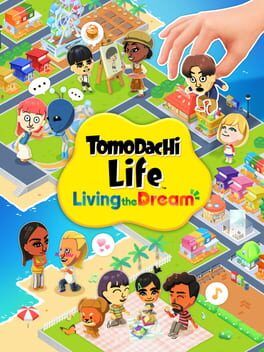
Breaking down how Tomodachi Life: Living the Dream modernizes the 3DS cult hit with non-binary Miis, fully flexible relationships, deeper personalities, island-building and tighter image sharing on Nintendo Switch.
Nintendo’s Tomodachi series has always been about watching your Miis do bizarre, often hilarious things while you poke at their lives from the sidelines. Tomodachi Life on 3DS turned that formula into a cult hit back in 2014. Tomodachi Life: Living the Dream on Nintendo Switch is not just a port. It is a ground-up sequel that tries to keep the surreal sitcom energy of the original while fixing its biggest gaps and bringing it in line with 2026 expectations.
This is a direct recap and explainer of what has changed from the 3DS game, and who this new version is really aimed at now.
Non-binary Miis and a modern gender system
The 3DS Tomodachi Life was built on the old, binary Mii framework. You chose male or female, and everything from clothes to relationships was rigidly sorted around that choice. Living the Dream shifts that foundation by treating gender as a character setting rather than a hard limit.
Miis can now be created as male, female or non-binary. This is not just a cosmetic label. Nintendo rebuilt the systems that sit on top of that choice so the game can handle them correctly in daily life, in dialogue flavor, and especially in romance. It also means you can actually represent friends, family or yourself in a way that matches who people are in 2026, instead of cramming everyone into a two-box form.
There is also attention to presentation. The new Mii editor includes more facial parts, hair options and expressions than anything on 3DS, which helps non-binary Miis avoid feeling like a quick toggle dropped into an old toolset. Miis finally have ears, you can lean into androgynous looks, or just get closer to real people’s faces instead of the very basic models from a decade ago.
Same-sex relationships and flexible dating preferences
The lack of same-sex couples was easily the most infamous problem with 3DS Tomodachi Life. Living the Dream is built from the ground up so that the relationship web finally matches how players actually use the series.
Every Mii now has a dating preference page. You decide who they can fall for by ticking which genders they are attracted to. That can be any mix of male, female and non-binary, or none at all. In practice, this means you can set up Miis who are straight, gay, lesbian, bi, pan, ace or somewhere in between, and the simulation will respect those boundaries when crushes, confessions and love triangles start firing off.
Crucially, this is not hidden behind some obscure flag or a one off narrative event. It is surfaced like any other core stat, the way age or personality were in the 3DS game. That makes it easy to tune how your island looks socially. Want a big queer friend group where almost everyone is dating across the spectrum. You can make that. Prefer to recreate your own family more literally. The tools support that too.
The relationship system is also more flexible about who can live together and how households form. Shared housing for more than just couples, messier love geometry and more granular preferences all combine to make the social chaos feel closer to what players used to fake with workarounds in the original.
Personality quirks go beyond the old sliders
On 3DS, personality was mostly a hidden math problem. You slid a handful of bars for things like energy and kindness, the game dropped the Mii into one of a few personality buckets and that was that. It worked, but if you had dozens of residents, many started to feel interchangeable.
Living the Dream keeps the familiar stat sliders so returning players can still quickly sketch a character. On top of that, it layers Little Quirks. These are mix and match traits you assign after the base personality. They do not replace the old system. Instead they sit above it and nudge behavior in visible ways.
Quirks cover things like how a Mii eats, how they sleep, what kind of idle poses they slip into and the verbal tics they pepper into dialogue. You can give someone a nervous sweat wiping habit, make another toss and turn dramatically at night or decide that your best friend always strikes over the top hero poses for no good reason. You also assign favorite phrases, which are now treated like another quirk instead of an afterthought.
The result is that two Miis with similar base stats still come across differently on screen. It makes the random dream sequences and skits play better, because the visual comedy is hooked into traits you chose rather than being entirely procedurally strange.
From a static block to a customizable island
The original Tomodachi Life’s island was charming but mostly fixed. Buildings unlocked over time and filled in pre set slots, but you were really customizing the people, not the place. Living the Dream clearly studied Animal Crossing and other modern life sims to rethink that balance.
This time you are not just naming an island and watching icons appear on a map. As your population grows, you expand and shape distinct neighborhoods. You can move shops and apartments, place houses, decorate parts of town and gradually build something that feels like a place your cast actually lives in.
The city planning side is framed as collaborative. Your Miis will pitch ideas for new districts or relocating spots, and you can either indulge their whims or stay focused on your own layout goals. Over time, it starts to resemble a tiny, dense social diorama. This does not turn Tomodachi Life into a full Animal Crossing style town sim, but it does give you more to do between watching cutscenes and running minigames.
Customization goes beyond the skyline as well. The Palette House feature lets you design things like pets, pieces of clothing, bits of decor, TV show bumpers and even some of the island’s flooring. Combined with the new Mii creator, the effect is a big jump in how personal your version of Tomodachi can look, even if you are still operating inside Nintendo’s guided sandbox.
Image sharing restrictions and what they actually mean
If you follow Tomodachi, you know that part of the fun is screenshotting the strangest scenes you stumble into and blasting them across social media. Nintendo is not turning that off in Living the Dream, but it is putting some notable fences around what you can share and how.
The company has already warned that certain image sharing features will be restricted. The explanation is tied directly to how the game is used. Players routinely recreate real people, including kids, celebrities and public figures, then throw them into scenarios that range from sweet to extremely out of context. Nintendo’s concern is that some of those scenes, captured without any framing, can be misread or spread in ways that do not match the spirit of a lighthearted comedy sim.
Practically, you are still able to grab screenshots through the standard Switch capture button and share them manually. The limits are more about built in tools. Expect tighter filters around any in game sharing feeds, fewer automated photo collages that pull from every possible event, and restrictions on sending certain scenes or combinations of characters straight from the software.
For players who loved the wild, anything goes Tumblr and Twitter culture around the 3DS game, that will feel like a tradeoff. For Nintendo, it is the cost of keeping a game full of user named avatar chaos on modern platforms without courting nonstop controversy.
Who is Tomodachi Life: Living the Dream really for in 2026
Living the Dream is clearly pitched at three overlapping audiences.
The first group is fans of the original who have spent a decade asking when Tomodachi would escape the 3DS. For them, this is the familiar template with more knobs to turn and a cast that can finally reflect their real lives. The surreal humor is intact. Dreams return, minigames sit between soap opera beats and you still spend a lot of time just checking rooms to see what nonsense your residents are up to.
The second group is players who fell in love with life sims like Animal Crossing New Horizons and are now hungry for something that channels that cozy, low pressure energy into a much weirder direction. Tomodachi has always been more about watching strange vignettes than about grinding resources, and island customization plus modern relationship options put it much closer to the comfort games people gravitate toward in 2026.
The third group is anyone who looked at the original’s limitations and bounced off it. If you are queer and were frustrated by how 3DS Tomodachi handled romance, this is the version that was supposed to exist all along. If you want your self insert Mii to sit somewhere beyond binary pronouns, the new gender and dating systems finally give you that space. It is still a Nintendo social sim, which means some clumsy edges and a PG tone, but the foundation is a far better fit for the people who actually populate Nintendo’s audience today.
If you already know you hate randomized comedy and watching systems collide, Living the Dream will not convert you. It is still fundamentally about emergent skits, awkward song performances and AI weirdness rather than goals and checklists. For everyone else, especially those who have been quietly running their 3DS island for years waiting for a successor, this is the Tomodachi that understands why it became a phenomenon and what it needed to change to matter in 2026.