
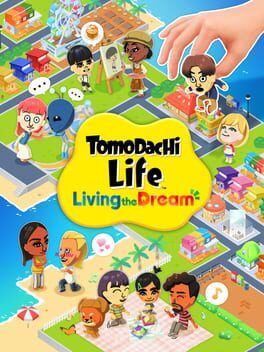

New to Tomodachi Life: Living the Dream on Switch? Here’s what early players have already discovered about pet customization, eShop domination, and why you really should not mess with time travel.
If you are just starting Tomodachi Life: Living the Dream on Nintendo Switch, the first week is where your island’s personality really locks in. Early players have already pushed the systems in some surprising directions, from turning pets into convincing Pokémon lookalikes to breaking their save files by trying to “time travel.” Here is what you need to know as a new player in week one.
The game is quietly dominating the eShop
Tomodachi Life: Living the Dream is not just a nostalgia hit. On the latest Nintendo Switch eShop charts for April 18, 2026, it sits at number one across all games, ahead of long‑time heavyweights like Super Mario Galaxy + Super Mario Galaxy 2, Super Smash Bros. Ultimate, and even multiple Pokémon releases. That top placement is especially notable because it had already reached number one on preloads alone the week before launch, and it has managed to hold that spot now that the game is properly out.
For a new player, what this means is simple. The online community is huge right now. Players are sharing Mii designs, pet ideas, and island layouts at a rapid pace. If you are the type that enjoys trading ideas and copying clever builds, this launch window is the most active the game will ever be. Your first week is the best time to plug into that energy, experiment with silly concepts, and lean into the social side of Tomodachi Life.
Pokémon‑style pets are taking over apartments
One of the biggest surprises from early adopters is how flexible the pet system is. Even though the game does not have an official Pokémon crossover, players have started using the customization tools to build pets that strongly resemble Pikachu, Eevee, and other favorites.
This is happening because the pet creator leans more on shapes, colors, and accessories than realistic animal detail. By adjusting ear size, tail length, head shape, and pattern colors, you can push a pet into something that feels more like a creature than a standard cat or dog. Add in themed outfits and room decorations, and an apartment can start to look like a low‑budget Pokémon Center.
If you want to lean into that trend in your first week, start with bold color blocking. Simple, high contrast colors read well at a distance and make your pet instantly recognizable. Think bright yellow bodies with brown accents, or soft browns and creams with a distinct collar or bow to hint at a specific Pokémon. The trick is not to chase perfect accuracy but to capture the overall silhouette and vibe so your Miis react to them as distinct personalities.
Because Tomodachi Life is so focused on interactions, the pet you create will show up in musical numbers, dream sequences, and slice‑of‑life cutscenes. A clever design will pay off constantly, especially during the chaotic first week, when the game surfaces lots of early events to introduce systems.
Why you really should not time travel
In other life sims, players often “time travel” by changing their console clock to speed up progress or skip waiting. Early Tomodachi Life: Living the Dream players have tried the same trick and are already warning others not to follow their lead.
Reports describe Miis waking up at strange hours, friendship events firing out of sequence, and daily rewards skipping forward or failing to reset properly. Some players have even seen their island mood tank after jumping days ahead, with Miis suddenly angry or depressed because the simulation tried to reconcile several days of unseen interactions at once.
More worrying are cases where time‑skipping appears to confuse the game’s save logic. Certain recurring events stop appearing on schedule, and it can take several real‑time days of normal play for things to feel stable again. You might not corrupt your save outright, but your first week’s progression can become messy and unpredictable.
For new players, the takeaway is clear. Treat Tomodachi Life as a daily check‑in game. The first week is tuned around short sessions where you check new problems, solve small requests, watch a handful of skits, and then put it down. If you want to binge, open the game multiple times in a day instead of jumping the clock forward. You will see more natural relationship growth and avoid the odd glitches that early time travelers are reporting.
How to make the most of your first week
Your opening days set the tone for your island. Because the game reacts heavily to the personalities you assign and the relationships you encourage, it is worth slowing down and treating the first week as a kind of soft world building phase.
Focus on a small, memorable cast before you start filling every room. Early players who immediately cram the island full of Miis often find it hard to track who is who, which can make the random events feel noisy instead of charming. Starting with a few key Miis built around a theme, like a friend group, a family, or a cast from your favorite show, gives the simulation clear anchor points. Pets then act as supporting characters that bounce between these cores and amplify their interactions.
Because daily items, clothing options, and apartment themes rotate on a schedule, it also pays to log in each day just to see what is new. If you see something that fits your long‑term theme, grab it, even if you are not ready to use it yet. Early collectors are already finding that having the right outfit or decor ready at the moment a new Mii moves in makes their entrance feel more intentional.
Finally, remember that Tomodachi Life thrives on surprise. The charts show it is a hit, the community is already bending its systems into Pokémon‑like creations, and the time travel stories prove the simulation can behave in unexpected ways. In your first week, your main job is not to “optimize” your island but to give it just enough structure that all the weirdness has a great stage to play out on.