
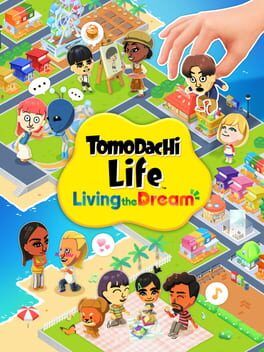

Nintendo’s long-in-development Tomodachi Life: Living the Dream finally brings the 3DS cult classic’s bizarre social chaos to Switch. Here is what the developers say about the near decade-long wait, which new ideas really matter, and why Tomodachi still fills a niche nothing else at Nintendo touches.
Nintendo does not really make games like Tomodachi Life anymore. Even in an era packed with cozy sims, life management games, and social sandboxes, Tomodachi Life: Living the Dream arrives on Switch as something that feels oddly distinct from almost everything else Nintendo ships. It is a life sim where your Miis fart, overshare, fall in and out of love, form bands, and belt out auto-tuned ballads about spaghetti. It is also a project that, according to Nintendo’s own developers, quietly simmered for close to a decade before it was finally ready.
With Living the Dream now approaching launch, Nintendo has started pulling back the curtain through a rare, surprisingly candid developer interview. Taken together, those comments explain both why the sequel took so long and why it still occupies a bizarre niche that neither Animal Crossing nor Miitopia nor any other first-party series truly covers.
Nearly a decade of quiet work
The headline detail from the interview is simple: Tomodachi Life: Living the Dream has been in some form of development for almost ten years. That span roughly tracks from the latter years of the 3DS original’s life into the Switch era, through Nintendo’s pivot to a hybrid console and several company-wide shifts in how it approaches online play and account systems.
That long runway was not about brute-forcing content. Instead, the team describes a slow, iterative push to rethink what a Tomodachi game should be on modern hardware. The original Tomodachi Life was built for a handheld you opened for a few minutes at a time. Living the Dream has to work on a television, on the go, in docked or portable form, and in an ecosystem where players expect cloud saves, online sharing, and a long tail of post-launch attention. Figuring out how to let people poke at a tiny dollhouse of Miis in this new context was not straightforward.
The developers also indicate that the team kept revisiting foundational questions rather than rushing to lock things in. What does a Mii mean to people now, years after the height of Wii Sports and the 3DS? How much should the game push absurdity, and how much should it lean into gentler, slice-of-life vignettes? How scripted should events be versus letting emergent interactions drive the best stories? Those are the kinds of design problems that only resolve through countless prototypes and, in Nintendo fashion, plenty of content that never makes it into the final build.
The end result of that long gestation is not a radical genre reinvention so much as a game that tries to refine and deepen what Tomodachi already was, while quietly modernizing the bits that would have felt stuck in 2014.
New ideas that sound small but matter a lot
Living the Dream is full of new story hooks, activities, and structural tweaks, but the developers keep circling back to something more basic: they wanted Miis to feel more like individual oddballs than interchangeable dolls. Where the original leaned heavily on canned skits and stock personality categories, the sequel layers in dozens of tiny behavioral quirks and reactions that can radically change how your apartment block feels over time.
One of the more talked-about examples from the interview is, of all things, farting. The team spent serious time debating whether Miis should be able to break wind at all. Some staff thought it was essential to the anarchic humor of Tomodachi life, others worried it was too crude for a broadly family-friendly Nintendo game. The compromise was to treat it as a quirk you can opt into rather than a forced universal behavior.
That decision and the work around it say more about the sequel than the joke itself. Sound staff reportedly did a surprising number of takes on the fart effect because feedback kept swinging between too boring and too realistic. Visual designers experimented to the point that one early version apparently looked more like an explosion than a tiny puff. All of that polish on something that remains completely optional underscores the team’s belief that tiny, throwaway moments are the soul of Tomodachi.
Similar attention goes into how Miis eat, how they toss and turn in bed, how they respond to their favorite meals, and how their moods swing when relationships hit rough patches. You can feel the philosophy: the more specific and strange each Mii becomes, the more human the whole simulation starts to feel, even if the humor leans hard into the surreal.
On top of those micro-behaviors, the sequel folds in new tools for expression. Expanded customization means it is easier and quicker to turn your friends, celebrities, or original characters into Miis that actually resemble the real person in your head. New personality shading lets two Miis with ostensibly similar types still express themselves differently as they bounce through events. All of this is in service of what Tomodachi does best: turning your contact list into a chaotic sitcom you did not script but cannot stop watching.
Why Tomodachi still feels different from everything else Nintendo makes
In the broader landscape of Nintendo’s catalog, Tomodachi occupies a very specific corner. Animal Crossing is about slow, cozy routine and gentle self-expression. Miitopia wraps Miis in a traditional RPG structure. Even Mario and Splatoon’s online modes are fundamentally about skill and mastery. Tomodachi Life: Living the Dream is about none of that.
Instead, it is a social sim focused on emergent comedy and unexpected emotional whiplash. You are not optimizing a town layout, grinding for gear, or climbing ranked ladders. You are watching your best friend’s Mii form a band with your boss, confess their love to a game character you made as a joke, then write a bizarre song about fast food. The systems are tuned not for balance but to generate anecdotes.
That focus on throwaway stories is part of why it still feels like such an odd fit in Nintendo’s lineup. Most first-party series reward planning, execution, and long-term investment. Tomodachi rewards checking in to see what mess the Miis have made this time. Even compared to other life sims, it leans harder into non sequiturs, dream logic, and jokes that practically hinge on how inappropriate or unexpected they feel in a Nintendo-branded game.
It is also a rare modern Nintendo title that leans right back into the Mii concept without apology. On Switch, Miis often lurk in system settings or show up as optional avatars. In Living the Dream, they are the whole point. The developers’ comments make it clear they see Miis as a kind of social glue, a way for players to bridge the gap between the game and their own personal circles. Giving those Miis more granular quirks, more ways to embarrass themselves, and more expressive tools is their way of doubling down on what made the 3DS original stick in people’s memories.
The long wait and the risk of surprise
The nearly decade-long development story also hints at another tension around Living the Dream. Part of the appeal of Tomodachi has always been discovery. The original game thrived on word of mouth and screenshots of completely out-of-context scenes that made no sense unless you had played it. With the sequel, Nintendo has to walk a line between explaining how it has evolved and preserving the sense that you are constantly stumbling on bits of content you were never meant to see ahead of time.
That is why recent interviews and previews have tended to focus on process, philosophy, and safe examples instead of cataloging every new feature in detail. Even things as trivial as bodily function gags are described in the context of design tradeoffs instead of being shown in exhaustive clips. The developers seem very aware that the joy of Tomodachi lives in how quickly your expectations get overturned by some weird musical number or relationship twist.
For launch, that means there is a quiet spoiler risk even for something as seemingly light as a social sim. The most memorable songs, the strangest one-off events, and the most specific late-game surprises are the sort of things you probably want to encounter unspoiled.
A cult favorite growing into its moment
Looking back, the original Tomodachi Life arrived on 3DS as a bit of a curiosity: a Japanese oddity localized late in the system’s life. Living the Dream, by contrast, is rolling out into a landscape ready to embrace games about hanging out, tinkering with little lives, and watching AI driven characters surprise you.
The long development time, the extreme care over even throwaway gags, and the emphasis on making Miis feel messier and more expressive all point to a team that understands what made the first game memorable. Nintendo clearly did not want to rush a follow-up that chased trends or sanded off the series’ stranger edges. Instead, it took nearly a decade to figure out how to let Tomodachi be Tomodachi again on a much bigger stage.
There are other cozy sims, other life games, and other social sandboxes on Switch, but there is still nothing quite like watching your friend’s Mii argue with a cartoon version of your favorite musician over who gets to front a food-themed rock band. Living the Dream looks like it is finally giving that very specific kind of chaos the room it always deserved.