
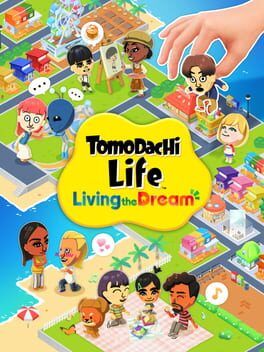

Nintendo’s free Tomodachi Life: Living the Dream “Welcome Version” demo is out now with save transfer to the full game and an unfortunate crash bug. Here’s what the slice actually reveals about the sequel’s systems, how carryover progress builds momentum, and whether the 9 pm – 10 am crash issue should shake your confidence before launch.
Tomodachi Life: Living the Dream’s free “Welcome Version” demo has arrived on the Switch eShop, and on paper it is exactly what long‑time fans wanted: an early chance to poke at the new island, meet a few Miis, then bring that progress into the full game next month.
In practice, the demo does three important things for players. It sets expectations about how this sequel’s systems feel moment to moment, it gives your eventual save file a running start, and it has already revealed how quickly Nintendo will react when something goes wrong, thanks to a very specific crash bug.
What the demo actually lets you do
The Welcome Version is deliberately small, but it is not just a cutscene sampler. You can create up to three Miis, move them onto a fledgling island, and live with them long enough to see a miniature version of Tomodachi chaos play out.
This is enough time to see how the sequel sharpens the original’s formula. The Mii creation tools are noticeably more flexible, particularly around gender expression and clothing. Dialogue and “Little Quirks” surface faster, and the island throws situations at you in shorter intervals, so there is less waiting around between weird vignettes. It feels tuned for quick handheld sessions, with days broken up into bite‑sized storylets instead of slow trickles of events.
Shops, minigames and social encounters are all present in trimmed‑down form. You will not unlock the full catalog of outfits or activities, but you get to taste the loop: feed Miis, respond to their requests, watch friendships or crushes flicker to life, and then collect rewards that feed back into more customization. For anyone who bounced off the 3DS original because it took too long to get going, the demo suggests a sequel that is faster to show you why it is funny.
A snapshot of the sequel’s systems
Because the Welcome Version is so focused, what is in the demo stands out as a statement of intent for the full release.
First, the personality and relationship systems start doing work almost immediately. Even with only three residents, you will usually see at least one argument, one new friendship, and some kind of crush or awkward confession before you hit the demo’s end. The game wants your island to feel alive quickly, not after days of check‑ins.
Second, Little Quirks and hobbies are more legible. Miis broadcast their tastes and habits through bespoke animations and requests, making it easier to read who they are at a glance. That is useful when you are eventually juggling dozens of residents, and the demo hints at this by letting your tiny cast feel distinct within an hour.
Third, scheduling matters more. Time‑of‑day gating was always part of Tomodachi, but scripted events in the Welcome Version lean harder on it. Certain scenes and shop stocks only appear in specific windows, which both encourages short daily visits and quietly prepares you for managing a busier island in the full game.
In short, the demo is less about content volume and more about signaling how Tomodachi Life: Living the Dream wants to respect your time: fast setups, dense interactions, and systems that start paying off while you are still in tutorial territory.
Save transfer: a small demo with long legs
The biggest structural win for players is that all this early effort is not disposable. The demo’s save can be transferred directly to the full game at launch, including the Miis you create and the early progress you make with them.
In a life sim where attachment to characters is the main hook, that matters. Naming, styling, and voicing your Miis is the point, and re‑doing that work on day one can feel like a chore. Carrying over your three starter residents means the first hours of the retail release can focus on expanding your island, not recreating it.
That continuity quietly smooths out a classic Tomodachi problem: the slow first day. When you boot the full game with a Welcome Version save, you arrive with a seed of established relationships, a few outfits, and at least a partial sense of who these people are. Momentum is baked in. Instead of “getting through” the tutorial again, you are building on your own ongoing sitcom.
Nintendo is also sweetening the pot with at least one cosmetic bonus for finishing the demo. Rewards like the hamster costume are trivial in isolation, but they send a message that the demo is part of your long‑term island history, not a throwaway side app.
How it changes pre‑launch hype
From a player‑experience perspective, the save transfer does more than just save time. It changes the tenor of the pre‑launch weeks.
If you were on the fence, being able to live with a tiny version of your island for free, then roll that same save into the full release, removes one of the biggest mental barriers to trying a life sim where jokes and drama are very personal. You do not have to worry that you are “wasting” your ideas on a limited trial.
If you already know you are buying it, the demo becomes a soft launch. Your first arguments, romances, and in‑jokes between Miis are now canon for your island. That makes the weeks between demo and release feel less like waiting and more like a prologue season.
The crash bug: what actually went wrong
The one thing puncturing the good vibes is a very specific crash bug in the Welcome Version. Nintendo has acknowledged that, after you reach the end of the demo, the app can crash if you launch it or wake your console from sleep between roughly 9 pm and 10 am system time.
This is the kind of oddly precise bug that only a real‑world rollout tends to expose. Something in the post‑ending schedule logic is misbehaving during nighttime and early‑morning checks, and instead of failing gracefully, the demo exits entirely.
Importantly, it is a demo‑only problem. There is no indication so far that saves are being corrupted or that the same issue affects the retail build. It is annoying if you play mostly in the evenings or mornings, but it is also avoidable by staying out of that time window until a patch lands.
Does the bug shake confidence?
On its face, seeing your island comedy experiment crash as soon as you finish the Welcome Version is not a great look for a series that depends on daily habit. For a life sim, you want reliability: you check in, you get your stories, you leave.
There are two ways this could color player expectations.
For more cautious players, any day‑one technical hiccup suggests holding back on preorders until performance is proven. If a thin, carefully carved demo can stumble on something as fundamental as opening during certain hours, it naturally raises questions about how robust the full island simulation will be once dozens of Miis and online features are in play.
On the other hand, the narrowness of the bug can cut in the opposite direction. Because it only triggers after the demo’s endpoint and in a specific time range, it feels like the sort of scripting oversight that slipped past internal QA, not a systemic engine issue. Nintendo’s quick public acknowledgement also makes this a useful, if unplanned, stress test of how they will communicate and patch Tomodachi problems post‑launch.
Ultimately, confidence will hinge less on the existence of this bug and more on how fast the fix arrives and how clearly save safety is communicated. As long as progress is preserved and the full game does not show similar time‑based crashes, most players are likely to treat the Welcome Version issue as a footnote rather than a red flag.
What the demo tells us about living with this sequel
Set the bug aside, and the Welcome Version is a surprisingly revealing slice of Tomodachi Life: Living the Dream.
It shows a game that wants to get to the weird, personal stories much faster than the 3DS original, with more expressive Miis and livelier daily pacing. It uses save transfer to turn a marketing demo into the opening chapter of your actual island, preserving the characters and moments you start to care about now.
And, through that crash bug, it accidentally gives us an early look at how Nintendo will support it. If the fix is timely and transparent, it might actually boost confidence that, this time, Tomodachi’s long‑tail life is something Nintendo intends to actively shepherd.
For now, if you are curious, the smartest move is simple. Spend an evening with the Welcome Version, avoid booting it during the known problem hours once you hit the end, and see whether your first trio of Miis makes you want to bring their drama along when Tomodachi Life: Living the Dream properly opens its doors on April 16.