
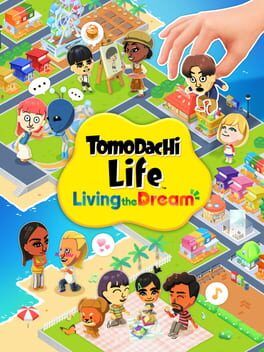

Nintendo says Tomodachi Life: Living the Dream has topped 8 million sales, already surpassing Tomodachi Life 3DS sales and pointing to a bigger global future for Mii social sims.
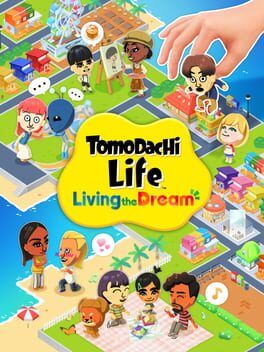
Image: IGDB
Tomodachi Life has a new series record in under four months
Tomodachi Life: Living the Dream has cleared 8 million sales worldwide, according to Nintendo, making it the best-selling Tomodachi game to date less than four months after launch. That is the hard number at the center of Nintendo sales 2026 this week, and it comes with a useful bit of tension: a Mii-driven comedy life sim has already outpaced the 3DS game that made the series an international name.
Nintendo’s latest financial materials, as cited by Nintendo Life and VGC, say cumulative global sell-through for Tomodachi Life: Living the Dream had exceeded 8 million units as of August 5, 2026. The game launched on April 16, 2026. By the end of June, Nintendo reported roughly 7.94 million to 7.96 million copies sold, depending on the outlet’s reading of the figures. The regional numbers cited in both reports, 2.55 million in Japan and 5.39 million outside Japan, add up to 7.94 million, while VGC reports Nintendo’s end-of-Q1 figure as 7.96 million. The small discrepancy does not change the confirmed milestone: Nintendo says Tomodachi Life: Living the Dream sales are now above 8 million.
That puts it ahead of Tomodachi Life on 3DS, which VGC reports sold 6.73 million copies worldwide and became the 11th best-selling 3DS game ever. It also towers over the Japan-only DS original, Tomodachi Collection, which VGC says sold 3.2 million copies after its 2009 release. For a series built on loose social observation, oddball dialogue, and the pleasure of watching Miis behave badly, strangely, or sweetly without much player pressure, the speed of this result is the real story.
The Switch 2 angle is real, but Nintendo still calls this a Switch game
Some readers will naturally search for this as Tomodachi Life Switch 2, especially now that Nintendo is emphasizing the new hardware cycle. The confirmed platform detail is narrower. Nintendo Life quotes Nintendo describing Tomodachi Life: Living the Dream as a Nintendo Switch title, while also noting that consumers can play Nintendo Switch software on Nintendo Switch 2 and that many people are using that compatibility.
That distinction matters. The available source material does not describe Living the Dream as a native Switch 2 sequel, a Switch 2 Edition, or a game with confirmed Switch 2-specific enhancements. Nintendo’s stated strategy, as quoted by Nintendo Life, is to continue communicating the appeal of evergreen Nintendo Switch titles by using the broader hardware installed base while Switch software remains playable on Switch 2.
So the safest practical read is this: Tomodachi Life: Living the Dream launched for Nintendo Switch on April 16, 2026, and Nintendo says Switch 2 backward compatibility is helping people continue to play Switch software on the newer system. If you are waiting for a dedicated Switch 2 version, the source material does not confirm one. If you own a Switch and are interested in the game as released, Nintendo’s sales data already shows it has found a huge audience without needing to be framed as a native Switch 2 showcase.
The old localization doubt has flipped into an overseas advantage
The clearest reason Living the Dream is outperforming the 3DS original is reach. Tomodachi began as a Japan-only DS series with Tomodachi Collection, and VGC notes that some once believed the amount of text in the game would make an international release difficult. The 3DS sequel changed that by releasing internationally and selling 6.73 million copies worldwide. Living the Dream has now gone further, with most of its early sales coming from outside Japan.
Nintendo’s regional split is blunt: of the roughly 7.94 million copies sold by the end of June, 2.55 million were sold in Japan and 5.39 million were sold overseas, according to Nintendo Life and VGC. That does not mean any single overseas country beat Japan, since the overseas figure combines many markets. It does show that the modern Tomodachi audience is no longer defined mainly by its home territory.
That is a major shift for a game whose charm depends on language. Tomodachi’s jokes, personality quirks, relationship drama, songs, arguments, compliments, and absurd little skits live or die on localization. VGC’s review called Living the Dream “a hilarious helping of nonsense” and praised its localized dialogue and customization, while warning that it can become repetitive after a few weeks. In sales terms, that tradeoff appears to be working: the game’s text-heavy identity, once a possible barrier, has become part of the reason people outside Japan can recognize it, quote it, clip it, and share it.
Virality fits Tomodachi better than it fits most life sims
Nintendo did not say social media caused the 8 million milestone, but the surrounding reports give a strong picture of how Living the Dream travels. VGC points to the game’s word-of-mouth potential, including players sharing silly moments online and a demo version released before launch. The Straits Times also reported that players have been recreating famous faces and fictional characters, then spreading their interactions through social platforms. One example cited by the outlet involved a TikTok account with more than 1.7 million views showing avatars resembling actors such as Jack Black and Jennifer Coolidge interacting with characters like Charlie Brown and Cooking Mama.
That kind of sharing is unusually well matched to Tomodachi’s design. Many games generate clips through mastery, failure, spectacle, or competitive drama. Tomodachi generates them through juxtaposition: a familiar-looking Mii says something unhinged, falls in love with the wrong person, performs a bizarre song, or turns a quiet island routine into a miniature sketch. The player’s authorship comes from setup and customization, while the punchline often arrives through the simulation.
That helps explain why Living the Dream could move quickly from curiosity to purchase. The Straits Times reported that the game sold more than 3.8 million units globally within two weeks of its April release. It also reported that Living the Dream topped sales charts in Japan for a third straight month in June according to Famitsu, and that Circana had it leading U.S. unit sales rankings in April before taking fifth in May. Those are not lifetime legs yet, but they show a strong launch curve across regions, retail habits, and audience types.
Cozy timing helped, but the appeal is stranger than comfort alone
Living the Dream is being described as a cozy hit, and that label is supported by the way outside analysts and outlets are reading it. The Straits Times connected the game’s success to players seeking escape from anxiety and isolation, and quoted Niko Partners research director Darang Candra saying life-sim games offer a slower, simpler, more relaxing world than competitive or lore-heavy games. Nintendo itself says the game is being enjoyed by people of all ages, regardless of gender.
Still, Tomodachi’s particular craft is weirder than the cozy label can fully capture. This is not the same promise as decorating a town, optimizing a farm, or grinding out a social calendar. Its central trick is observation. You make the islanders, tune their identities, then watch small unpredictable scenes unfold. The low-commitment structure lowers the intimidation factor, while the Mii system makes even a tiny interaction feel personal because the cast can be made from friends, family, celebrities, mascots, or private in-jokes.
That also helps with family play. VGC’s review said the game is easy to play and that its customization gives it scope for the whole family, even if the repetition becomes noticeable over time. Nintendo Life gave it 7/10, calling it one of Nintendo’s strangest games and pointing to its laughs and creativity. Those review notes line up with the sales profile: Living the Dream does not need to be endlessly deep for every player if it is approachable, funny, readable across ages, and immediately shareable.
The 3DS comparison shows how much Nintendo’s audience has changed
Tomodachi Life 3DS sales were already impressive. Selling 6.73 million copies worldwide on 3DS placed it among that system’s biggest games, according to VGC. But Living the Dream passing 8 million so quickly suggests the sequel benefited from a different Nintendo ecosystem: a much broader post-Switch audience, a stronger digital and social discovery loop, and a hardware transition where Switch software remains relevant on Switch 2.
Nintendo’s own comments, quoted by Nintendo Life, are revealing because they group Living the Dream with evergreen Switch software strategy. The company is not presenting the title as a short-window launch novelty. It is describing a game that can keep selling across the Switch base while Switch 2 owners continue playing older Switch software. For a social sim, that is especially important. These games are not always consumed like big cinematic releases. They often grow through repeated check-ins, family recommendations, viral clips, and the slow spread of “you need to see what my island did today” moments.
The unanswered question is whether Nintendo treats Mii-focused social sims as a newly revalidated pillar or as a once-per-generation oddity that happens to have landed perfectly. The numbers argue for the former. The reviews argue for caution, because repetition is a known limitation. If Nintendo wants Tomodachi to keep expanding, future updates or sequels would need to preserve the unpredictable toy-box quality while giving long-term players more scenes, relationship variety, and reasons to return after the first few weeks. The source material does not confirm any update roadmap, paid expansion, or Switch 2 Edition, so that remains expectation rather than news.
For players, the sales milestone points to a lively community now
If you are deciding whether to jump in after the Tomodachi Life 8 million announcement, the confirmed case is simple. Tomodachi Life: Living the Dream is available as a Nintendo Switch game, launched worldwide on April 16, 2026, and Nintendo says it has already exceeded 8 million global sales. Nintendo has also said Switch software can be played on Nintendo Switch 2, but no native Switch 2 upgrade path is confirmed in the provided sources.
The buyer’s-guide read from the available reporting is equally clear. This is a strong fit if you like customization, Miis, emergent comedy, low-pressure daily play, and games that produce stories you can retell. It may be less satisfying if you want a heavily directed life sim, deep progression, competitive systems, or a structure that avoids repetition over longer stretches. VGC and Nintendo Life both found the game funny and creative, while VGC specifically warned that it can get repetitive after weeks of play.
As a business signal, though, Living the Dream has already answered the biggest question. The Mii social sim was not stranded in the 3DS era. It has outgrown it. Nintendo’s new numbers show a series that can sell globally, travel through clips and personal comedy, and fit neatly into the Switch-to-Switch 2 transition without needing to chase the graphical arms race. For a game about tiny avatars making tiny disasters, that is a remarkably large footprint.