
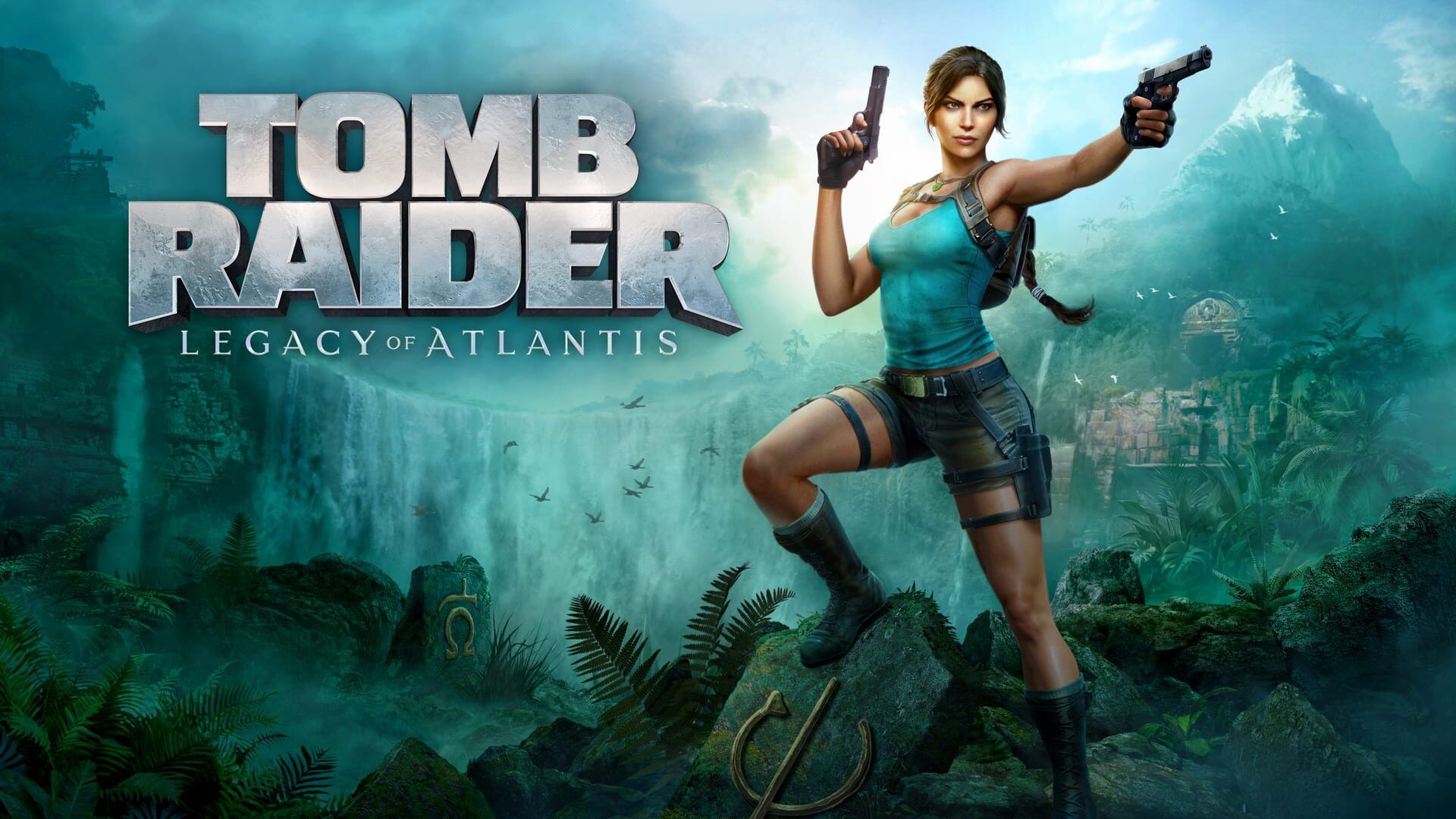

A deep hands-on look at how Tomb Raider: Legacy of Atlantis reimagines Lara Croft’s 1996 debut with classic exploration, acrobatics, and modern systems that hint at the series’ future.
Tomb Raider: Legacy of Atlantis is a remake with a point to prove. Nearly three decades after Lara Croft first swan-dived into gaming history, Crystal Dynamics and Flying Wild Hog are revisiting that original expedition into Atlantis and its dinosaur‑stalked valleys, rebuilding it with Unreal Engine 5 while trying to restore something fans have missed: the feeling of plotting your own path through a deadly, mysterious ruin.
Early hands-on sessions, including ours, focus on a single slice of the campaign built around two iconic beats from the 1996 game: the cog-and-waterfall puzzle and the first encounter with the Tyrannosaurus rex. It is a compact demo, but it already reveals how Legacy of Atlantis wants to bridge the grid-based precision of classic Tomb Raider with the fluidity and spectacle of modern action adventures.
Reimagining Lara’s first expedition
Legacy of Atlantis is not a one-to-one remake. Story beats, locations, and set pieces echo the original Tomb Raider, but the script and structure have been rewritten to sit in the same continuity as the 2013–2018 Survivor trilogy. This Lara is no longer a frightened first-timer; she is confident, witty, and already a seasoned raider when she steps into that Peruvian valley.
The tone immediately feels different from the gritted-teeth trauma of the Survivor games. Lara cracks dry one-liners about crumbling masonry, muses about lost civilizations, and treats danger as a challenge rather than a tragedy. The shift matters because it informs how the game plays: this is an adventure about mastery and style, not survival at any cost.
The level itself mirrors the Lost Valley from the PS1 original. You still emerge from tight caverns into a wide basin of waterfalls, wooden scaffolds, and precarious ledges. Raptors prowl the brush. Enormous stone gears sit half-buried in the rock. But the layout is no longer a strict series of rectangular chambers stitched together. The space loops and layers over itself vertically, encouraging you to read the terrain and improvise routes rather than simply follow a glowing marker.
Classic exploration without handholding
The strongest first impression is how much Legacy of Atlantis wants you to look, think, and commit. There is no golden breadcrumb trail, no neon paint splashed on every ledge. Key climbable surfaces are readable thanks to texture and silhouette, but the game trusts you to visually parse where Lara can and cannot go.
Exploration flows more like a modern third-person platformer than the tank-controlled grid of 1996, yet the spirit of deliberate planning remains. Jumps carry a notable “float,” evoking the rhythm of Lara’s original leaps while avoiding their rigidity. You still find yourself backing up a few steps, eyeballing the distance to a distant platform, then committing to a running jump that has just enough air time to allow for mid-flight corrections.
There is a welcome amount of friction too. Climbing routes are not perfectly smooth conveyor belts. Some handholds crumble, forcing quick decisions about where to leap next. Zip lines and tightropes are placed as rewards for reaching higher ground, not as mandatory critical path transitions. Optional alcoves branch off the main route, hiding relics, journals, and caches that flesh out the Atlantean mystery.
Lara’s new scan pulse is the one major concession to modern readability. Tapping it sends out a brief wave that highlights interactable objects and traversal anchors. Used sparingly, it feels like a safety net instead of a crutch, but you can already imagine purists turning it off to fully recreate that 90s “lost in the level” feel.
Acrobatics restored and refined
If the Survivor trilogy framed Lara as a scrappy climber who could just barely scramble out of trouble, Legacy of Atlantis wants her to be a gymnast again. Almost every combat arena and traversal challenge is built to let you express that agility.
Basic movement is crisp: Lara can pivot, change directions in mid-air, and snap to ledges with satisfying responsiveness. Short hops, mantle moves, and wall kicks link together naturally. Crucially, the preview reintroduces those signature sidesteps, backflips, and cartwheels in a way that no longer feels clunky. Flicking the stick and tapping dodge can send Lara flipping sideways past an enemy, while still giving you time to line up your dual pistols.
The new wrist-mounted grapple is the other key addition. Mechanically, it sits somewhere between a safety rope and a full traversal gadget. In platforming sequences, it allows Lara to turn long jumps into wide arcs, chaining a sprint off a collapsing ledge into a swing across a chasm, then dismounting into a climbable wall. In puzzles, it lets her pull heavy stone blocks, rotate suspended platforms, and redirect water flows by yanking at corroded levers.
The best moments in the demo come when the platforming, grapple, and environmental hazards interlock. One standout sequence has Lara sprinting along a flooding aqueduct, leaping across broken channels, then firing the grapple mid-air to catch a hanging mechanism. You have to time the swing to avoid falling debris, then release at the apex to slam into a crumbling balcony. It is not brutally difficult, but it demands attention and timing in a way that feels true to Tomb Raider’s old obsession with spatial puzzles.
Puzzles that reinterpret, not just repeat
The cog puzzle from the original game is a smart microcosm of how Legacy of Atlantis approaches remake design. In 1996, you mostly jogged around a boxy valley collecting oversized gears, then slotted them into a contraption to stop a waterfall. Here, the concept is the same, but the journey is much more layered.
Each gear now occupies a distinct sub-area with its own traversal theme. One is perched atop a crumbling watchtower riddled with climbing routes and breakable ladders. Another sits behind a subterranean pool that demands a mix of swimming, timing, and careful use of air pockets. A third is wedged into a rock wall that you free only by solving a light-routing puzzle with reflective plates.
These spaces loop back into the central hub in elegant ways. Unlocking shortcuts gradually stitches the valley into a dense knot of paths. By the time you place the final gear, you have mentally mapped the area not as a checklist of objectives, but as an interconnected ruin whose architecture now makes sense.
The puzzles themselves are not mind-melting, at least in this slice, but they are layered enough to require more than simply following button prompts. You are aligning machinery, reading environmental clues, and experimenting with cause and effect. More importantly, the game resists the urge to over-explain. Lara occasionally mutters an observation, but she does not narrate every solution before you can even attempt it.
Combat that rewards style over grinding
Legacy of Atlantis has no interest in becoming a cover shooter. Combat is punchy and present, yet it slots in as punctuation between traversal and puzzles rather than the primary verb. The raptor skirmishes in the demo highlight both the strengths and potential concerns of this approach.
Lara’s dual pistols return as her defining tool, sporting unlimited ammo and quick, rhythmic firing. You can also pick up heavier weapons, like a shotgun, as situational power spikes, but the pistols are clearly designed as the mainstay. Enemies lunge aggressively, encouraging you to stay mobile. The most satisfying way to fight is to combine dodges and flips with concentrated fire, weaving around attacks while keeping your aim trained on weak points.
The new Focus system embodies that idea. Perfectly timed dodges and acrobatic maneuvers build a Focus meter. Fill enough segments and you can trigger a brief slow-motion state where enemies move as if wading through syrup while Lara dances around them, landing precise headshots. Used well, it turns combat into a stylish rhythm of baiting attacks, evading at the last instant, and cashing in your stored Focus for a devastating flurry.
Crucially, combat arenas are built like mini-platforming spaces. Elevated ledges, low walls, hanging beams, and destructible cover all invite you to reposition rather than dig in. Fighting raptors becomes a matter of constantly moving across these perches, using the grapple to reposition or pull down environmental hazards.
If there is a caveat from these early encounters, it is that enemy AI and variety still feel fairly simple, skewing closer to a throwback action-platformer than a modern tactical shooter. For this particular kind of Tomb Raider, that may be an intentional choice, but the full game will need a broader bestiary and more complex scenarios to keep the combat loop from feeling repetitive.
The T. rex returns as a cinematic showcase
No remake of Tomb Raider could ignore the moment Lara rounds a corner and stares up at a towering Tyrannosaurus. Legacy of Atlantis embraces that legacy while reframing the encounter as both a boss fight and an expressive traversal set piece.
The first sighting is almost quiet. You solve the final gear puzzle, the waterfall parts, and a cavern mouth yawns open. Inside, the space widens into a natural arena of stepped rock, old scaffolding, and toppled stone. Then the ground shudders. Trees splinter. The T. rex pushes into view, all wet scales, scarring, and flicking eyes rendered in breath-stealing detail.
Rather than a simple circle-strafe gunfight, the sequence unfolds in phases. Initially, you are dodging charges, slipping between stone pillars and clambering up ledges while taking opportunistic shots at the beast’s head and legs. The game leans heavily on its acrobatics here, with the rex’s attacks designed to punish players who stand still.
As the fight escalates, the environment starts collapsing. Wooden walkways snap, boulders tumble, and escape routes narrow. The last stretch morphs into a full-blown chase, echoing modern cinematic platformers without feeling entirely scripted. You are sprinting along collapsing bridges, chaining grapples between jutting rock spires, and sliding down muddy slopes as the dinosaur tears through everything behind you. Fail a jump and you are given a brisk checkpoint restart, but the sequence wants you to feel barely in control, surviving by a whisker.
The demo ends on a cliffhanger, with Lara’s planned escape route obliterated and a plunge into a raging river cutting the screen to black. It is a bold note to end on and a clear statement of intent: this remake is not content to simply recreate old memories; it wants to dramatize them.
Systems and progression beneath the surface
Outside the core loop of jumping, puzzling, and shooting, Legacy of Atlantis also layers in light progression systems. The preview build teases a skill tree divided into traversal, combat, and survival perks, though it is locked for now. Collectibles suggest that completing optional challenges and exploration will feed into this growth, rewarding players with materials and knowledge rather than just achievement pop-ups.
Hidden journals, relics, and murals tie Lara’s more self-assured personality to the broader Tomb Raider timeline, nodding to both the classic games and the Survivor trilogy. It feels like an attempt to unify Lara’s fractured history into a single, coherent arc without bogging this specific adventure down in continuity baggage.
Equipment upgrades look to be restrained. You can enhance the pistols’ handling or boost the power of a shotgun, for example, but there is no sign of sprawling RPG stat spreadsheets. That restraint suits a remake that wants to foreground platforming and problem-solving over endless loot treadmills.
What this all suggests for Tomb Raider’s future
Taken as a whole, Tomb Raider: Legacy of Atlantis feels like a manifesto for where Crystal Dynamics wants to steer the series next. It leans back into elaborate tombs and tricky traversal, it celebrates Lara as a graceful acrobat rather than a traumatized survivor, and it keeps combat purposeful instead of omnipresent.
There are questions the full game will need to answer. Can it maintain this density of bespoke puzzles without resorting to filler arenas? Will later tombs push the difficulty and complexity enough to satisfy long-time fans without alienating newcomers? And can the story thread the needle between nostalgic callbacks and genuinely new myth-building?
But after this early hands-on, the foundation looks promising. Legacy of Atlantis does not feel like a glossy reskin of a 90s classic or an Uncharted knockoff wearing a familiar face. It feels like Tomb Raider trying to remember what made it special in the first place and updating that identity for 2027 rather than 1996.
If the rest of the campaign can match the confidence and clarity of this Lost Valley slice, Lara Croft’s return to her first tomb might also mark the start of her most exciting era yet.