
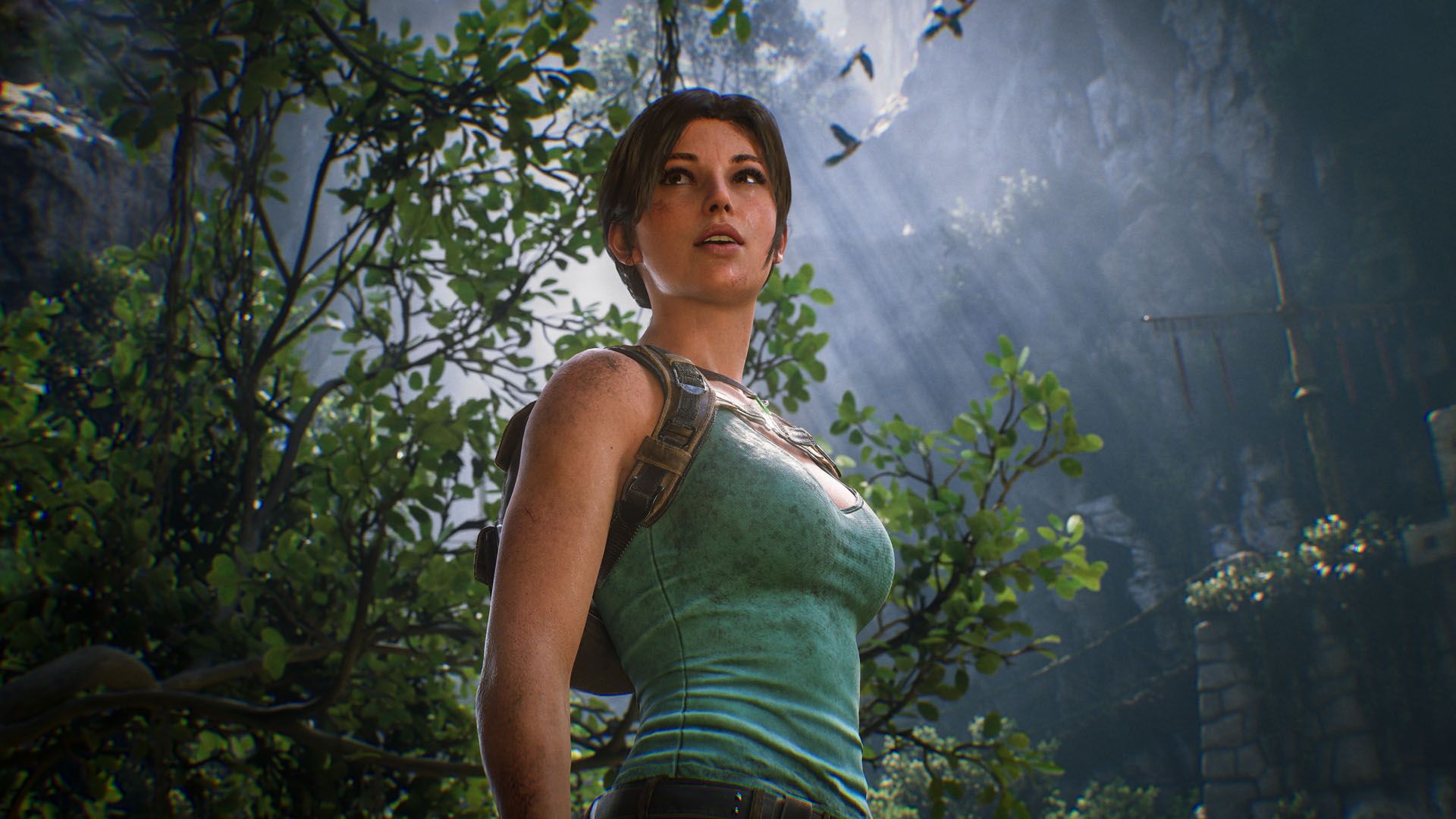
Flying Wild Hog and Crystal Dynamics say Tomb Raider: Legacy of Atlantis will leave the 1996 game's most emotional vistas, objects, locations, and scenes almost untouched while rebuilding the adventure for modern platforms.
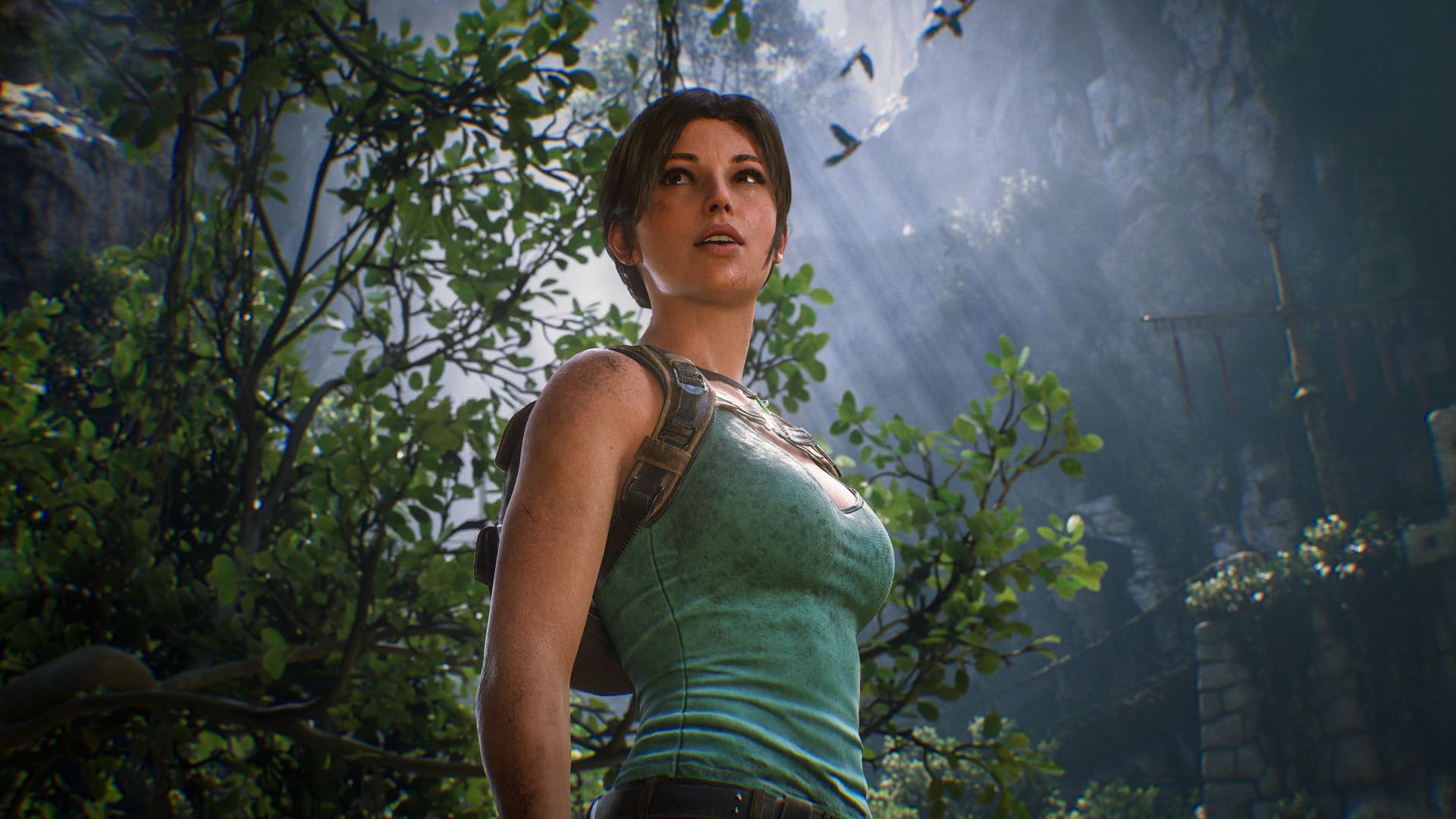
Image: news.xbox.com
Legacy of Atlantis is drawing its preservation line around memory
The clearest statement yet about Tomb Raider: Legacy of Atlantis is also the one most likely to define the remake’s relationship with longtime fans: Flying Wild Hog creative director Michał Kuk told Edge Magazine, according to GamingBolt and GamesRadar, that the team is leaving the original Tomb Raider’s most emotionally resonant material “almost untouched.”
Kuk framed preservation around what players carry with them after the credits, rather than around a room-by-room duplication of the 1996 game. “Imagine you just finished the first Tomb Raider, then you close your eyes, and you imagine a playthrough in your head,” Kuk said in the quote reported by GamingBolt. “Your brain remembers the things that generated the most emotions for you. These moments, locations, vistas, objects that stick in your memory, these are the things that have to be in the [remake] almost untouched.”
That is the tension sitting at the center of Tomb Raider Legacy of Atlantis. Crystal Dynamics and Flying Wild Hog are building the game from scratch in Unreal Engine 5, according to earlier comments from Crystal Dynamics studio head Scott Amos cited by GamingBolt, while also promising that certain pieces of Lara Croft’s first expedition should still hit with the same rhythm and force. For a series built on discovery, isolation, sudden danger, and the charge of seeing an impossible space open up ahead, the developers are arguing that the emotional shape of the original matters as much as the geometry.
A reimagining, not a sealed museum piece
Crystal Dynamics has been careful to describe Tomb Raider: Legacy of Atlantis as a reimagining rather than a strictly faithful remake. GamingBolt reports that game director Will Kerslake said the team wants to honor the original Tomb Raider’s legacy while adding modern gameplay elements for current players. Scott Amos described the project as a “love letter by fans, all of us, for fans,” tied directly to the Tomb Raider 30th Anniversary and to “Core Design’s original DNA and intent.”
That distinction gives the team room to change how Lara moves, fights, reads a space, and survives a tomb, even if the major emotional beats remain recognizable. VGTimes reports that the remake will add modern mechanics including crafting and skill trees, systems associated with the Survivor trilogy rather than the 1996 release. Wikipedia’s summary of the game, included in the provided source material, also lists new mechanics such as a wrist-mounted grappling hook, an archaeological scanner, and a Focus ability for slowing combat and making precision attacks.
Those additions are not preservation in the purist sense. They suggest a game with a different combat tempo, a different set of verbs, and potentially a different puzzle-solving cadence. The preservation promise, then, is narrower and more cinematic: the view at the end of a climb, the object that anchors a memory, the set-piece composition of a dangerous room, the feeling of standing somewhere ancient and hostile with only Lara’s confidence to push the frame forward.
Realism is already forcing changes to the old adventure logic
Crystal Dynamics experience director Jeff Adams has pointed to one practical reason the remake cannot simply reproduce every detail from the original. As reported by GamingBolt and VGTimes, Adams said that “as we bring the level of realism up, there are some things from the original we struggle to justify.” His example was blunt: finding a med pack in a tomb concealed for 10,000 years.
That single example says a lot about the preservation problem facing Tomb Raider: Legacy of Atlantis. The 1996 game operated with the clarity of early 3D action-adventure design, where a pickup could sit in a ruin because the player needed health and the level needed readable friction. A modern, more realistic presentation makes those abstractions louder. If the world now looks physically convincing, the old game’s conveniences risk becoming visual jokes unless they are redesigned, explained, or removed.
This is where the Tomb Raider remaster preservation conversation becomes complicated, even though Legacy of Atlantis is being described by its makers as a remake or reimagining rather than a remaster. Longtime fans may want the route, the mood, and the shock of recognition. A modern production has to decide whether a med pack, a lever, a traversal gap, or an enemy placement still supports that mood when presented with contemporary lighting, animation, and environmental detail. Kuk’s comments suggest the team’s answer is to protect the high-emotion landmarks while allowing the connective tissue to change.
The original’s scale still shapes the remake’s burden
The Tomb Raider 30th Anniversary context matters because Legacy of Atlantis is returning to the game that established Lara Croft as a defining action-adventure figure. HappyGamer’s report on Xbox Wire’s anniversary interview with Meagan Marie notes that the 1996 Tomb Raider began at Core Design in Derby, England, with six primary developers, supported by additional artists and audio staff. Marie credited that group with changing expectations for protagonists, saying in the Xbox Wire interview that they “changed the face of the industry, and they changed the face of what we expect from our protagonists.”
That original game’s identity was built from constraints as much as ambition. Tombs were readable, angular, and often harshly quiet. Combat arrived in sharp bursts, traversal demanded deliberate positioning, and the camera often let a new vista function like a reward. Translating that into a full Unreal Engine 5 production is not a neutral upgrade. Better fidelity can deepen awe, but it can also crowd out the clean stagecraft that made an encounter or reveal land.
Amos’ comments, as relayed by GamingBolt, show the studio is thinking about that conversion directly. He said areas that might have been “a background image in the old game” can now be “completely realized in full 3D.” For set-piece design, that is a major shift. A backdrop can imply scale without inviting the player to test it. A fully realized 3D space has to support movement, sightlines, collision, encounter logic, and player expectation. Keeping Legacy of Atlantis original scenes emotionally intact may depend on knowing when added detail serves the memory and when it dilutes it.
Fans are being asked to accept new systems around old touchstones
The developers’ approach is likely to please and unsettle different parts of the Tomb Raider audience. OtakuKart reports that some fans have criticized additions such as crafting and skill trees because those systems were not part of the original game. That reaction is understandable in a series where eras carry distinct identities: the Core Design games, Crystal Dynamics’ Legend-era trilogy, and the Survivor trilogy each taught players a different version of Lara’s movement, vulnerability, and control.
Meagan Marie, speaking in the Xbox Wire interview summarized by HappyGamer, said the 2013 reboot built its own fanbase, with some players telling the studio that the Survivor game was their first Tomb Raider. She also said Lara’s constants include a passion for uncovering the unknown, a sense of wonder, physical prowess, and quippiness. Legacy of Atlantis appears designed to sit between those audiences: familiar enough for players who remember Lara’s original hunt for Atlantis, flexible enough for players whose expectations were shaped by later action-adventure pacing.
The unanswered design question is how much friction those modern systems introduce. Crafting can create tension if resources are scarce and routes are dangerous. It can also slow pacing if every corridor becomes a harvesting lane. Skill trees can support player expression, but they can soften a carefully tuned adventure if core abilities feel withheld. None of the provided sources include hands-on impressions, so the safest conclusion is that the preservation promise is philosophical for now. The real test will be whether modern progression supports the original’s sense of risk instead of sanding it down.
Release details are clearer than the final preservation balance
Several practical details are already public through listings and reports. HappyGamer says the Steam page lists Amazon Game Studios as publisher, a Windows release date of February 12, 2027, and a current price of $59.99. VGTimes reports that Tomb Raider: Legacy of Atlantis is set to launch on February 12, 2027, for PC, PS5, Xbox Series X/S, and Nintendo Switch 2. Wikipedia’s listing in the provided material also names Crystal Dynamics and Flying Wild Hog as developers, Amazon Game Studios as publisher, and the same worldwide release date and platforms.
For players deciding whether to follow closely or wait, the confirmed pitch is specific but incomplete. The teams are promising recognizable emotional peaks from the 1996 game, a from-scratch Unreal Engine 5 production, and modernized mechanics. The sources do not provide performance targets, PC requirements, edition details, upgrade paths, or hands-on confirmation of how the new systems interact with the original level flow.
That leaves Tomb Raider: Legacy of Atlantis in a familiar but delicate position for a remake of a beloved game. The developers are not promising a preserved fossil. They are promising that the scenes, vistas, objects, and locations burned into fans’ memories will still carry their old charge. For Lara Croft, whose best adventures often hinge on the pause before the leap, that may be the right place to draw the line. The leap itself still has to land.