
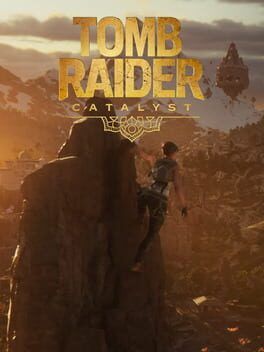

How Tomb Raider: Catalyst, Amazon’s TV ambitions, and a unified new Lara Croft performance are quietly rebuilding the franchise for the next decade.
A new Tomb Raider era begins with Catalyst
Tomb Raider: Catalyst is not just the next numbered adventure for Lara Croft. It is the cornerstone of Amazon and Crystal Dynamics’ plan to rebuild Tomb Raider as a unified, cross‑media franchise that stretches from Unreal Engine 5 blockbusters to prestige streaming TV.
Revealed at The Game Awards 2025 alongside the UE5 reimagining Tomb Raider: Legacy of Atlantis, Catalyst is positioned as the “largest Tomb Raider world yet,” a 2027 flagship that sets the tone for how Lara will look, sound, and move for years to come.
Early details, casting news, and Amazon’s broader Lara strategy already sketch a clear direction. Catalyst is less about closing the book on the reboot trilogy and more about fusing every version of Lara into a single, future‑proof icon.
What Catalyst actually is
Officially, Catalyst is a brand new mainline entry for PS5, Xbox Series X|S, and PC, developed by Crystal Dynamics and published by Amazon Games. It runs on Unreal Engine 5 and is framed as the series’ most ambitious production yet.
The game is set in Northern India after a mythic cataclysm tears open the landscape. The disaster exposes long‑buried ruins, awakens ancient guardians, and draws in rival treasure hunters whose goals clash with Lara’s. Crystal Dynamics talks about themes of trust, power, and consequence, hinting at a Lara who is no longer a traumatized survivor but a seasoned operator forced to reckon with the fallout of her choices.
Press materials emphasize a vast, contiguous world thick with secrets, intricate tombs, and layered traversal. The pitch is clear: Catalyst is the moment Tomb Raider fully embraces large, systemic spaces rather than narrow, cinematic corridors. Where the Survivor trilogy chased Uncharted’s set‑piece pacing, Catalyst leans into exploration as the headline feature.
Unreal Engine 5 as the franchise’s technical reset
The UE5 switch is about more than prettier cliffs and higher‑poly ruins. For Amazon and Crystal Dynamics, it is the technical foundation for a long‑running, interconnected Tomb Raider slate.
Catalyst and Legacy of Atlantis both run on Unreal Engine 5, and early commentary from studio leadership stresses scalability and pipeline efficiency. Building Lara, her traversal systems, and her gear once at extremely high fidelity means those assets can be refined and reused across multiple projects. It is a strategy that serves games and any transmedia extensions built around the same visual identity.
From a pure game design perspective, UE5 gives Crystal Dynamics room to return to the old fantasy of sprawling, interconnected tombs without sacrificing spectacle. Nanite‑driven geometry and modern streaming tech let the studio combine dense, puzzle‑rich interiors with towering outdoor vistas in a single space. A “largest world yet” only works if loading and streaming stay invisible while Lara clambers from a mountain‑top temple into the buried catacombs beneath.
The result is a technical platform that can carry future sequels, expansions, and reimaginings without constantly rebooting the engine or the character.
Reconciling classic Lara with the Survivor trilogy
One of the quiet but important messages behind Catalyst’s reveal is that Crystal Dynamics is done splitting Lara into separate universes. The new Lara shown in marketing sits visually between the angular, hyper‑confident 90s icon and the grounded Survivor‑era archaeologist.
Coverage of the Game Awards trailer notes a Lara closer in silhouette to the Core Design years, but with the modern gear, scars, and emotional range of the 2013 reboot. Catalyst is not another origin story, and that matters. It implies a Lara who has already been through her formative trauma, already proven herself, and now operates at the height of her abilities.
That middle ground is crucial for a series about exploration. The classic games treated Lara as a near‑mythic professional who shrugged off collapsing ruins; the reboot trilogy often centered vulnerability and psychological damage. Catalyst appears to blend those approaches, bringing back the thrill of an effortlessly capable Lara while retaining the human nuance that made the reboots resonate.
A unified voice and performance for Lara Croft
PC Gamer’s reporting confirms that Alix Wilton Regan is the new voice of Lara Croft for this era, covering both Catalyst and Legacy of Atlantis. Her credits include Dragon Age: Inquisition, Cyberpunk 2077, Mass Effect 3, Lies of P, and multiple Assassin’s Creed titles. In other words, she is a veteran of narrative‑heavy action RPGs and modern cinematic storytelling.
Casting the same actor across a forward‑looking sequel and a UE5 reimagining of Lara’s 1996 debut sends a strong signal. Instead of treating past and present as separate timelines with different Laras, Amazon and Crystal Dynamics are building one continuous performance that can flex across tone and era.
Regan’s background suggests a Lara who is sharp, sardonic, and emotionally layered rather than purely stoic or purely traumatized. That is important as Catalyst leans back into larger‑than‑life myth. The series needs a Lara who can sell both the grounded, archaeological legwork and the more operatic moments where ancient guardians awaken and reality bends around the player.
For players who bounced off the tonal whiplash of the reboot era, a single, clearly defined Lara across multiple games is a chance to reset expectations.
How Legacy of Atlantis sets the stage for Catalyst
Legacy of Atlantis, a full Unreal Engine 5 reimagining of the original Tomb Raider, arrives in 2026, a year before Catalyst. It revisits Lara’s hunt for the Scion with modern level design, expanded storylines, and more elaborate tombs.
Strategically, that release order matters. Legacy of Atlantis will likely be many players’ first contact with the new Lara. It reintroduces the core pillars of the series: isolation, precision platforming, dense environmental puzzles, and an uneasy mix of ancient magic and pulpy villainy.
By the time Catalyst launches, Crystal Dynamics and Amazon will already have tested their new tone, traversal feel, and puzzle density on a beloved template. Feedback from a reimagined, tightly structured classic can inform how far Catalyst pushes into open world structure without losing what makes Tomb Raider distinct from other action adventures.
It also allows Amazon to market Lara’s story in a clean, chronological way: experience her iconic debut reimagined, then follow her into a far larger, more complex adventure that treats those events as foundation rather than prologue.
Amazon’s plan: games, TV, and a single Lara brand
Catalyst sits at the center of something bigger than a two‑game announcement. Amazon has been candid about seeing Tomb Raider as a cross‑media franchise that spans games and streaming.
Alongside the game slate, Amazon is developing a live action Tomb Raider TV series. Eurogamer’s reporting confirms that Sigourney Weaver has joined the show as Wallace, a key supporting figure in Lara’s life, and that she describes the scripts as “incredible and very funny.” That choice of words is telling. It suggests a tone that respects adventure pulp roots, with room for wit and character interplay instead of unrelenting grit.
Weaver’s casting signals Amazon’s ambitions. This is not a low‑budget side project but a prestige production designed to sit next to The Boys or Fallout in its portfolio. A veteran like Weaver tends to be picky, and her praise for the writing hints that the show is comfortable leaning into the inherent absurdity of archaeological super‑adventures without slipping into parody.
The crucial question is how closely the TV series will track the new game continuity. Amazon is in a rare position, owning a major streaming platform and publishing the flagship games. That gives it unusual freedom to align character arcs, visual designs, and even story beats across mediums. A consistent Lara look, emotional arc, and tone between Catalyst and the TV series would make cross‑promotion far easier than past film tie‑ins that treated the games as loose inspiration.
What Catalyst’s reveal says about future Tomb Raider design
Look closely at how Amazon and Crystal Dynamics describe Catalyst and a pattern emerges.
First, exploration is front and center. “Largest world yet” is more than marketing inflation. It implies a structure that pushes beyond the semi‑linear hubs of Rise and Shadow of the Tomb Raider. Expect expansive regions in Northern India that interlock, with optional tombs braided into main routes instead of tucked away as tiny side rooms.
Second, tombs are no longer an optional afterthought. Press releases and early coverage highlight “intricate puzzles” and “lost tombs packed with secrets.” If you strip those elements down, you risk turning Tomb Raider into a generic third person shooter with rock climbing. Catalyst seems determined to reverse that drift, using UE5 to build larger multi‑stage spaces that demand planning, observation, and lateral thinking.
Third, Lara’s “adventure tech” is called out as richly customizable. That suggests a gear and progression system more in line with modern action RPGs, but the language pointedly avoids turning her into a loot treadmill. Instead, the focus appears to be on gadgets and tools that alter traversal and puzzle‑solving, closer to a Metroidvania‑style arsenal than pure damage numbers.
Put together, those pillars hint at a design future that sits between the precision platforming of the 90s games and the systemic sandboxes of contemporary open worlds. Catalyst could easily become the template for a whole string of UE5 Tomb Raider titles that treat each region as a layered puzzle box rather than a cinematic corridor.
Tone, humor, and the influence of the TV series
Sigourney Weaver’s comments about the Tomb Raider TV scripts being “incredible and very funny” are more relevant to Catalyst than they may appear. Games and shows obviously operate on different timelines and constraints, but when a single company steers both, tone tends to converge.
Amazon appears to want a Lara who can occupy the same conversational, quippy space as other big genre leads without losing her edge. That means Catalyst will likely dial back from the relentless trauma of the Survivor trilogy in favor of a hero who can meet danger with dry wit and competence.
If the TV series lands, expect that tone to bleed into future game installments as well. A successful on‑screen Lara will define the character for millions of viewers, and game writers will be incentivized to keep her voice familiar. Catalyst’s Lara may well be the prototype for the version audiences meet on TV.
A long horizon: why 2027 matters
Launching Catalyst in 2027 is a clear statement about Amazon’s patience. This is not a quick tie‑in built to cash in on the TV series. It is a multi‑year pillar project designed to arrive after Legacy of Atlantis has reset the baseline and after the TV show has hopefully established Lara in the streaming space.
From a production standpoint, that gives Crystal Dynamics time to build out the tools, pipelines, and content volume a truly large UE5 world demands. From a franchise standpoint, it gives Amazon space to weave marketing and narrative beats across games and television without tripping over conflicting continuities.
If Catalyst lands, it becomes the reference point for everything that follows: sequels, spin offs, and perhaps even crossovers that treat Lara as part of a wider Amazon action‑adventure ecosystem.
Where the franchise seems to be heading
Taken together, the reveal of Catalyst, the UE5 reimagining of Legacy of Atlantis, the casting of Alix Wilton Regan, and Sigourney Weaver’s role in the TV series all point toward a single conclusion. Tomb Raider is being rebuilt as a coherent, long‑term brand with one Lara Croft at its center and Unreal Engine 5 as its technical and aesthetic backbone.
Catalyst is the lynchpin of that plan. It is where Crystal Dynamics can finally stop reintroducing Lara and start letting her operate as the fully formed adventurer her legend promises. It is where Amazon can prove it can fund and ship a blockbuster single player adventure that stands next to its streaming hits. And it is likely the template from which the next decade of Tomb Raider takes its cues.
For fans, that means two important things. First, the classic fantasy of being alone in ancient places, teasing apart impossible mechanisms and outrunning collapsing stone, is back at the center of the pitch. Second, Lara is poised to step out of reboot purgatory and into a stable identity that stretches across games and television.
If Catalyst can deliver on the promise of its reveal, it will not just be the next Tomb Raider. It will be the moment the series finally figures out how to be all its past selves at once while pointing decisively toward the future.