
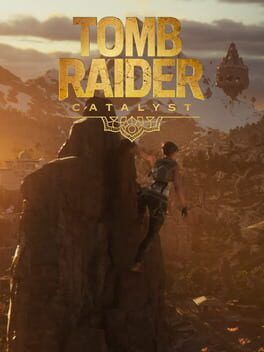

Amazon Games boss Jeffrey Gattis has confirmed Tomb Raider: Catalyst is now planned for 2028, pushing Lara Croft’s next Unreal Engine 5 adventure beyond its original 2027 window.
Image: IGDB
Amazon has put Lara Croft’s next new adventure in 2028
Tomb Raider: Catalyst is now planned for 2028, according to Amazon Games boss Jeffrey Gattis, turning Lara Croft’s next mainline-style PS5 adventure into a longer wait than originally announced. Speaking to The Game Business, Gattis said Amazon had announced two Tomb Raider titles, with Tomb Raider: Legacy of Atlantis due on February 12, 2027, “and then we’ll follow on in 2028 with the next one.” IGN, Push Square, GameSpot, and TheSixthAxis all reported the remark as confirmation that Catalyst has moved out of its 2027 window.
That is the concrete development. What remains unannounced is almost as important: Amazon has not provided a narrower 2028 launch window, and the cited interview did not include a dedicated delay statement explaining the production reason. For players tracking the new Tomb Raider game since its reveal, the only firm timing now is that Legacy of Atlantis comes first in February 2027, while Catalyst follows sometime the year after.
The Tomb Raider Catalyst delay is significant because this is the project positioned as the forward-looking entry. IGN describes it as Crystal Dynamics’ next-gen, Unreal Engine 5-built Tomb Raider, previously set for PC, PlayStation 5, and Xbox Series X|S in 2027 and published by Amazon Game Studios. The delay moves the larger, new chapter farther away from its reveal momentum and leaves 2027 to the remake-style Legacy of Atlantis instead.
A two-game plan has become a longer runway
The timing shift makes Amazon and Crystal Dynamics’ Tomb Raider calendar look more deliberate, whether or not that was the original plan. Push Square reports that Catalyst and Legacy of Atlantis were announced together, originally slated for 2027 and 2026 respectively, and that both games have now moved one year beyond those initial dates. IGN similarly notes that Legacy of Atlantis was delayed from 2026 to February 12, 2027, while Catalyst has now shifted to 2028.
That creates a clearer sequence. Legacy of Atlantis, described by Push Square and GameSpot as a return to Lara’s original adventure, now anchors early 2027. Catalyst, the new entry set across Northern India, no longer has to share the same calendar year with another major Tomb Raider release. The Outerhaven framed that spacing as a likely benefit, arguing that two Tomb Raider games in one year could have forced the same audience to divide its attention. That is an interpretation from that outlet, not an official Amazon explanation, but the new schedule does avoid a crowded internal launch pattern.
For a series built on pacing, this matters at the product level as much as the marketing level. A remake of the first game and a new Unreal Engine 5 adventure ask different things from players. One sells memory, architectural familiarity, and the thrill of seeing an old tomb rebuilt. The other has to prove where Lara Croft goes next, how she moves, how she fights, and how modern set pieces can carry the series without losing the feeling of discovery. Giving Catalyst a separate year raises expectations rather than lowering them.
The production signal is patience, but not a blank check
The delay suggests Catalyst is still in a long production lane, but the sources do not support a precise diagnosis beyond that. IGN reports that Crystal Dynamics announced years ago that it was building the next Tomb Raider in Unreal Engine 5, and that Catalyst was formally set for 2027 when announced in December. Moving to 2028 means the project now has at least another year beyond that public target, but Amazon has not said whether the extra time is for scope, technology, staffing, release strategy, or all of the above.
There is relevant context around the studio. IGN reports that Crystal Dynamics suffered its fourth redundancy round in 12 months in March 2026, while the Embracer-owned studio said it remained “fully committed to the future development” of the Lara Croft franchise. GameSpot also cites the March layoffs in its coverage of the delay. Those layoffs are confirmed context, not confirmed cause. The available sources do not say the redundancies delayed Catalyst, and treating them as the sole explanation would go beyond the reporting.
The Unreal Engine 5 detail is another production clue, though not a conclusion by itself. For an action-adventure game built around climbing, traversal, puzzle spaces, combat arenas, and large cinematic transitions, the engine choice raises the technical ceiling and the technical risk. Catalyst will be judged on whether its spaces feel authored rather than merely large, whether combat has weight without dragging Lara away from exploration, and whether spectacle can serve the rhythm of a tomb rather than flatten it into a chase sequence. The longer runway gives Crystal Dynamics room to answer those questions, but it also makes players less tolerant of rough edges when the game finally appears.
Catalyst’s story pitch points to a bigger, riskier Lara Croft adventure
The official description cited by IGN and TheSixthAxis places Tomb Raider: Catalyst across Northern India, after a mythical cataclysm has exposed ancient secrets and awakened mysterious forces that guard them. The premise brings rival treasure hunters into the region, with Lara racing to uncover the truth beneath a fractured landscape and stop others from using its power. IGN’s quoted blurb also says Lara must decide who to trust among rivals and allies to prevent a catastrophe and protect a secret that could reshape the future.
That is a loaded setup for an action-adventure game. It gives Crystal Dynamics a landscape that can justify vertical ruins, broken terrain, hidden routes, and hostile expeditions converging on the same prize. It also sets up a trust-and-betrayal structure, with TheSixthAxis reporting that players will experience a story that tests Lara in new ways. If Catalyst lives up to that pitch, the drama should sit inside the level design: competing hunters arriving at the wrong time, alliances shifting inside dangerous spaces, and ancient mechanisms turning exploration into pressure.
The danger is that a mythic catastrophe can become background noise if the game cannot make its spaces readable and tense. Tomb Raider is at its strongest when danger has geography: the ledge that crumbles, the route that doubles back, the chamber that teaches the player how its machinery works before it tries to kill them. Catalyst’s 2028 date gives Crystal Dynamics more time to build that kind of rhythm, but it also stretches the gap between promise and proof. Until Amazon or Crystal Dynamics shows more gameplay, the story pitch remains a framework rather than evidence of execution.
Amazon’s Tomb Raider strategy now stretches beyond one release
Gattis’ comments also place Catalyst inside Amazon’s wider gaming ambitions. GameSpot reports that, in the same broader interview, Gattis discussed building an identity for Amazon Luna around a content portfolio that makes players associate the service with names such as Tomb Raider and Bond. The quote does not directly state that Luna strategy caused the Catalyst delay, and Amazon has not issued a separate explanation tying the 2028 date to streaming plans. It does show that Amazon sees Tomb Raider as part of a larger portfolio play rather than a single boxed release.
IGN reports that Amazon is publishing the upcoming Tomb Raider games and is also working on a Tomb Raider TV show for Prime Video starring Sophie Turner. That matters for expectations because Lara Croft is being positioned across games and screen projects at the same time. The risk for fans is familiar: a franchise plan can create energy, but it can also make the core game feel like one tile in a corporate mosaic if the adventure itself does not land.
For Catalyst, the practical question is platform clarity. IGN says the game was announced for PC, PlayStation 5, and Xbox Series X|S. TheSixthAxis lists PlayStation 5, Xbox Series X|S, and Steam for 2028. No source material provided here confirms a price, editions, preorders, upgrade path, or performance targets. Push Square raises a possible physical-disc concern around the PS5 version, speculating that a 2028 PS5 release could be affected by Sony’s physical media timing, but that remains outlet analysis rather than an Amazon or PlayStation announcement. For now, the safest reader guidance is simple: do not make purchase plans around editions or formats until Amazon publishes formal store details.
The long wait changes the standard Catalyst has to meet
A Lara Croft PS5 game arriving in 2028 will not be judged like a routine sequel. By then, Catalyst will have spent years in public conversation as the next new Tomb Raider, following a remake that arrives first and sets the tone for Crystal Dynamics’ current handling of the character. If Legacy of Atlantis is well received, Catalyst inherits momentum and pressure. If it disappoints, Catalyst becomes the project asked to restore confidence.
The confirmed delay also changes how fans should pace their expectations. Legacy of Atlantis is the next playable stop, with Amazon’s Gattis giving February 12, 2027 as its date in the interview cited by multiple outlets. Catalyst has only a year, 2028, with no month or season attached. That means the wait could be roughly a year after Legacy of Atlantis, or it could be longer depending on where it lands in the calendar. No firmer window has been offered.
As an action-adventure prospect, Catalyst now has to justify both its scale and its silence. The setting in Northern India, the rival treasure hunters, the mythical cataclysm, and the Unreal Engine 5 foundation all point toward a bigger canvas for Lara Croft. The delay gives Crystal Dynamics more time to make that canvas playable with precision: traversal that feels dangerous but fair, combat that has momentum without swallowing the adventure, and set pieces that escalate because the player understands the space collapsing around them. Amazon has confirmed the 2028 target. The unanswered question is whether the extra time turns Catalyst into the confident next chapter fans have been waiting for.