
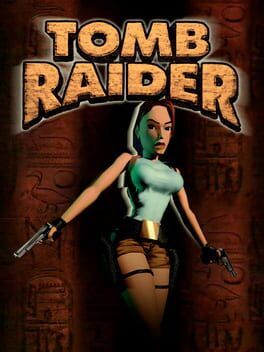
Aspyr’s “passionate response” comment to Tomb Raider (2013) on Switch hints at Rise and Shadow following on Switch 2, and says a lot about how long single‑player blockbusters now live.
Tomb Raider (2013) arriving on Nintendo hardware in 2025 feels almost surreal. Crystal Dynamics’ reboot is old enough to be nostalgic, yet it has just made its handheld debut in a world already looking toward Switch 2. Aspyr’s port is more than a curiosity, though. The studio’s talk of a “passionate response” from Switch players has instantly kicked off a bigger discussion: will Rise of the Tomb Raider and Shadow of the Tomb Raider complete the Survivor trilogy on Nintendo’s next system, and what does that say about the new afterlife of big-budget single‑player games?
A reboot that finally found Nintendo
When Tomb Raider launched in 2013 on Xbox 360, PS3 and PC, it was held up as one of the flagship reinventions of a classic series. It traded the old grid‑based, puzzle‑heavy tombs for cinematic platforming, physics‑led traversal and a harsher origin story for Lara Croft. Definitive Edition on PS4 and Xbox One followed quickly with sharper visuals and higher frame rates, cementing it as a benchmark early in that console cycle.
Nintendo platforms were the conspicuous omission. Wii U never got the reboot. The original Switch, launched in 2017, filled its third‑party gaps with bespoke projects and portable‑friendly conversions, but Tomb Raider’s mainline reboot sat out years of hybrid success. Only the remastered classic trilogy bridged Lara to Nintendo fans, leaving an awkward gap between PS1 nostalgia and the modern Survivor era.
That is why Tomb Raider’s late, properly portable debut matters. It is not just a port arriving years after its peers. It is the missing link that finally makes the franchise’s history feel continuous on Nintendo machines, right as the audience is preparing to move to new hardware.
Aspyr’s “passionate response” and what it really signals
In interviews and statements around the Switch release, Aspyr has singled out the “passionate response” to Tomb Raider 2013 from Switch players. On the surface, that is polite PR language. In context, it reads like a barometer. Aspyr has already shipped the remastered PS1 trilogy on Switch. It has now brought the 2013 origin story across. When the studio then openly says that strong reception is pushing it to “explore the possibilities” of more Survivor‑era ports, it is quietly testing the waters for a full trilogy rollout.
The timing lines up neatly with Nintendo’s own roadmap. Tomb Raider 2013 is hitting Switch at the very end of the hardware’s life, just as reports and official teases point toward Switch 2 landing in 2025. Instead of fighting for space among brand new blockbusters on PS5 and Xbox Series X/S, Lara’s reboot is dropping into a mature ecosystem where ports, remasters and back catalogue hits routinely perform.
If engagement is high and word of mouth is loud, it tells Aspyr and Embracer that there is still a paying audience for the Survivor trilogy outside the usual PlayStation, Xbox and PC crowd. That, more than anything, is what makes Rise and Shadow on Nintendo hardware feel plausible rather than wishful thinking.
Why Rise and Shadow make Switch 2 sense
On paper, bringing Rise of the Tomb Raider and Shadow of the Tomb Raider to the original Switch would be a far tougher technical ask than Tomb Raider 2013. Both sequels are heavier on geometry, foliage and effects, and Shadow in particular leans on dense jungle scenes and global illumination that already challenged Xbox One and PS4.
Switch 2 is the missing puzzle piece. While official specs are still under wraps, credible reporting and tech demos have consistently pointed to a device aimed somewhere around current lower‑end current‑gen machines but with DLSS‑style upscaling shouldering a lot of the work. That profile is ideal for late‑PS4‑and‑Xbox‑One era games like Rise and Shadow.
Instead of tearing the games down to the point where they barely resemble the original releases, Aspyr could target solid image quality at a lower internal resolution, lean on reconstruction and retain the cinematic feel that defined the trilogy. Portable play would be the headline feature, not survival‑mode compromises.
There is also a pragmatic angle. Aspyr has built experience on Switch with the classic Tomb Raider remasters and with Tomb Raider 2013. It understands both the quirks of Nintendo’s OS and the expectations of an audience that has already bought other Tomb Raider titles there. Turning that expertise into a trilogy completion pack for Switch 2 is a cleaner pitch than trying to sell yet another remaster on platforms that already own these games several times over.
Fitting into the emerging Switch 2 library
If you sketch out what Switch 2’s third‑party library is likely to look like, it has a clear shape. Publishers want a way to resell successful last‑gen titles to a portable audience, while also building new games that can target all current consoles without leaving Nintendo behind. Survivor‑era Tomb Raider slots into that template almost perfectly.
Think of the kind of games that have thrived on Switch so far: The Witcher 3, Skyrim, Dark Souls, Resident Evil 4, Doom and countless other ports have proven that there is a strong appetite for “known quantity” single‑player epics that people can play in bed, on trains or on lunch breaks. A future Switch 2 library filled with enhanced ports of PS4 and Xbox One hits will almost certainly exist alongside new releases, and that is exactly where a Tomb Raider Survivor Trilogy collection would sit.
In that environment, Tomb Raider’s tone and pacing help it stand out. Each game is a relatively tight 10 to 20 hour campaign instead of a 100 hour sprawl. Combat arenas and traversal sequences are stylish but digestible. For portable sessions, that makes Lara’s adventures more approachable than some of the open world time sinks that currently dominate.
Nintendo’s audience has also warmed dramatically to gritty, cinematic action over the last decade. Switch players already have Doom Eternal, multiple Resident Evil remakes and cloud‑streamed versions of more visually intensive titles. Lara would not feel like an outlier in a Switch 2 line up that is likely to include ambitious horror, shooters and story driven adventures alongside Mario and Zelda.
The new life cycle of AAA single‑player games
The story behind Tomb Raider’s late Nintendo arrival is really part of a broader shift in how long big single‑player games now live. In the PS2 and PS3 eras, once a blockbuster had done the rounds on its lead platforms, it might see one definitive edition and then fade. Today, a successful game can roll through remasters, retro collections, subscription services and new hardware ports for a decade or more.
Tomb Raider’s reboot is a textbook case. It started on Xbox 360 and PS3, then jumped to PS4 and Xbox One with Definitive Edition. It has been discounted heavily on PC, thrown into bundles, added to services and now finally brought to a Nintendo system long after its initial spotlight. That is not just nostalgia mining. It reflects the way players now discover and revisit games across multiple devices over many years.
From the publisher’s side, the economics line up. Building a single player epic from scratch costs more than ever, but porting it to a new platform is comparatively cheap, especially with middleware and shared engines smoothing the path. Each new platform wave looks back at the previous generation’s biggest hits and asks which ones can be sold again with new convenience and context.
That model rewards games that are self contained yet replayable. The Survivor trilogy fits that mold. Each entry tells a complete story with a beginning and an end, but the mix of stealth, exploration and combat encourages multiple runs. As long as there is an audience that has not played them yet in portable form, they remain viable catalogue picks.
What a full Survivor trilogy on Nintendo would mean
If Aspyr follows through and brings Rise and Shadow to Switch 2, it would quietly complete a long arc for Tomb Raider on Nintendo. The brand would be represented from the classic PS1 style through to the modern cinematic trilogy, all playable on a single family of hybrid devices.
For Nintendo fans, that would finally erase the weird fragmentation that has defined Lara’s presence on their systems. Instead of jumping from the remastered early adventures straight to a new entry like Tomb Raider: Catalyst on other consoles, players could experience the entire character reboot and then move into whatever comes next in the franchise.
For the wider industry, it would be another proof point that long tail, cross generational releases are now the default for large single‑player games. Tomb Raider is not unique here. But the very fact that a 2013 reboot is commanding headlines in 2025 on a platform it skipped entirely shows how much the business has shifted toward keeping prestige titles visible for as long as possible.
That is ultimately what Aspyr’s talk of a “passionate response” captures. It is less about surprise that people still care about Lara Croft, and more about confirmation that there is a reliable, portable hungry audience ready to give older blockbusters a second life on new hardware. If that momentum carries into Switch 2, Rise and Shadow feel less like speculative wishes and more like the next logical step in a very modern kind of comeback tour.