
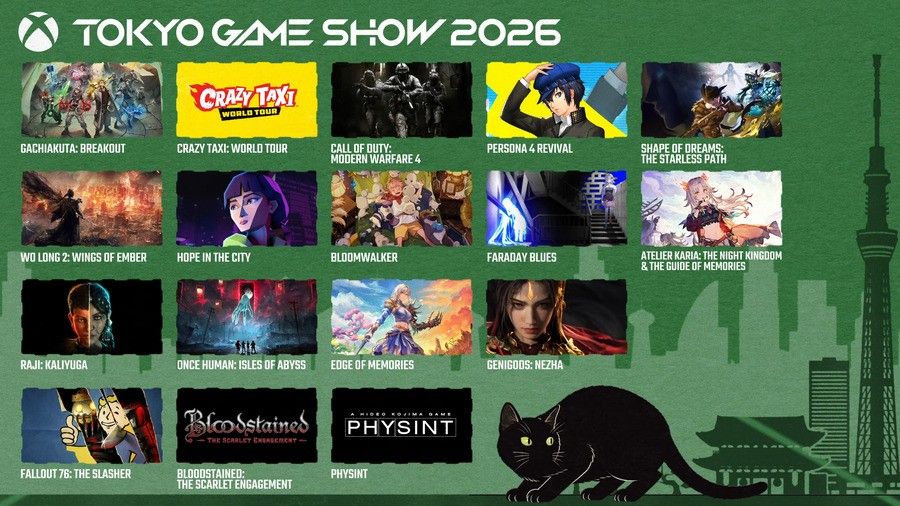

Tokyo Game Show 2026 and Gamescom 2026 reveal a showcase calendar built around playable proof, longer queues, regional publisher strategy, and hardware transition signals.
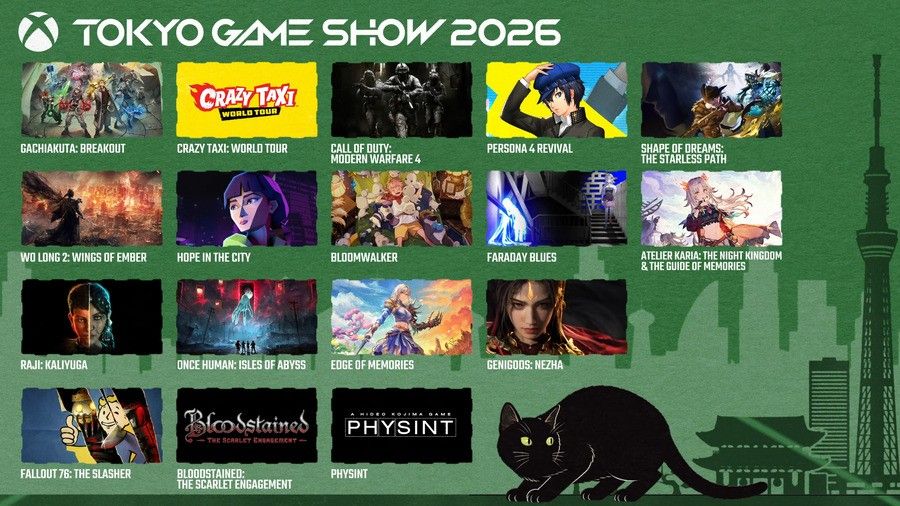
Image: purexbox.com
Tokyo Game Show’s fifth day turned crowd pressure into the story
Tokyo Game Show 2026’s most concrete change was structural: the official exhibitor site says the event expanded to five days, from September 17 to 21 at Makuhari Messe in Chiba, making it the longest run in TGS history. The organizer’s stated reason was practical rather than ceremonial. Its own exhibition materials say public days can approach nearly 100,000 visitors per day, limiting the number of games attendees can actually try, so TGS 2026 added another public day to create more chances for hands-on play.
That single scheduling decision captures the biggest shift visible across Tokyo Game Show 2026 and Gamescom 2026. The value of a major gaming event is increasingly measured by whether players can touch the game, not whether a trailer can fill a livestream slot. TGS’s official language is unusually direct on this point, saying hands-on access is now crucial for forecasting future sales and planning development activities across AAA and indie projects alike.
The tension is that longer shows do not automatically solve the queue economy. Push Square’s Sammy Barker, writing from Gamescom and Tokyo Game Show, said that even on Gamescom business days, attendees should not expect to get into the event early and should keep the first morning free if they want to properly see booths. His account of HoYoverse’s Gamescom booth included a sizable merch line early on, before the public crush that usually defines Cologne. In other words, organizers are adding time, but publishers are adding reasons to linger.
Hands-on demos are becoming the real announcement layer
The reported booth lineups at Tokyo Game Show 2026 show how playable builds have become the strongest signal in a reveal cycle. GameDaily reported that attendees could go hands-on with Final Fantasy VII Revelation, dated for April 8, 2027, and Final Fantasy Resonance on the TGS show floor, with Square Enix also screening trailers for Dragon Quest and Dissidia titles. ASO World similarly described Square Enix’s booth as anchored by the first globally playable demo of Final Fantasy VII Revelation.
That matters because a playable demo performs a different job than a staged trailer. A trailer asks players to believe a publisher’s promise. A demo exposes combat readability, UI density, loading cadence, controller feel, and whether a booth attendant needs to explain the loop every 30 seconds. ASO World reported that Final Fantasy VII Revelation’s public demo highlighted airship-based overworld exploration and a new linked combat system called “Trinity.” Those are the sorts of systems that benefit from hands-on explanation, because the sell is in pacing and execution rather than logo recognition.
Capcom’s reported TGS presence fits the same pattern. ASO World said the publisher brought a playable Nintendo Switch 2 build of Monster Hunter Wilds: Ascendance, plus first-time Japanese playable demos for Dragon’s Dogma II: Dark Arisen and Mega Man: Dual Override. If that account is accurate, Capcom used TGS as a test bed for both audience enthusiasm and platform transition messaging. A Monster Hunter expansion on new hybrid hardware is the kind of booth choice that lets a publisher watch friction points in real time: performance expectations, portability assumptions, and whether players understand the upgrade proposition.
Gamescom 2026 looked like the global allocation play
Push Square’s floor diary frames Gamescom 2026 as a major destination for Chinese publishers and developers. Barker wrote that HoYoverse’s booth was split into sections for multiple games, including Genshin Impact, Honkai: Star Rail, Zenless Zone Zero, Honkai: Nexus Anima, and Petit Planet. He also observed that major upcoming Chinese-developed titles such as Tides of Annihilation, Arknights: Endfield, and Silver Palace dominated the German show floor.
His sharper claim is comparative: to his knowledge, outside of possible indie booths, there were zero Chinese games on display at Tokyo Game Show, despite many of those titles being large in Japan. That is one writer’s on-site observation, not an official exhibitor census, and it sits alongside broader roundup language from VGTimes saying TGS has long grown beyond Japanese development and that studios from China, the US, South Korea, and other countries increasingly take part. The clean reading is that Gamescom appeared to be the bigger strategic stage for high-visibility Chinese publisher booth spending, while TGS’s international footprint is broader than a single walk-through can fully capture.
From a strategy perspective, Cologne offers a different payoff. Game Developer’s event page describes gamescom as the world’s largest leading event for computer and video games, bringing together fans, publishers, developers, esports professionals, cosplayers, creators, and business stakeholders both in person and digitally. VGTimes reported that Gamescom 2026 drew almost 370,000 visitors, far above its reported estimate of roughly 200,000 for TGS 2026. If a publisher wants maximum Western-facing awareness, influencer throughput, and merch-line visibility, the German show still offers scale that Tokyo does not match.
Tokyo’s publisher staging pointed toward hardware transition
ASO World’s TGS 2026 coverage argued that the show offered the clearest signal yet of an industry pivot toward Nintendo Switch 2 and hybrid hardware. The concrete examples it provided include Capcom’s playable Switch 2 build of Monster Hunter Wilds: Ascendance and a slate of “major Switch 2 updates” across the show. That should be treated as a reported trend from that outlet, not as a complete platform map, because the provided sources do not include official platform lists for every title.
Still, the staging logic is easy to read. A new hardware cycle changes how publishers spend booth space. When a game runs on a new device in public, it does marketing work and risk management at the same time. It tells players the publisher is ready for the next platform, while letting the publisher observe whether frame rate, screen size, battery expectations, or controller ergonomics become conversation topics.
This is where TGS’s five-day format becomes more than crowd control. The official organizer says the goal is to increase opportunities for visitors to try games and raise satisfaction for global fans. For publishers navigating a hardware transition, those extra public hours are useful telemetry. Demo lines, repeat play, abandonment rates, and social clips all become early balance data for marketing plans. A crowded booth can validate interest, but a playable booth can reveal whether that interest survives actual input.
The show floor is now a portfolio map, not a single megaton hunt
The biggest publishers at TGS 2026, according to the supplied roundups, staged themselves as portfolios rather than single-game hype machines. ASO World described Capcom’s showing as its largest-ever mix of live-service and flagship content. Square Enix leaned into an RPG-heavy slate. SEGA and ATLUS drew attention with RGG Studio’s original action IP Stranger Than Heaven and Persona 4 Revival. Bandai Namco mixed manga adaptations and legacy franchises, including Dragon Ball Xenoverse 3 and Ace Combat 8: Wings of Theve.
That layout reflects where the market has gone. A booth now has to serve multiple time horizons. Live-service updates keep existing communities engaged. Remakes and remasters reduce discovery risk by leaning on known brands. New IP provides the upside swing. Indie spaces add freshness and platform-holder goodwill. TGS’s own official materials highlight SELECTED INDIE 80, including free exhibition support for indie developers and newly established SI80 Excellence Awards, which shows that the organizer is also treating discovery as infrastructure.
VGTimes reported that this year’s TGS program featured more than 2,000 games, ranging from large releases to indie projects. In a slate that dense, booth design becomes a filtering tool. A giant franchise statue might earn a photo, but clear demo pods, short onboarding, and visible wait times determine how many players experience the build. The next wave of game showcase trends is less about a single surprise reveal and more about how effectively a publisher converts foot traffic into informed intent.
Attendance numbers show the limits of the live-event rebound
The sources do not give one clean attendance story for Tokyo Game Show 2026. TGS’s official exhibitor site said before the event that it anticipated nearly 300,000 visitors. VGTimes later wrote that organizers estimated attendance at roughly 200,000 people, while also reporting almost 370,000 visitors for Gamescom 2026. Those numbers may be using different timing, counting methods, or stages of reporting, and the provided material does not resolve the discrepancy.
The conflict is useful rather than inconvenient. It reminds readers that gaming events are judged through several lenses at once: registered attendance, public-day density, business-day utility, online reach, and how many people actually get hands-on time. TGS expanded because its organizer identified trial access as a weak point. Gamescom’s scale creates unmatched exposure, but Push Square’s account reinforces that scale also creates line pressure, even before the busiest windows.
Game Developer’s listing currently points to gamescom’s next edition running August 23 to 29, 2027 in Cologne, which underlines how quickly the industry calendar rolls forward. For players and publishers, the practical question after 2026 is not whether these shows are alive. They clearly are. The question is whether they can keep translating attendance into playable access, because a packed hall with inaccessible demos is a weaker marketing tool than a smaller booth that lets the right audience play.
How readers should read the next showcase cycle
For anyone tracking Tokyo Game Show 2026, Gamescom 2026, and the broader gaming events calendar, the useful habit is to separate three layers. Confirmed event infrastructure includes TGS’s five-day expansion, its September 17 to 21 dates, its Business Day and Public Day split, and its official emphasis on creating more chances to try games. Reported show-floor activity includes hands-on demos described by outlets such as GameDaily and ASO World, plus booth impressions from Push Square. Interpretation begins when we infer publisher strategy from those placements.
That distinction matters because showcase season rewards overreading. A huge booth does not guarantee a smooth launch. A long demo line does not prove broad market demand if the playable stations are scarce. A missing regional presence can signal politics, budget allocation, localization timing, or simple scheduling, and the sources here do not prove one explanation over another. Barker described the apparent absence of major Chinese games at TGS as political, but he also limited the claim to his knowledge from the floor.
The clearest reader guidance is to treat hands-on access as the strongest confidence signal. If a publisher is showing a game publicly, letting attendees play it, and giving specific dates or platform builds, that is firmer ground than a trailer montage. Tokyo Game Show 2026 and Gamescom 2026 both point toward showcases that are becoming longer, more crowded, more regionally specialized, and more dependent on playable proof. The next competitive edge will belong to the publishers that design booths like good strategy games: clear objectives, controlled bottlenecks, smart resource placement, and enough hands-on time for players to make a real decision.