

Tokyo Game Show 2026 has confirmed PlayStation and Square Enix among 759 exhibitors. Here is what PS5 players should expect, and what remains unannounced.
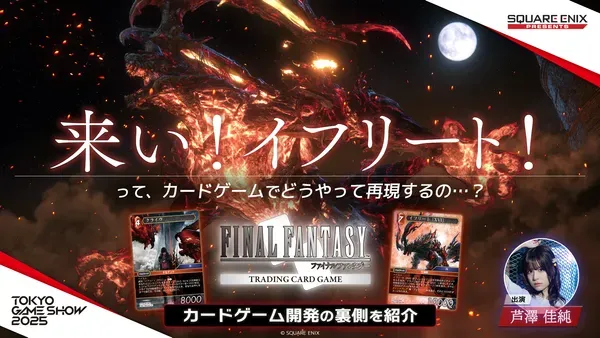
Image: jp.square-enix.com
The exhibitor list is real, but the PS5 lineup is still under wraps
Tokyo Game Show 2026 has confirmed Sony Interactive Entertainment and Square Enix on its exhibitor list, putting two of the biggest names for PS5 players back on the Makuhari Messe floor from September 17 to 21. Video Games Chronicle reports that the Computer Entertainment Supplier’s Association has revealed 759 exhibitors for this year’s show, including 484 domestic and 275 international exhibitors, with Square Enix, Sony Interactive Entertainment, Sega, Koei Tecmo, Konami, Capcom, and other major Japanese publishers listed.
That is the concrete development. The tension is that an exhibitor listing is not a stage schedule, a trailer slate, or a promise of new game reveals. For anyone tracking upcoming PS5 games, PlayStation TGS 2026 and Square Enix TGS 2026 are now worth watching closely, but the sources available so far do not confirm what either booth will show. Push Square says there is no word yet on what PlayStation’s booth will feature this year. The same is true for Square Enix’s specific lineup in the provided source material.
That distinction matters for expectations. Tokyo Game Show is built around playable floors, business meetings, livestream segments, merchandise, hardware, mobile titles, PC games, esports, and publisher showcases that can vary widely in ambition. A booth from PlayStation or Square Enix can mean hands-on demos, stage presentations, partner titles, photo spots, trailers already shown elsewhere, or a mix of all of those. It can also mean a carefully managed presence around games with already announced dates rather than a barrage of new reveals.
Nintendo is absent again, according to VGC, which notes that is typical for the company. For PS5 owners, that leaves the show’s console spotlight leaning toward Sony’s own booth and the broad third-party ecosystem surrounding it. The exhibitor reveal gives the event shape, but the game-by-game stakes are still waiting behind the curtain.
TGS 2026 is bigger and longer because the show floor has become the story
Tokyo Game Show 2026 is not simply another annual stop on the calendar. Gematsu reports, based on CESA’s announcement, that the show currently spans 3,946 booths and includes exhibitors from 51 countries and regions, surpassing Tokyo Game Show 2025’s total of 46. VGC also notes that this year marks the event’s 30th anniversary and its first-ever five-day format.
That extra day changes the rhythm of the event. Tech Times reports that CESA cited crowding as the driver behind the format shift, with public days drawing close to 100,000 visitors each. According to that report, the first two days, September 17 and 18, remain reserved for business visitors, industry professionals, and press, while September 19 through 21 are public days. September 21 falls on Japan’s Respect for the Aged Day holiday, and Tech Times reports the final day closes early at 4 p.m. local time.
For players watching from home, the five-day structure should be read less like a promise of five days of megaton announcements and more like an attempt to make the show playable. TGS has always had a different texture from a platform holder’s digital showcase. A State of Play can cut from trailer to trailer with maximum velocity. A convention booth has to move real people through demo stations, stage queues, merch areas, and press appointments. If Sony or Square Enix brings a major action game, RPG, fighting game, or live-service title, the value may come from extended demo impressions rather than a single cinematic reveal.
GosuGamers reports that TGS 2025 drew 263,101 attendees across four days. Tech Times says CESA projects roughly 300,000 total attendees for 2026. That creates a practical reading of the exhibitor list: the show is expanding because the demand for hands-on access has outgrown the older format. For PS5 players, the best information may come from what press and attendees actually get to play, how it feels, how it runs, and what publishers are willing to say on the floor.
PlayStation’s return suggests a show-floor strategy, not necessarily a reveal blitz
Push Square reports that PlayStation will have a booth at Tokyo Game Show for the third year in a row. The outlet also notes that Sony had skipped many conventions over the past several years before returning to TGS in 2024. That recent pattern makes PlayStation TGS 2026 notable, especially for a company that has often preferred controlled digital presentations over the noise and risk of a crowded public expo.
The key phrase from Push Square is that there is no word on what the booth will feature. The outlet expects a mixture of first-party and third-party games and specifically says it would expect Marvel’s Wolverine to be there because, according to Push Square, it releases days before the event. That is Push Square’s expectation, not a confirmed TGS lineup from Sony. It is a sensible possibility in the way a late-stage action game benefits from controlled hands-on exposure, but it remains unannounced for the booth.
If Marvel’s Wolverine or another high-profile PS5 action title appears, the most useful questions will be mechanical rather than theatrical. A trailer can sell claws, lighting, and a bruising sense of impact. A demo shows whether traversal has snap, whether encounters have readable rhythm, whether enemy design supports the fantasy, and whether set pieces are built for player control or for camera choreography. TGS is especially valuable when a game moves from promise to touch, from the sizzle reel to the timing window.
Push Square also reports that PlayStation showed several titles at last year’s event, including Marvel Tokon: Fighting Souls, which it says launches next month. That example points to a realistic pattern. A TGS booth can spotlight games already deep in the marketing cycle, giving players and press one last playable look before release. It can also support third-party partners that matter to the Japanese market. Until Sony publishes its own TGS 2026 plans, PS5 players should treat the booth as confirmed presence, not confirmed announcements.
Square Enix is confirmed, but its booth could mean many different things
Square Enix’s name on the Tokyo Game Show 2026 exhibitor list is important, but it is also broad. The provided sources confirm Square Enix as an exhibitor; they do not confirm which games, platforms, stage events, demos, or merchandise will appear under its banner. That leaves Square Enix TGS 2026 in the most familiar kind of pre-show fog: the logo is visible, the contents are still sealed.
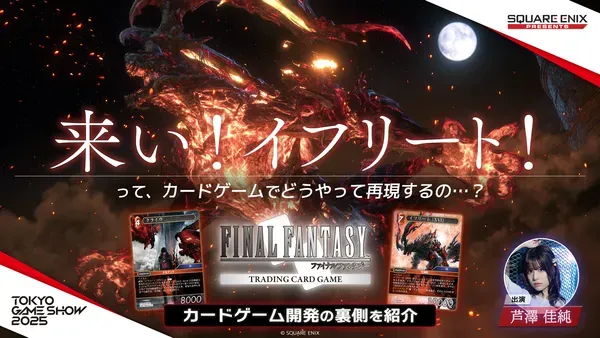
That uncertainty is especially important with Square Enix because its event presence can cover far more than a single console release. The required media attached to this article comes from Square Enix’s TGS 2025 materials and is tied to the Final Fantasy Trading Card Game, specifically a behind-the-scenes feature about how the “Come to Me, Ifrit!” card was made. That image is from last year’s TGS presence, not a 2026 announcement. Its relevance is as a cautionary example: a Square Enix booth can include franchise-adjacent products, community programming, card games, merchandise, stage talks, and platform-diverse software.
For PS5 players, the safe read is that Square Enix’s attendance increases the odds that its console-facing pipeline will have some visibility at the show, but it does not identify what that visibility is. A game can appear as a theater trailer with no playable build. Another can appear in a public demo. A third can be represented through merchandise, music, or a producer talk with little new gameplay. Those are very different outcomes for anyone deciding whether to follow the show minute by minute.
The useful expectation is precision. Wait for Square Enix’s own TGS site, livestream schedule, and booth map before assuming any specific upcoming PS5 games will be there. If Square Enix does bring action or adventure material to the floor, the questions should be sharper than whether the trailer looks expensive. Does combat communicate intent clearly? Are boss phases paced for player decision-making? Are party systems readable in a noisy demo environment? TGS can answer those questions only when a real build is present.
The wider exhibitor roster may be where PS5 owners get the most practical news
The PlayStation and Square Enix names will draw the eye, but the wider TGS 2026 exhibitors list may be just as important for PS5 players. VGC names Sega, Koei Tecmo, Konami, and Capcom among Japan’s major publishers attending. Push Square also lists Square Enix, Capcom, Sega, Koei Tecmo, Atlus, and Level-5 among confirmed names. GosuGamers’ rundown includes major companies such as Bandai Namco and Capcom, while Gematsu’s list shows a broad general exhibition area stretching across publishers, hardware companies, indie developers, regional pavilions, and technology brands.
CESA’s own framing, quoted by Gematsu, describes a venue covering home consoles, smartphones, and PCs, along with esports titles, augmented reality and virtual reality experiences, indie games, hardware, gaming furniture, and business solutions. That is the real scale of TGS 2026. It is a platform-agnostic industry floor first, then a PS5 news source depending on what each company chooses to bring.
That wider context guards against overreading any single name. Nexon, for example, has already announced through a press release covered by GamersHeroes that it will present Mabinogi Mobile and Project RX at Tokyo Game Show 2026. The same report says Mabinogi Mobile is an online RPG optimized for mobile play, with cross-play across mobile and PC platforms, and that Project RX is a subculture game built around story, character interactions, and lifestyle content. That is real TGS software news, but it is not PS5 news in the provided material.
The lesson carries across the floor. TGS 2026 will likely generate plenty of trailers, demos, and interviews, but platform confirmation has to come title by title. For upcoming PS5 games, the relevant information is not merely whether a publisher is present. It is whether that publisher confirms a PS5 version, playable build, release window, physical or digital availability, upgrade path, performance target, or localization plan. None of those details should be assumed from the exhibitor list alone.
How PS5 players should follow Tokyo Game Show 2026 without chasing ghosts
If you are planning around Tokyo Game Show 2026, the calendar is clear. The event runs September 17 to 21 at Makuhari Messe in Chiba, Japan. According to Tech Times, September 17 and 18 are business and press days, while September 19 through 21 are public days. VGC reports that members of the public will be able to buy a special 30th Anniversary Ticket that includes a pure gold medal engraved with visuals from popular games.
If you are attending for a specific PS5 title, wait for booth schedules before spending money on that hope. The expanded five-day format may relieve some pressure, but Tech Times’ reporting on crowding suggests demand remains a central issue. A confirmed exhibitor can still have limited demo stations, timed tickets, long queues, stage-only presentations, or press-only access. The difference between seeing a trailer on a booth screen and playing a 20-minute build is the difference between atmosphere and evidence.
If you are watching online, the most valuable coverage will probably arrive in layers. First come official schedules from PlayStation, Square Enix, and other exhibitors. Then come trailers and livestream segments. After that, the strongest reporting often comes from hands-on impressions, developer interviews, and direct comparisons between demo promises and past footage. For action and adventure fans, that last layer is where the signal usually lives: movement feel, camera behavior, hit feedback, encounter density, and whether a set piece breathes when a player misses the perfect line.
The confirmed story is strong enough on its own. Tokyo Game Show 2026 has a record-scale feel, a five-day anniversary format, and a major exhibitor list that includes PlayStation and Square Enix. The unconfirmed story is the one players should hold at arm’s length. Until Sony Interactive Entertainment and Square Enix announce their booth contents, the smartest expectation is not a guaranteed reveal slate. It is a crowded, consequential show floor where the next round of PS5 evidence may be playable before it is spectacular.